
All hydrogel articles
-
 News
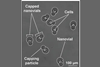
Scientists put a lid on tiny test tubes, opening new frontiers for cell research
Imagine shrinking a test tube until it can hold just one or two cells, then making hundreds of thousands of these miniature test tubes to run experiments simultaneously. Tiny bowl-shaped hydrogel particles capture cells and measure what they produce. Now, researchers have added a lid, allowing cells to remain inside longer, grow into small colonies and interact with other cells under controlled conditions.
-
 News
Cell ‘invisibility cloaks’ could offer side-effect-free diabetes treatment
New research suggests manufacturing cells an “invisibility cloak” out of a jelly-like material known as hydrogel, may offer an easier, less damaging treatment pathway for people with diabetes undergoing cell therapy.
-
 News
Fungi enhance hydrogels for stronger, safer materials
New research uses a natural substance from fungi, called chitin, to create hydrogels that are both significantly stronger and tougher.
-
 News
‘Baked’, printed, ready – premiere of architecture made from yeast
Researchers have developed a new, entirely bio-based material from a somewhat unexpected ingredient: yeast. The material is 3D printed and customised for use in architectural and interior design elements that are currently made from non-renewable or fossil-based materials, such as plaster, plastic or synthetic textiles.
-
 News
Light without electricity? Glowing algae could make it possible
Researchers successfully turned on the “light switch” in algae and kept them lit up using simple chemical solutions. The finding opens the door for future technologies such as autonomous robots that can operate in dark environments and living sensors for water quality.
-
 News
Smart wound dressing delivers antibiotics on-demand, accelerating healing and reducing resistance
Biomedical engineers have developed a new wound dressing material that releases antibiotic drugs only when harmful bacteria are present in a wound. The material could help rapidly clear wound infections to accelerate healing while reducing the unnecessary use of antibiotics.
-
 News
New gel-based system allows bacteria to act as bioelectrical sensors
Researchers have developed a safe bioelectronic sensor that allows for effective electronic communication even in liquid environments. The system uses the naturally occurring polymer chitosan, acting as a kind of shell to keep the bacteria from escaping.
-
 News
Scientists fight superbugs with nets, light switches - and egg white
A new gel could combat resistant bacteria in wounds and around implant sites, while also supporting healing. The hydrogel, which is inspired by natural immune defences, has produced highly promising results in animal models.
-
 News
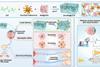
Injectable hydrogel-mediated co-delivery of oncolytic adenovirus and melphalan for retinoblastoma control and vision preservation
The collagen-based hydrogel enabled controlled oncolytic adenovirus and melphalan release and sustained retention. This approach eradicated retinoblastoma tumors and restored normal ocular structure and visual function following intravitreal administration.
-
 News
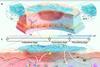
Microenvironment-feedback hydrogel enables precise staged repair of infected wounds
A research team has developed a hydrogel that can sense changes in wound pH and automatically switches its therapeutic behavior from fighting infection to promoting tissue repair.
-
 News
Smart bandage with ‘plant power’ heals chronic wounds faster than market leaders
A multidisciplinary team has unveiled a next-generation wound dressing that behaves like a living leaf yet fights like a miniature pharmacy. It combines neomycin-grafted cellulose nonwovens with a polyvinyl alcohol/cellulose-nanofiber aerogel dyed with blueberry anthocyanins.
-
 News
Antibacterial material restores the efficacy of antibiotics against resistant bacteria
Research shows that resistant bacteria can regain susceptibility to antibiotics when the treatment is combined with a material equipped with antibacterial peptides.
-
 News
Super-strong bacterial cellulose macrofibers made simple with TAT technique
Researchers have engineered a novel method to create high-performance macrofibers with enhanced mechanical properties and humidity response.
-
 News
Living bioelectronic device monitors and manages psoriasis in mice
Coupling skin bacteria-laden hydrogel and electronics, researchers have introduced a bioelectronics system that can deliver management and adaptive treatment of skin inflammation. They test this approach in a mouse model of psoriasis.
-
 News
Wound treatment gel fights the battle against antibacterial resistance
Researchers have created a hydrogel that is easier to synthesize, contains natural antibiotic properties, and promotes cell growth.
-
 News
Plasma device is giant step forward to help treat chronic wounds that affect millions
A team of international scientists has developed a more effective treatment for chronic wounds that does not involve antibiotics or silver-based dressings, but an ionized gas called plasma. Source: University of South Australia The plasma activates oxygen and nitrogen molecules to treat wounds effectively. The treatment involves ...
-
 News
Novel intranasal mask protects respiratory tract from viral aerosols
Researchers have developed a novel intranasal mask to protect the respiratory tract from viral aerosols. It showed satisfactory protection in mouse model, digital human nasal model and human respiratory tract model.
-
 News
Veins of bacteria could form a self-healing system for concrete infrastructure
Researchers are turning reinforcing fibers into a living tissue system that rushes concrete-healing bacteria to the site of cracks to repair the damage.
-
 News
Gamechanging project could propel anti-microbial peptides into forefront of AMR battle
Experts from the University of Huddersfield have teamed up with an international consortium of partners for a four-year research project that aims to develop a new method for the commercial production of anti-microbial peptides (AMPs).