
All multiple sclerosis articles
-
 News
NewsCommon virus plus mono associated with increased risk of MS
Having the disease infectious mononucleosis, often called mono, caused by the Epstein-Barr virus is associated with an increased risk of developing multiple sclerosis (MS), according to a study.
-
 News
NewsNew study: Immune cells linked to Epstein-Barr virus may play a role in MS
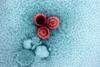
Researchers have found that certain types of CD8+ “killer” T cells — immune cells that destroy damaged or infected cells — are more abundant in people with MS. Some of these killer T cells target EBV, which suggests that the virus may trigger the damaging immune response seen in MS.
-
 News
NewsWhen a virus releases the immune brake: New evidence on the onset of multiple sclerosis
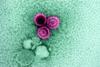
A study investigating the links between Epstein-Barr virus and multiple sclerosis shows that EBV can interfere with the control of B cells. One viral protein mimics a crucial “approval” signal that B cells usually require from other immune cells. Self-reactive B cells can then survive even when they should be shut down.
-
 News
NewsNew mechanism links Epstein-Barr virus to MS
Scientists investigating the links between the Epstein-Barr virus and multiple sclerosis show that when the immune system fights EBV, certain T cells – which normally attack the virus – can also react to a protein in the brain called Anoctamin-2 (ANO2), a phenomenon called molecular mimicry.
-
 News
NewsGenetic risk factor and viral infection jointly contribute to MS
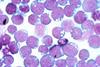
One of the leading triggers for multiple sclerosis (MS) is an infection with the Epstein-Barr virus. However, certain gene variants also play an important role. Researchers have shown that it is the molecular interaction between environmental and genetic risk factors that ultimately triggers the disease.
-
 News
NewsOral bacterium tied to disability severity in multiple sclerosis
A research team has conducted a study with findings that suggest a potential association between the relative abundance of Fusobacterium nucleatum (F. nucleatum), a bacterium found in the mouth, and disease severity in multiple sclerosis (MS) patients.
-
 News
NewsA fatal mix-up: How certain gut bacteria drive multiple sclerosis
If gut bacteria are too similar to the protective layer of nerves, they can misdirect the immune system and cause it to attack its own nervous system. This mechanism can accelerate the progression of multiple sclerosis.
-
 News
NewsStudy links multiple sclerosis with distinct oral microbiome
Researchers have produced the most comprehensive genetic and metabolic analysis to date of the oral microbiome associated with multiple sclerosis (MS). They found that people with MS have a distinct oral microbiome compared to healthy individuals.
-
 News
NewsTwin study detects gut bacteria that play a role in development of multiple sclerosis
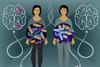
Researchers examined stool samples from 81 pairs of twins, and compared their composition between siblings. They identified 51 taxa—groups of microorganisms—that differed in abundance between twins with and without MS symptoms.
-
 News
NewsHow the Epstein-Barr virus promotes its spread within the body
Researchers have discovered that the Epstein-Barr virus (EBV) increases the ability of infected immune cells to migrate. In this way, the pathogen promotes its spread in the body – a discovery that may have therapeutic implications.
-
 News
NewsGenes combined with immune response to Epstein-Barr virus increase MS risk
In multiple sclerosis (MS), antibodies to the common Epstein-Barr virus can accidentally attack a protein in the brain and spinal cord. New research shows that the combination of certain viral antibodies and genetic risk factors can be linked to a greatly increased risk of MS.
-
 News
NewsStart-up EBViously announces its launch
EBViously, a spin-off of Helmholtz Munich, officially started operations on 11 November 2024. The company is developing a preventive vaccine against diseases caused by the Epstein-Barr virus (EBV).
-
 News
NewsAncient viral DNA in human genome linked to multiple sclerosis and amyotrophic lateral sclerosis
New research has revealed a connection between ancient viral DNA embedded in the human genome and the genetic risk for two major diseases that affect the central nervous system.
-
 News
NewsEpstein-Barr Virus and brain cross-reactivity: possible mechanism for multiple sclerosis unveiled
The role that Epstein-Barr Virus (EBV) plays in the development of multiple sclerosis (MS) may be caused by a higher level of cross-reactivity, where the body’s immune system binds to the wrong target, than previously thought.
-
 News
NewsMultiple sclerosis: Possible basis for vaccine researched
Researchers have shown that the risk of MS is particularly high in people with a combination of certain host factors and variants of the Epstein-Barr virus (EBV).
-
 News
NewsHERV-W virus acting as neuropathogen successfully confirmed
Scientists have described a direct functional connection between the release of an endogenous retrovirus and the worsening of neurodegenerative processes in multiple sclerosis.
-
 News
NewsEngineered probiotic developed to treat multiple sclerosis
Researchers are working on a new approach to target autoimmunity in the brain, leveraging designer bacteria to make treatment safer and more effective.
-
 News
NewsBacteria with anti-inflammatory effects found in gut of sclerosis patients with no evidence of active disease
Multiple sclerosis patients do not have the same bacteria in their intestines as healthy people. There are also differences in the composition and function of the bacteria in the intestines of multiple sclerosis patients, depending on whether their illness is active, and whether they are in treatment, a new study shows.
-
 News
NewsPoor gut health may drive multiple sclerosis — but better diet may ease it
Researchers have traced a previously observed link between microscopic organisms in the digestive tract — collectively known as the gut microbiome — and multiple sclerosis (MS).
-
 News
NewsNew research unit awarded €6m to investigate gut-brain axis
The German Research Foundation (DFG) is funding a new clinical research unit that will investigate the interaction between the digestive and nervous systems with reference to inflammatory and degenerative diseases, the first collaborative research group in Germany to explore the “gut-brain axis”.