
All Reproductive &Urinary Tract Microbiome articles – Page 2
-
 News
NewsSARS-CoV-2 does not persist in the placenta after maternal recovery from COVID-19
A new study finds that the virus that causes COVID-19 does not linger in placental tissue weeks to months after a pregnant woman recovers from infection - offering important reassurance for clinicians and patients alike.
-
 News
NewsRapid urine test could select UTI antibiotics within hours
Patients with urinary tract infections (UTIs) could receive the right antibiotic far sooner, thanks to a new test that produces results within hours rather than days.
-
 News
NewsEarly pregnancy probiotics may help prevent spontaneous preterm delivery
A new study suggests that probiotics supplementation during early pregnancy may help reduce the risk of recurrent spontaneous preterm delivery (sPTD). Pregnant women who consumed probiotics containing Clostridium butyricum showed lower recurrence rates of sPTD compared with national averages.
-
 News
NewsStudy reveals how a live bacterial therapy reshapes the vaginal microbiome and identifies predictors of treatment success
A new study provides the most detailed picture yet of how a promising bacterial therapy works to prevent recurrent bacterial vaginosis (BV) and why it works better for some women than others.
-
 News
NewsEndometrial microbiota-dimethylglycine-Treg cell axis affects endometrial receptivity in recurrent implantation failure
A new study investigates the possibility of an imbalance in reproductive tract microbiota as a potential factor associated with recurrent implantation failure, offering a novel and promising avenue for exploration.
-
 News
NewsWhole-genome sequencing is a powerful tool that can pick up on genetic signatures for antimicrobial resistance in UTIs: research
New research to be presented at MLSFF26 reveals whole-genome sequencing as a powerful tool that can distinguish between antibiotic-resistant and susceptible strains of urinary tract pathogens by identifying the specific genetic signatures that confer resistance.
-
 News
NewsMulti-strain probiotic therapy shows promise in preventing bacterial vaginosis recurrence
A global team of experts has identified a promising new approach to prevent recurrence of bacterial vaginosis (BV). In a phase 1 randomized clinical trial, researchers found that a short course of a multi-strain probiotic restored protective bacteria to the vagina, significantly reducing disease recurrence.
-
 News
NewsMothers' exposure to microbes protect their newborn babies against infection
A study dives into new depths to explore why only some babies develop severe infection to common bacteria. The research revealed that the babies that became most severely ill from E. coli infections also had markedly lower levels of germ-fighting antibodies transferred from their mothers.
-
 News
NewsNeonatal sepsis: using vaginal microbiota to improve predictions
Researchers have found that some identifiable microbial signatures in vaginal swab samples taken at delivery are associated with a risk of neonatal sepsis.
-
 News
NewsResearchers discover that vaginal bacteria don’t always behave the same way
By analyzing vaginal microbiome data at unprecedented resolution, researchers have identified 25 distinct vaginal microbiome types and demonstrated that bacteria of the same species can differ substantially in their functional potential, thereby affecting how these microbes interact with the body.
-
 News
NewsResearchers discover a previously unknown bacterial component in kidney stone formation
In an unexpected finding, scientists have discovered that bacteria are present inside the most common type of kidney stone, revealing a previously unrecognized component involved in their formation. The findings point to a possible therapeutic target that could be used for prevention and treatment.
-
 News
NewsResearcher reveals secrets of bacteria that can swim upstream
Rather than washing pathogens away, strong fluid currents act as “guide rails” that align bacteria and accelerate their upstream migration. They discovered that this creates a “two-way invasion” where pioneer cells reach the source within minutes, seeding colonies that spread threefold faster than in still water.
-
 News
NewsResearchers uncover the secret route of prostate infections
A research team has developed a “mini prostate” organoid model using adult stem cells. Using this model, the scientists could follow a bacterial prostatitis infection step by step under controlled conditions and identify exactly how the bacteria attack.
-
 News
NewsSome antibodies outmaneuver germs from sticking to cells
Researchers have uncovered several new mechanisms by which antibodies block E. coli bacteria that cause urinary tract infections from attaching to bladder cells. Once E. coli bacteria get a strong grip, they can be difficult to flush out.
-
 News
NewsNew database to target chronic UTIs – a long-overlooked condition that may begin in childhood
A new database targeting chronic urinary tract infections (UTIs) – a long-overlooked condition that may begin in childhood – is set to help researchers uncover why millions of women and girls worldwide suffer from infections that defy treatment and stump microbiologists.
-
 News
News4 million euros for study with personalized phage therapy
UMC Utrecht has received a grant of 4 million euros for the first clinical study in the Netherlands involving a customized therapy with bacteriophages for patients with recurrent urinary tract infections.
-
 News
NewsNew method accelerates resistance testing in urinary tract infections
Researchers have developed two methods that allow urine samples to be tested directly for antibiotic susceptibility. Because the procedures do not require standardized bacterial suspensions, the time to result is reduced by up to 24 hours compared to conventional testing.
-
 News
NewsProfessor named EMBO Young Investigator for work on the infant microbiome
Prof. Moran Yassour has been selected as one of the 2025 EMBO Young Investigators. She receives this prestigious recognition for her innovative research on the developing infant microbiome and its impact on pediatric health.
-
 News
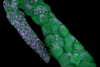
NewsImaging reveals bacterial symbionts in the ovaries of tiny, aquatic crustaceans
Researchers have imaged a heritable form of bacterial symbiosis inside the reproductive system of tiny crustaceans known as ostracods. Bacteria from the genus Cardinium live inside the egg cells and tissues of ostracod ovaries, transmitted from mothers to offspring.
-
 News
NewsNearly 1 in 5 urinary tract infections linked to contaminated meat
A new study estimates that nearly one in five urinary tract infections in Southern California may be caused by E. coli strains transmitted through contaminated meat – and people living in low-income neighborhoods are at the greatest risk.