
All Stanford University articles – Page 2
-
 News
NewsResearchers establish link between form and function of gut bacterium
New insights into the functional differences between the various morphotypes of Bacteroides thetaiotaomicron could open up new possibilities for medicine. A better understanding of their diversity could lay the foundation for novel microbiome-based therapies.
-
 News
NewsTrees vs. disease: Tree cover reduces mosquito-borne health risk
A new study shows that in Costa Rica, even modest patches of tree cover can reduce the presence of invasive mosquito species known to transmit diseases like dengue fever.
-
 News
NewsNew antibodies show potential to defeat all SARS-CoV-2 variants
Researchers discovered that a paired combination of antibodies binding to the two domains of the SARS-CoV-2 viral particle showed promising results in elimination of all virus variants caused in the COVID-19 pandemic.
-
 News
NewsStudy: Smartwatches could end the next pandemic
Everyday smartwatches are extremely accurate in detecting viral infection long before symptoms appear — new research shows how they could help stop a pandemic before it even begins.
-
 News
NewsMachine learning framework can decipher immune system’s record of past infections
A novel machine learning framework can decipher an individual’s immune system’s record of past infections and diseases, providing a powerful tool with the potential for diagnosing autoimmune disorders, viral infections, and vaccine responses with precision.
-
 News
NewsAfrica’s largest human microbiome study sheds light on gut diversity and health
The most extensive study of the gut microbiome in Africa has discovered new microbial species and never-before-reported metagenomes from several African sites.
-
 News
NewsRotavirus protein NSP4 manipulates gastrointestinal disease severity
This study is among the first to show that the rotavirus protein NSP4 is both necessary and sufficient for multiple aspects of rotavirus infection by disrupting calcium signaling not only within infected cells but also in nearby uninfected cells.
-
 Careers
Towards space plastics - and solving a few Earth problems en route
Dr Nils Averesch, Assistant Professor of Space Biology at the Space Life Science Laboratory, Cape Canaveral, reveals how his research on microbial plastic production could pave the way for thriving human settlements in space.
-
 News
NewsOcean microbe’s unusual pair of enzymes may boost carbon storage, study suggests
Scientists have discovered multiple forms of a ubiquitous enzyme in microbes that thrive in low-oxygen zones off the coasts of Central and South America.
-
 News
NewsFlu virus remains infectious in refrigerated raw milk
Influenza or flu virus can remain infectious in refrigerated raw milk for up to five days, a new study reveals. The findings come at a time when outbreaks of bird flu in dairy cattle have raised concerns about the potential for a new pandemic.
-
 News
NewsScientists transform ubiquitous skin bacterium into a topical vaccine
Researchers have domesticated of a bacterial species that hangs out on the skin of close to everyone on Earth to create a vaccine that is a cream instead of needle.
-
 News
NewsClimate change responsible for 19% of today’s rising dengue burden - but Wolbachia offers hope
Climate change is having a massive global impact on dengue transmission, accounting for 19% of the current dengue burden, with a potential to spark an additional 40%-60% spike by 2050 — and by as much as 150%-200% in some areas.
-
 News
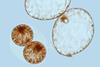
NewsPlankton balloon to six times their size in newly discovered mode of oceanic travel
Researchers describe a species of bioluminescent phytoplankton, called Pyrocystis noctiluca, that balloons to six times their original size of a few hundred microns, showcasing a unique strategy for long-distance ocean travel.
-
 News
NewsHidden trails of marine snow can affect how the ocean stores carbon
A new study reveals never-before seen mucus ‘parachutes’ produced by microscopic marine organisms that significantly slow their sinking, putting the brakes on a process crucial for removing carbon dioxide from the atmosphere.
-
 News
NewsZooplankton go ‘Eew!’ to cleaning feces-contaminated water
Scientists were recently surprised to find that the natural community of zooplankton — tiny, aquatic animals known to graze on bacteria — present in freshwater and saltwater do not clean water that is contaminated with fecal microorganisms.
-
 News
NewsScientists untangle interactions between the Earth’s early life forms and the environment over 500 million years
A new perspective explores the intricate feedbacks among ancient life forms, including algae, plants and animals, and the chemical environment in the current Phanerozoic Eon, which began approximately 540 million years ago.
-
 News
NewsUncovering ‘Blockbuster T cells’ in the gut wins major prize
Kazuki Nagashima developed a method with which to zero in on individual gut bacterium’s impacts on T cells. His work showed that – contrary to what has been thought – some T cells in the gut can interact with multiple bacteria.
-
 News
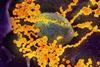
NewsScientists develop new nanoscale way to see viruses in action
A new, nano-scale look at how the SARS-CoV-2 virus replicates in cells may offer greater precision in drug development, scientists report.
-
 News
NewsScientists invent ‘living bioelectronics’ that can sense and heal skin
Scientists have created a prototype for ’living bioelectronics’: a combination of living cells, gel, and electronics that can integrate with living tissue. The patches are made of sensors, bacterial cells, and a gel made from starch and gelatin.
-
 News
NewsNew test rapidly diagnoses cat parasite infections and reduces false positives
An easy-to-use test and new paradigm for care can help save lives, sight, cognition and motor function by rapidly diagnosing and treating Toxoplasma infections.
- Previous Page
- Page1
- Page2
- Page3
- Next Page