
All World Health Organization articles
-
 News
News€8 million Horizon Europe grant to launch next-generation initiative to detect, assess and respond to pandemics
Led by the University of Oxford in partnership with the WHO and an international consortium the three-year PANDAI project will develop and deploy advanced AI models to transform the detection, assessment, prediction and response to global disease threats.
-
 News
NewsPromising single-dose malaria treatment advances toward pan-African clinical trial
A promising single-dose malaria treatment that could help address growing drug resistance and simplify treatment for patients.
-
 News
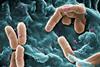
NewsFirst-of-its-kind computer model of bacterial biofilms could support antibiotic resistance research
Faster and more effective ways to treat Pseudomonas aeruginosa could be on the cards thanks to a first-of-its-kind 3D computer model which shows how the bacterium grows and reshapes its protective layer and spreads to new surfaces.
-
 News
NewsOropouche virus has already infected more than 5 million people in Brazil, study suggests
The recent Oropouche virus outbreak in 2023 has drawn attention in Brazil and other Latin American countries because of its scale and rapid spread. Researchers estimate that since 1960, the virus has infected approximately 9.4 million people in Latin America and the Caribbean.
-
 News
NewsResearch forecasts global antimicrobial resistance threats for the next two decades
New research has analysed antimicrobial resistance (AMR) on a global scale to predict how resistance patterns could evolve by the year 2050, identifying around 210 resistance traits that could pose the greatest future risk.
-
 News
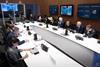
News CEPI fast-tracks three Bundibugyo ebolavirus vaccine candidates
The Coalition for Epidemic Preparedness Innovations (CEPI) will urgently accelerate development of three investigational vaccines targeting the Bundibugyo ebolavirus that has caused a rapidly spreading epidemic in the Democratic Republic of the Congo (DRC) and neighbouring Uganda.
-
 News
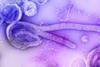
NewsGlobal Virus Network experts urge rapid regional action as Bundibugyo Ebola outbreak raises cross-border concerns
The Global Virus Network (GVN) calls for greater global financial, logistical and research support for the local response to the rare Bundibugjo Ebola virus outbreak in Africa. The spread of this virus, largely undetected, was declared a global public health emergency by the World Health Organization.
-
 News
NewsExperts call on WHO to revisit its approach to airborne risk in light of hantavirus outbreak
In light of the hantavirus outbreak, public health experts have called on the World Health Organization (WHO) to shift its default response to emerging respiratory viruses. The starting point should not be to downplay the risk of airborne transmission until it is definitively proven, they warned.
-
 News
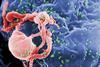
NewsWHO certifies the Bahamas for eliminating mother-to-child transmission of HIV
In a landmark achievement for Caribbean public health, the World Health Organization (WHO) congratulates The Bahamas for becoming the latest Caribbean nation to be certified as having eliminated the mother-to-child transmission of HIV.
-
 News
NewsLancet Countdown Europe: New report on health and climate change
Europe’s dependence on fossil fuels is not only making the continent economically and politically vulnerable, it also has dramatic consequences for the population’s health. Growing air pollution, heat damage and the climate-related spread of infectious diseases are looming, warns a new report.
-
 News
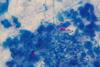
NewsWHO recommends new diagnostic tools to help end TB
On World TB Day, WHO is urging countries to accelerate action to end tuberculosis (TB) and expand access to lifesaving services by using new innovations such as diagnostic tests that can be used near the point-of-care and tongue swabs that can help detect the disease faster.
-
 News
NewsEuropean Region misses 1 in 5 TB cases: WHO Europe and ECDC publish new joint surveillance report
The European Region continues to fall short of regional and global End TB milestones on two fronts: a persistent detection challenge, with one in five TB cases going undiagnosed or unreported, and drug-resistance levels that remain far higher than in other regions.
-
 News
NewsGlobal commitment on display as countries negotiate key annex to the Pandemic Agreement
Member States of the World Health Organization (WHO) concluded a weeklong round of negotiations on draft annex for Pathogen Access and Benefit Sharing (PABS) – a key component of the WHO Pandemic Agreement.
-
 News
NewsMpox: recombinant virus with genomic elements of clades Ib and IIb
Recombination of monkeypox virus (MPXV) strains has been documented in recent months, with two cases of a recombinant strain comprising clade Ib and IIb MPXV reported, the World Health Organization says.
-
 News
NewsWHO calls for mental health to be central to neglected tropical disease care
A major new World Health Organization publication sets out, for the first time, a practical, evidence-based package of care to address the mental health impacts of neglected tropical diseases (NTDs) and the stigma that can prevent people from seeking care and participating fully in society.
-
 News
NewsSix years after COVID-19’s global alarm: Is the world better prepared for the next pandemic?
Six years ago, the Director-General of the World Health Organization sounded the highest global alarm available under international law at the time, declaring the outbreak of a new coronavirus disease. As we cross this six-year mark, WHO asks: Is the world better prepared for the next pandemic?
-
 News
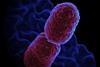
NewsRethinking global AMR strategy: the 2024 WHO Bacterial Priority Pathogens List from a One Health perspective
A new perspective examines the World Health Organization’s 2024 Bacterial Priority Pathogens List (WHO BPPL), highlighting its strengths as a research roadmap while identifying critical gaps for a truly holistic antimicrobial resistance (AMR) strategy.
-
 News
NewsInstitut Pasteur issues statement on U.S. administration’s attacks against biomedical research, global public health action and vaccination
For several months now, the current U.S. administration has consistently attacked and endeavored to weaken biomedical research and public health action in the United States and worldwide with unparalleled vigor, the Institut Pasteur has said in a new statement.
-
 News
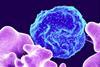
NewsNew tools saved a million lives from malaria last year but progress under threat as drug resistance rises
Wider use of new tools against malaria, including dual-ingredient nets and WHO-recommended vaccines helped to prevent an estimated 170 million cases and 1 million deaths in 2024, according to WHO’s annual World Malaria Report.
-
 News
NewsMeasles deaths down 88% since 2000, but cases surge
Global immunization efforts have led to an 88% drop in measles deaths between 2000 and 2024, according to a new report from the World Health Organization (WHO). Nearly 59 million lives have been saved by the measles vaccine since 2000.