
All Bacteria articles – Page 42
-
 News
Strategic changes in water treatment could prevent disease outbreaks
A breakthrough new study shows how strategic changes in water treatment effectively treated a deadly outbreak of Legionnaires’ Disease. For the first time, the study provides evidence of an outbreak being stopped by introducing disinfection to previously untreated groundwater.
-
 News
Bacteria frozen in ancient underground ice cave found to be resistant against 10 modern antibiotics
Researchers tested antibiotic resistance profiles of a bacterial strain that until recently was hidden in a 5,000-year-old layer of ice of an underground ice cave – and found it could be an opportunity for developing new strategies to prevent the rise of antibiotic resistance.
-
 News
Rhododendron-derived drugs now made by bacteria
Bioengineered E. coli bacteria can now produce a group of compounds with anticancer, anti-HIV, antidiabetic and anti-inflammatory activities. The compounds, orsellinic acid-derived meroterpenoids, are produced by Rhododendron species.
-
 News
Gut microbiome may be the link to gluten sensitivity without celiac disease
Researchers found that after antibiotic treatment, mice exposed to gluten had changes in the bacteria living in the gut. These shifts in bacteria types altered how they processed carbohydrates, fats and sugars which may influence how these nutrients are recognized by the immune system.
-
 News
Lactobacillus rhamnosus L34: Native probiotic that reduces inflammation in patients with chronic kidney disease
Researchers in Thailand have discovered a native probiotic strain, Lactobacillus rhamnosus L34, that helps reduce uremic toxins and inflammation-related cytokines in patients with chronic kidney disease (CKD) before dialysis.
-
 News
Newly discovered bacterium converts carbon dioxide into chemicals using electricity
A newly identified soil bacterium may help unlock cleaner ways to recycle carbon dioxide and produce valuable chemicals using electricity. The sulfate reducing bacterium Fundidesulfovibrio terrae possesses an unusual ability to both export and absorb electrical energy while converting carbon dioxide into acetate.
-
 News
Beneficial bacterium deployed to protect turfgrass from fungal foes
A novel strain of Bacillus subtilis helps a variety of plants resist soil‑borne diseases, retain moisture and develop stronger root‑to‑shoot growth. New findings on the effect of UD1022 on dollar spot disease suggests intriguing implications for manufacturing of biological treatments for the fungal disease.
-
 News
Rich medieval Danes bought graves ‘closer to God’ despite leprosy stigma, archaeologists find
Researchers used gravesites to investigate social exclusion based on illness, by studying whether people with leprosy or tuberculosis were kept out of the higher-status areas. Unexpectedly, they found that people who were ill with stigmatized diseases were buried just as prominently as their peers.
-
 News
Living material makes harmful UV light visible – Functional coating made from proteins and bacteria
Researchers have developed a T-shirt coating - using proteins and bacteria - that reliably detects contact with UV-A radiation, is bio‑based, and could open the door to a wide range of new materials that draw on the biological functions of cells.
-
 News
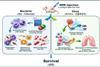
One strategy to block both drug-resistant bacteria and influenza: new broad-spectrum infection prevention approach validated
A new paper moves beyond traditional infection control strategies reliant on antibiotics and vaccines by introducing a new approach that primes the immune system before infection occurs.
-
 News
How the joint defence mechanism of two bacteria works
Back in 2021, researchers showed that bacteria of the genera Pseudomonas and Paenibacillus join forces to protect themselves from their predator, an amoeba. Now, they have been able to show exactly how this defense mechanism works.
-
 News
Eleven genetic variants affect the gut microbiome
In two new studies on 28,000 individuals, researchers are able to show that genetic variants in 11 regions of the human genome have a clear influence on which bacteria are in the gut and what they do there. Only two genetic regions were previously known.
-
 News
Basic research on Listeria bacteria leads to unique cancer therapy
After nearly 40 years of research on how Listeria bacteria manipulate our cells and battle our immune system to cause listeriosis, researchers have discovered a way to turn the bacteria into a potent booster of the immune system — and a potential weapon against cancer.
-
 News
Children with Crohn’s have distinct gut bacteria from kids with other digestive disorders
Researchers have found a “microbial signature” of pediatric Crohn’s disease that differs from the makeup of gut bacteria in children with other gastrointestinal conditions, with Crohn’s patients harboring more pro-inflammatory bacteria and less protective bacteria.
-
 News
What drives a mysterious sodium pump?
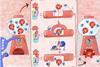
The enzyme Na⁺-NQR is a sodium pump that drives the respiration of many marine and pathogenic bacteria, powering the transportation of sodium ions across the membrane. A new study found that the sodium pump changes its structure in response to electron transfer inside the protein.
-
 News
Stiff gels slow germs: New study maps hydrogel properties that control bacterial growth
Scientists has found that firmer, lower water content hydrogels limit bacterial growth, with implications for designing antibacterial coatings, infection models, and advanced medical materials.
-
 News
Researchers develop new inhalable treatment for TB
Researchers have developed an inhalable, immunomodulating, biocompatible nanoparticle system encapsulating rifampin, one of the most important TB drugs.
-
 News
Root microbes could help oak trees adapt to drought
Microbes could help oak trees cope with environmental change. A study observing oaks growing in a natural woodland found that the trees’ above- and below-ground microbiomes were resilient to drought, nutrient scarcity, and exposure to pathogenic beetles and bacteria.
-
 News
Bacterial hitchhikers can give their hosts super strength
Molecular hitchhikers living within bacteria can make their hosts extra resistant to medical treatment by corralling them into tightly packed groups. The study introduces a previously unknown avenue through which bacterial infections can become more difficult to treat.
-
 News
Shorter treatment regimens are safe options for preventing active tuberculosis
A study comparing one- and three-month antibiotic treatments to prevent active tuberculosis (TB) finds that a high percentage of patients successfully completed both regimens and suffered few adverse side effects.