
All human papillomavirus articles
-
 News
NewsThe push to understand and treat HPV
Karl Munger is helping to lead an effort at Tufts University and Tufts Medicine that brings research scientists together with clinicians to save lives through improved HPV care and research.
-
 News
NewsResearchers call for increased screening for parasitic disease linked to HIV and cervical cancer risk
New research has highlighted the need to test millions of women and girls for female genital schistosomiasis (FGS), a neglected disease that can increase the risk of chronic illness, HIV and cervical cancer.
-
 News
NewsEnvironmental fungi found to alter vaginal mycobiome and cervical disease progression during dysbiosis
Scientists have demonstrated for the first time that environmental fungi actively interact with the vaginal bacteriome and mycobiome with likely implications for cervical disease progression.
-
 News
NewsTherapeutic vaccine shows mixed efficacy in preventing head and neck cancer recurrence
Researchers explore the effectivity of new therapeutic cancer vaccine in preventing the recurence of human papillomavirus triggered cancers.
-
 News
NewsTesting AI against public health’s existing tools
A new study found that AI chatbots made vaccine-hesitant parents more likely to say they would vaccinate their children against HPV, but did not outperform materials from government health agencies, whose effects also lasted longer.
-
 News
NewsSurvey highlights persistent uncertainty on STI vaccines
A nationally representative survey of empaneled adults finds that while most Americans understand how STIs spread, there are significant gaps in public knowledge about which infections can be prevented through vaccination.
-
 News
NewsHPV self-collection boosts cervical cancer screening rates
The first major U.S. rollout of HPV self-collection shows benefits for patients and providers, including fewer pelvic exams and better follow-up for HPV-positive results.
-
 News
NewsResearchers develop realistic ‘mock’ samples to speed cervical cancer test development
A team of bioengineers has developed a new way to create highly realistic “mock” patient samples that could help accelerate the development of faster, more accessible cervical cancer screening tests for low-resource settings.
-
 News
NewsNew kind of CRISPR could treat viral infection and cancer by shredding sick cells’ DNA
A new technology uses a relative of the CRISPR-Cas9 gene editing system to kill target cells. When activated by a specific, programmable genetic target, the Cas12a2 protein rips a cell’s genome apart. Researchers programmed Cas12a2 to kill virus-infected cells or cancer cells while leaving healthy cells untouched.
-
 News
NewsCervical cancer: A growing gap between high- and low-income countries
While high-income countries could eliminate cervical cancer by 2048 through human papillomavirus (HPV) vaccination and screening, the gap with lower-income countries is widening.
-
 News
NewsMethod for amplifying the full genome of human papillomavirus 16 uses overlapping extension polymerase chain reaction
Human papillomavirus (HPV) is a double-stranded circular DNA virus with a genome of approximately 7–8 kb. A new study aims to establish an overlapping extension polymerase chain reaction method for the amplification of the entire genome of HPV16.
-
 News
NewsImmunogenicity and safety of an Escherichia coli-produced 9-valent HPV vaccine in adolescents compared with young women
Based on new findings, the National Medical Products Administration of China has approved a two-dose immunization schedule for the domestically produced 9-valent HPV vaccine in girls aged 9 to 17 years.
-
 News
NewsScientists uncover how HPV-positive cancers hide from the immune system — and how to make them visible again
A new study solves a major mystery in cancer immunology by uncovering how HPV hides cancer cells from the immune system by using MARCHF8 to destroy MHC-I, which serves as a warning flag for the immune system.
-
 News
NewsTesting menstrual blood for HPV could be “robust alternative” to cervical screening
Testing menstrual blood for human papillomavirus (HPV) could be a “robust alternative or replacement” for current cervical cancer screening by a clinician, finds a study. The researchers say using menstrual blood for HPV testing is convenient and non-invasive.
-
 News
NewsStudy suggests far fewer cervical cancer screenings are needed for HPV‑vaccinated women
In a modeling study of women vaccinated against human papillomavirus (HPV), researchers found that cervical cancer screening could be done far less often than current recommendations without compromising health benefits.
-
 News
NewsNew hypothesis links HPV E6 and SARS‑CoV‑2 spike proteins to reduced p53 activity
Scientists have proposed a hypothesis suggesting that virally encoded proteins such as HPV-E6 or SARS-COV-2 Spike may cooperate in suppressing host defenses including tumor suppressor mechanisms involving p53.
-
 News
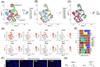
NewsSingle-cell insights reveal how HPV status reshapes penile tumor immunity
A study found that HPV-positive tumors in penile squamous cell carcinoma cases contained fewer proliferative macrophages and less exhausted CD8+ T cells, along with stronger chemokine signaling, revealing distinct immune remodeling associated with HPV infection.
-
 News
NewsStudent’s unexpected rise as a researcher leads to critical new insights into HPV
In two years, a student went from lab novice to medical diagnostics honors student whose study revealed how mutations in HPV proteins may increase cancer risk.
-
 News
NewsSome acute and chronic viral infections may increase the risk of cardiovascular disease
In the weeks following a bout of influenza or COVID, the risk of heart attack or stroke may rise dramatically, and chronic infections such as HIV may increase the long-term risk of serious cardiovascular disease events, according to new, independent research.
-
 News
NewsEurope backs first cervical cancer vaccination campaign in Angola
Angola’s first national vaccination campaign will immunise over 2 million girls aged 9–12 against cervical cancer. The national rollout began this week with coordinated delivery across schools, clinics, and communities in all 21 provinces.