
Latest news – Page 10
-
 News
NewsScientists develop world’s first modular co-culture platform for the one-pot production of rainbow-colored bacterial cellulose
The team engineered Komagataeibacter xylinus for bacterial cellulose synthesis and Escherichia coli for natural colorant overproduction. A co-culture of these engineered strains enabled the in situ coloration of bacterial cellulose.
-
 News
NewsLivestock manure linked to the rapid spread of hidden antibiotic resistance threats in farmland soils
Scientists have uncovered how even “low-risk” organic fertilizers like dried poultry manure can inadvertently drive a dramatic surge in dangerous antibiotic resistance genes, once released into vegetable plots used for food crops.
-
 News
NewsMaternal health programme cuts infection deaths by 32%
A landmark multi-country clinical trial has shown that a structured, sustainable approach to infection prevention and treatment can save women’s lives, cutting severe maternal infections and deaths by about one-third (32%) compared to usual care.
-
 News
NewsResearchers diagnose disease with a drop of blood, a microscope and AI
Scientists have developed an automated, high-throughput system that relies on imaging droplets of biofluids for disease diagnosis in an attempt to reduce the number of consumables and equipment needed for biomedical testing.
-
 News
NewsScientists use computer model to improve hospitals’ ability to limit spread of drug-resistant infections
The computer model improves on traditional methods like contact tracing by inferring asymptomatic carriers in the spread of antibiotic-resistant infections.
-
 News
NewsDrinking water people believe to be safe and clean often contain potentially dangerous bacteria
A study in Guatemala found the sources of drinking water people believe to be safe and clean often contain potentially dangerous bacteria. Bottled water sold in large refillable jugs was the most frequently contaminated with coliform bacteria – an indicator of fecal contamination.
-
 News
NewsWorld’s largest metabolomic study completed, paving way for predictive medicine
UK Biobank has today released the final set of data on nearly 250 metabolites in half a million volunteers. This completes the world’s largest ever metabolomic study, which will help drive treatment strategies for neurological conditions, heart disease and cancer.
-
 News
NewsSmart toilet designs in Cambodia held promise, but a key piece was missing
A smart toilet design introduced in rural Cambodia was supposed to change lives—keeping families safe and protecting the environment. However, while households reported that they liked the new system, a crucial piece was missing: using it correctly.
-
 News
NewsStudy unveils structure, identification and characterization of the RibD-enolase complex in Francisella
A study aiming to identify anti-tularemia drug targets determined the atomic structure and identified its components of the native RibD-enolase protein complex in Francisella novicida.
-
 News
NewsNew nanogel technology destroys drug-resistant bacteria in hours
A novel technology shows over 99.9% effectiveness against Pseudomonas aeruginosa (P. aeruginosa). It centres on a heteromultivalent nanogel: a flexible particle made by crosslinking polymers and adding sugar residues (galactose and fucose) alongside antimicrobial peptides.
-
 News
NewsImpact of pasteurization on dairy calves’ gut microbiota: A study of milk feeding and early microbial colonization
A new study highlights the impact of pasteurization on microbial diversity in dairy calves, underlining the importance of balancing pathogen safety and microbial health. It suggests that while pasteurization prevents pathogen transmission, it also reduces beneficial microbial transfer.
-
 News
NewsGenetically engineered fungi are protein packed, sustainable, and taste similar to meat
Researchers used CRISPR to increase a fungus’s production efficiency and cut its production-related environmental impact by as much as 61%—all without adding any foreign DNA. The genetically tweaked fungus tastes like meat and is easier to digest than its naturally occurring counterpart.
-
 News
NewsResearchers boost biosynthetic capacity in yeast through extended lifespan
Scientists have demonstrated that combining lifespan engineering strategies with metabolic pathway optimization in Saccharomyces cerevisiae enables highly efficient sclareol biosynthesis, marking an advance in improving microbial production through lifespan engineering.
-
 News
NewsBacteria ‘pills’ could detect gut diseases — without the endoscope
Researchers report that they’ve developed a sensor made of tiny microspheres packed with blood-sensing bacteria that detect markers of gastrointestinal disease. Taken orally, the miniature “pills” also contain magnetic particles that make them easy to collect from stool. Excreted from mouse models with colitis, the bacterial sensor detected gastrointestinal bleeding within minutes.
-
 News
NewsGSK and Fleming Initiative scientists unite to target AMR with advanced AI
GSK and the Fleming Initiative have announced six major new research programmes, called ‘Grand Challenges’ which harness some of the best scientific expertise and the latest technologies, including advanced AI, to find new ways to slow the progress of antimicrobial resistance (AMR).
-
 News
NewsMachine learning tool can scan for signs of extraterrestrial life
A machine learning framework can distinguish molecules made by biological processes from those formed through non-biological processes and could be used to analyze samples returned by current and future planetary missions.
-
 News
NewsProbiotic bifidobacterium may boost cancer treatment and suppress tumors
A new review explores how bifidobacterium, a common probiotic found in the gut, may contribute to cancer prevention and therapy. The authors highlight the growing importance of gut health in cancer treatment and shed light on how bifidobacterium could complement standard cancer therapies.
-
 News
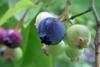
NewsFlower to fruit: tracking the changing fungal community on blueberry plants
A study identifies how fungal diversity changes over time and across tissue types in highbush blueberry, revealing dynamic transitions in the phyllosphere from buds to ripe fruits. Early-season buds and flowers harbor the highest fungal diversity, while unripe green fruits display the lowest.
-
 News
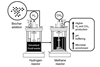
NewsBiochar boosts clean energy output from food waste in novel two-stage digestion system
A new study from researchers at the University of Western Australia and Universitas Brawijaya has found that adding biochar to advanced food waste recycling systems can significantly increase the clean energy yields of hydrogen and methane. This breakthrough offers promising strategies for municipalities and industries aiming to turn food scraps ...
-
 News
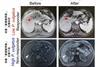
NewsGut bacterium impairs liver cancer treatment, inducing immunotherapy resistance
Researchers discovered that transplanting the gut bacterium Phocaeicola vulgatus into mouse models of liver cancer induced immunotherapy resistance. The finding is consistent with clinical observations in patients, showing that patients with low levels of P. vulgatus responded better to treatment.