
All microplastics articles
-
 News
NewsMicroplastics may act as pollutant shuttles, carrying chemicals, pathogens and antibiotic resistance genes
A new review reveals how microplastics transport multiple pollutants across ecosystems and proposes a framework for identifying when these vector effects become serious ecological threats.
-
 News
NewsRecycling food waste would bring huge benefits, but microplastics a challenge
A first nationwide look shows diversion of U.S. food waste from landfills could reduce related climate impacts by 89% and nutrient pollution by 50%, researchers say.
-
 News
NewsArctic microplastics: A ticking time bomb for climate feedback loops
A new study systematically maps the major transport pathways—atmospheric, oceanic, and local—and details how microplastics infiltrate Arctic food webs and interact with physical and biogeochemical processes that govern regional climate.
-
 News
NewsEffects of polystyrene nanoplastics and organophosphorus flame retardants on salamander gut-liver axis
New research reveals the effects of polystyrene nanoplastic and the organophosphorus flame retardant exposure on the gut-liver axis of salamanders.
-
 News
NewsThe impact of microplastics on ocean carbon uptake
Scientists who collected phytoplankton data from various climate zones around the world determined the extent to which growth is limited by microplastics. They have then used this data to calculate the average impact that a certain concentration of microplastics will have on algae in different regions or climate zones, as well as on a global scale.
-
 News
NewsNameko mucilage: An eco-friendly solution for microplastic pollution
Researchers use natural mucilage from nameko mushrooms for the removal of micro- and nano-plastics from water. The mucilage is rich in polysaccharides, particularly pectin—a naturally occurring plant-based compound—which is known for its particle-binding properties.
-
 News
NewsProlonged exposure to microplastics disrupts the metabolism of Mediterranean octocorals
Prolonged exposure to microplastics can disrupt vital physiological processes in gorgonians, such as respiration. Although these pollutants do not cause visible damage to tissues and cells, their effects could have an ecological impact on these organisms that structure the seabed.
-
 News
NewsHidden viral networks in soil microplastics may shape the future of sustainable agriculture
A new scientific review highlights the complex interactions between soil microbes and viruses that occur on the surface of microplastic particles. The study reveals that these microscopic relationships may influence soil health, ecosystem recovery, and the long term sustainability of agriculture.
-
 News
NewsTiny plastics, green solutions: How algae could help clean polluted waters
A new review examines how algae interact with microplastics in aquatic systems. Importantly, it highlights how their biological interactions could be harnessed to mitigate microplastic pollution, offering new perspectives for sustainable aquatic environmental management.
-
 News
NewsMicroplastics in soil may reshape microbial genes and threaten ecosystem stability
A new review highlights how microscopic plastic particles accumulating in soils can alter microbial genes that control essential ecosystem functions, potentially affecting food production, climate processes, and environmental health.
-
 News
NewsLab-grown algae removes microplastics from water
Scientists have applied a revolutionary strain of algae toward capturing and removing harmful microplastics from polluted water. The aim is to repurpose the collected microplastics into safe, bioplastic products such as composite plastic films.
-
 News
NewsPlastic particles can increase intestinal inflammation
Researchers investigating a possible link between the rising number of people with chronic inflammatory bowel disease and the increasing exposure to micro- and nanoplastics show that plastic particles influence the immune cells and the intestinal microbiome and can thus increase inflammation.
-
 News
NewsHow do biodegradable plastic films affect microplastics and soil microorganisms in paddy fields?
A study shows that biodegradable plastic films not only have the yield-preserving advantages of traditional plastic films, but also reduce the environmental risks of long-term accumulation of microplastics through synergistic effect with soil microorganisms.
-
 News
NewsBlack carbon from wheat straw burning shown to curb antibiotic resistance spread in farmlands with plastic mulch residues
A new study reveals that black carbon formed during wheat straw burning can significantly reduce the spread of antibiotic resistance genes in soil and soybean crops, offering a promising strategy for safer and more sustainable farming in regions burdened by plastic mulch debris.
-
 News
NewsMicroplastics disrupt gut microbiome and fermentation in farm animals
Microplastics, tiny plastic particles pervasive in agricultural environments, interact with and disrupt the microbial ecosystem in the rumen – the first stomach chamber of cattle, reveals an international study.
-
 News
NewsMicroplastics pose a human health risk in more ways than one
A new study shows that microplastics in the natural environment are colonised by pathogenic and antimicrobial resistant bacteria. The study team calls for urgent action for waste management and strongly recommends wearing gloves when taking part in beach cleans.
-
 News
NewsEmerging pollutants threaten efficiency of wastewater treatment: New review highlights urgent research needs
A new scientific review has shed light on how emerging pollutants commonly found in wastewater are disrupting biological phosphorus removal processes, posing risks to water quality and ecological health. The study examines how pharmaceuticals, microplastics, and industrial chemicals interfere with the key microorganisms responsible for phosphorus removal in wastewater treatment plants.
-
 News
NewsStudy unveils effects of microplastics on the Nu River sediment microbial community and greenhouse gas emissions:
Microplastics (MPs) in river ecosystems significantly affect sediment microbial communities and biogeochemical cycling. This study compared the effects of conventional polyvinyl chloride (PVC) and biodegradable polylactic acid (PLA) on sediment microbial communities and GHG emissions.
-
 News
NewsMicroplastics found to change gut microbiome in first human-sample study
New research presented today at UEG Week 2025 shows that microplastics can alter the human gut microbiome, with some changes resembling patterns linked to depression and colorectal cancer.
-
 News
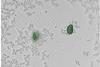
NewsBacteria that ‘shine a light’ on microplastic pollution
Researchers have developed a living sensor that attaches to plastic and produces green fluorescence. In an initial test on real-world water samples, the biosensor could easily detect environmentally relevant levels of microplastics.