
All Opinion articles
View all stories of the same content type.
-
 Opinion
How Puerto Rico’s first microbiome research center can reshape global science collaboration
AMI’s Global Ambassador for the Americas, Dr. Filipa Godoy-Vitorino, Chair of the Department of Microbiology at the University of Puerto Rico, reveals why she is spearheading the planned Puerto Rico Center for Microbiome Sciences (PR-CMS)—the first of its kind in the region.
-
 Opinion
When do human-driven changes to wildlife microbiomes become a One Health concern?
Animals live in close partnership with communities of microbes that support digestion, immune development, and defence against pathogens, but human activities are changing those partnerships, says Katherine M. Lagerstrom.
-
 Opinion
Whose culture is it? Rethinking the study of traditional fermented food microbiomes
When microbiologists study traditional fermented foods, are we simply documenting natural biodiversity, or are we also accessing a form of cultural heritage, asks Tara Spencer-Drakes, PhD.
-
 Opinion
Federal research rule changes could reshape applied microbiology in America
On June 5, 2026, the Office of Management and Budget (OMB) proposed sweeping changes to federal grant administration that would fundamentally alter how applied microbiology research and development is funded and conducted in America.
-
 Opinion
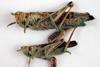
Fungi that inspired The Last of Us may hold the key to a pesticide-free agriculture
They may be the stuff of our nightmares, but Aditya Singh Ranout reveals how invisible allies underneath our feet in the form of entomopathogenic fungi are transforming agriculture - and why these fascinating microbes may hold the key to a pesticide-free agriculture.
-
 Opinion
Why cruise ships remain vulnerable to viral outbreaks - and how new technologies could help
A dream holiday can quickly become a public health challenge when thousands of people share the same dining rooms, elevators and living spaces. Recent viral outbreaks on cruise ships have shown just how vulnerable these floating cities remain to infectious diseases.
-
 Opinion
Biopiracy in microbiology: Who owns nature’s resources?
A growing global debate over “biopiracy” is raising urgent questions for microbiologists, researchers, industry and policymakers alike — and Applied Microbiology International is calling on members to help shape the conversation. Biopiracy refers to the unauthorised or unethical use of biological materials — including seeds, plants, ...
-
 Opinion
Building sector infrastructure: The MLSFF model
Members of the MLSFF Steering Committee explores the sustainability problem that plagues equity initiatives in STEM - and the solutions presented by the infrastructure partnership that delivers Europe’s only conference for minoritised life scientists.
-
 Opinion
Fertile ground: The rise of soil viral ecology
Soil viral ecology has been one of the most neglected areas of microbiology, but technological advances are opening up fertile new frontiers, says AMI Healthy Land Advisory Group member and CNRS researcher Christina Hazard.
-
 Opinion
Reversing the threat: How to stop measles from spreading again
As the Global Virus Network issues a stark warning over the significant resurgence of measles in the US and globally, William J. Moss, Sten H. Vermund, and Maggie L. Bartlett set out what needs to be done if the preventable harms of the current surge are to be reversed.
-
 Opinion
Why chromogenic media matters when testing for invasive pathogens: Could the cheapest plate be an expensive decision?
Chris Armstrong, President of Microbiology, Thermo Fisher Scientific, argues that laboratories should stop judging fungal culture media on unit price alone.
-
 Opinion
Disease X and the limits of voluntary multilateralism
Disease X is less a biological uncertainty than a governance stress test. The real question is whether the WHO Pandemic Agreement has corrected the failures exposed during COVID-19.
-
 Opinion
Listeria: the inconvenient truth that shaped our industry
Director General of the Chilled Food Association, Karin Goodburn MBE, who sits on AMI’s Food Security Advisory Group, reveals why the publication of new Listeria guidance for the UK food industry is regarded as a landmark moment.
-
 Opinion
We couldn’t get people interested in science - until we started speaking their language
In 2020, Puerto Rico faced a misinformation crisis. Melanie Ortiz Alvarez De La Campa reveals how five STEM undergraduates created a sci-comm organization that helped pass legislation, educated thousands, and created an inclusive database of Caribbean scientists.
-
 Opinion
The politics behind the global divide in bacteriophage therapy
The therapeutic potential of bacteriophages (or ‘phages’) has been widely dismissed for decades in the West, despite being regularly used to treat patients worldwide in the early and mid-20th century. In an age rife with disinformation, can the true potential of clinical phage technology be communicated to a public already uneasy about scientific intervention?
-
 Opinion
Pride in Microbiology Network: the road so far
Bruno Francesco Rodrigues de Oliveira, a founding member of the Pride in Microbiology Network, reveals how it has developed since it was launched three years ago - and what needs to happen next.
-
 Opinion
Could livestock-originated probiotics replace synthetic antibiotics for livestock?
In many developing countries, the use of antibiotics in both humans and animals is often indiscriminate and poorly regulated. Could livestock-originated probiotics be a suitable replacement?
-
 Opinion
Key lessons from the saMBA studies on human gut microbiome diversity
A recent study published in Nature Communications introduced the South American MicroBiome Archive (saMBA). The study offers several critical insights that deserve careful consideration.
-
 Opinion
Sustainability starts at the bench: microbiologists leading by example
The scale of the environmental crisis demands that sustainability move from the margins to the centre of every discipline.
-
 Opinion
Understanding the gut microbiome: are we missing essential information?
Undoubtedly, the gut microbiome is key to understanding the impact of diets and lifestyles on health. However, despite decades of scientific advancements, the connection between gut microbiome shifts and perceived health benefits remains unclear.