
They may be the stuff of our nightmares, but Aditya Singh Ranout reveals how invisible allies underneath our feet in the form of entomopathogenic fungi are transforming agriculture - and why these fascinating microbes may hold the key to a pesticide-free agriculture.
Every hectare of healthy farmland has a more densely populated world of microbes than any city in the world. A single gram of fertile soil has up to one million bacterial cells, kilometers of fungal hyphae, thousands of nematodes, and a surprising diversity of protozoa, archaea, and viruses. These creatures together form the soil microbiome, which drives nutrient cycling, plant immunity, and ecosystem resilience. Historically, agricultural practices largely ignored this invisible community. Today, it stands at the center of one of the most exciting revolutions in food science.
The convergence of genomics, precision farming, and mounting pressure to reduce synthetic chemical inputs has forced agronomists and ecologists to look downward. What they have found is not merely interesting—it is transformative.
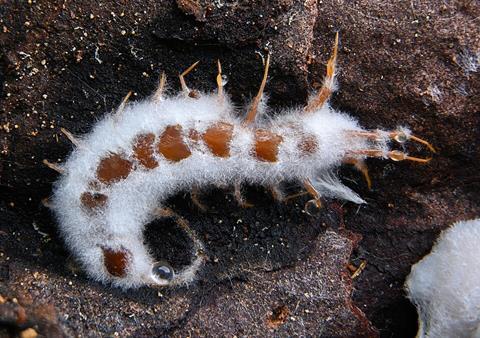
Microbes do not simply decompose organic matter. They fix atmospheric nitrogen, solubilize locked phosphorus, suppress soil-borne pathogens, prime plant immune systems, and most strikingly kill insect and mite pests with lethal precision. Among the most remarkable members of this microbial arsenal are entomopathogenic fungi (EPF) which have evolved over hundreds of millions of years to parasitize arthropod hosts and famously inspired The Last of Us.
Nature’s insecticide
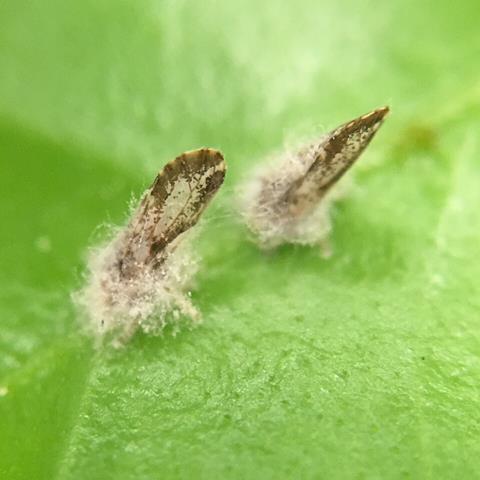
EPF occupy a unique niche in the web of biological control. Unlike bacterial insecticides, EPF infect their hosts through direct cuticular penetration. They do not need to be ingested by hosts. A spore settling on the exoskeleton of whitefly, aphid or caterpillar will geminate, penetrate the cuticle and colonize the haemocoel (body cavity), ultimately killing the host through a combination of nutrient depletion, toxin production, and physical disruption of organs.
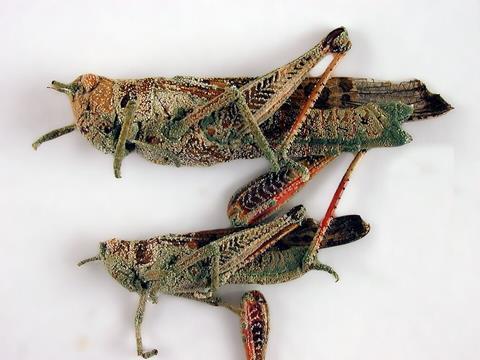
The evolutionary relationship between EPF and their arthropod hosts is ancient. The fossil evidence suggests the relationship goes at least 50 million years back. Some estimates show the origin of the interaction in the Cretaceous period, more than 100 million years ago. Over this time, the fungi have developed a sophisticated virulence mechanism, and insects have evolved counter-defenses. This co-evolutionary history makes EPF not just crude poisons but finely tuned biological weapons.
Key species and their agricultural applications
To date, more than 700 species of EPF have been identified as possessing efficacy against a wide range of agricultural and medical pests. Some of these species have gained intense scientific and industrial attention. These species include Beauveria bassiana, Metarhizium anisopliae, Lecanicillium lecanii, Tolypocladium spp and Isaria fumosorosea.
Each EPF holds a different ecological niche and targets a diverse range of pest species. These properties make them complementary tools in an integrated pest management (IPM) strategy.
Mechanisms beyond direct killing
Recently, EPF have been discovered to possess endophytic potential beyond their historical identity as soil-dwelling insect pathogens. They holds the ability to colonize plant tissues without causing disease to the host. Strains of B. bassiana or M. anisopliae are reported to colonize plant roots or leaves to provide remarkable benefits to the plant’s overall fitness.
These endophytically colonized plants show enhanced resistance to phloem-feeding insects and also improve immunity against abiotic stresses. This discovery of endophytic behavior has rewired our understanding regarding the EPFs’ role in the ecosystem. These organisms are not just insect killers but are the complex mutualists of plants. The agricultural implications of EPFs are profound.
What we once thought of as insect pathogens, we now recognize as multifunctional symbionts, as protectors, root colonizers, and immune primers for the plants they inhabit.
Formulation, delivery and commercialization
In entomopathogenic fungal research, the translation of laboratory leads into field-effective products has always been the great bottleneck. These organisms are sensitive to environmental conditions and require adequately humid conditions for effective efficacy against insect and mite pests. The spores of EPF showed susceptibility to UV degradation and early formulations of EPF failed not because the fungi were ineffective, but because they are unable to survive the hostile field conditions.
Modern formulation science has the capability of addressing these challenges. Oil-dispersion formulations protect conidia from UV radiation and extend their viability in field conditions. Microencapsulation using biodegradable polymers allows slow release and prolongs efficacy of EPF. For soil applications, wettable powder and granular formulations are generally considered as a better option to manage root pests. Meanwhile, seed coating technologies also allow direct inoculation of EPF into the plant’s microenvironment at germination stage when the seedlings are most vulnerable.
MICROBIOLOGY ON TAP: Get full access to all The Microbiologist articles from just £2.17 a month
Regulatory frameworks vary across jurisdictions but are increasingly evolving in a favorable direction. The European Union’s Farm to Fork strategy targets a 50% reduction in chemical pesticide use by 2030. Moreover, in India, the government’s PM-PRANAM programme makes a push toward zero-budget natural farming which has stimulated interest in microbial biocontrol agents.
Integration with farming systems
EPF are the most effective component of IPM systems. Their efficacy can be enhanced by combining with habitat management strategies that support the natural predator populations (ladybirds, parasitic wasps, spiders). The reduced tillage regime preserves the fungal communities present in soil. Additionally, organic matter additions sustain the broader soil microbiome, and strategic deployment of pheromone traps reduce pest populations where fungal infection can further maintain the balance.
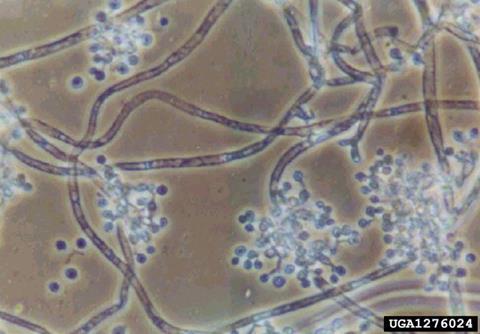
Compatibility of EPF with other biocontrol agents is an important consideration in sustainable pest management. Research has shown that B. bassiana and Bacillus thuringiensis can act synergistically against certain lepidopteran pests. In conjugation, B. bassiana weakens the immune system of the pest whereas the toxins of B. thuringiensis finally finish the job. Similarly, EPF in association with entomopathogenic nematodes have also shown enhanced efficacy against soil pests such as black vine weevil larvae, fall armyworm, and white grubs.
Challenges, frontiers, and the road ahead
Although EPF have shown promising results in managing the pest populations, significant challenges still exist. Among these challenges, strain selection is crucial as different isolates of same species show variation in virulence, temperature tolerance, and host range. Thus, the pursuit of elite strains that have broad spectrum, environmental robustness and strong endophytic potential is an active area of research. Advancement in comparative genomics begining with the identification of specific genes leading to virulence, environmental tolerance, and plant colonization signposts the way for marker-assisted strain selection.
Furthermore, climate change makes pest management more complex. The rise in temperature and shift in precipitation alter the geographic ranges of both pest species and their counterpart fungi. Simultaneously, humid regions may become more suitable for entomopathogenic fungal activity, while dry regions may face declines in effectiveness. Therefore, development of climate resilient fungal biocontrol agents through strain diversification, improved formulations, and adaptive management frameworks will be essential.
Microbial revolution
The microbial revolution in agriculture sector requires an awareness and responsibility among farmers, policymakers, and industrialists about the delicate microbiome of soil. Soil is not merely a substrate for the growth of crops - instead it is a living ecosystem having a diverse range of interdependent microorganisms. Soil health is the determining factor that affects agricultural productivity. EPF are one vivid expression of soil ecosystems that can offer precision and sustainability to the living world of soil.
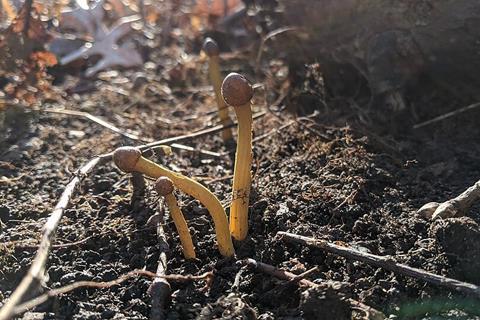
The soil microbiome beneath our feet is not a spectator in the drama of food production. Instead, these microbes are active partners, recyclers, and protectors of plant communities. Among these soil microbes, EPF hold a special position.
These soil beneficial allies’ evolution over millions of years make them precise biocontrol agents. They will probably become common crop protection tools besides specialized biopesticides within the next 10 years. EPF-based products are getting better with advancements in delivery methods and all that is left is the drive to incorporate these microscopic organisms into agricultural systems.
Aditya Singh Ranout is a doctoral student at the Academy of Scientific and Innovative Research, CSIR-IHBT, India, and a member of AMI’s Food Security Advisory Group.
Topics
- Advisory Group
- Agriculture
- Applied Microbiology International
- arthropods
- Asia & Oceania
- Bacillus thuringiensis
- Beauveria bassiana
- biocontrol agents
- Community
- endophytic fungi
- entomopathogenic fungi
- Fungi
- Healthy Land
- Isaria fumosorosea
- Lecanicillium lecanii
- Metarhizium anisopliae
- Microbes of the Earth
- parasites
- Pesticides
- phloem-feeding insects
- Soil & Plant Science
- sucking insects
- symbiosis
- Veterinary Medicine & Zoonoses








.jpg)

No comments yet