
All Community articles
-
 News
Hidden microbial ecosystems of leatherback turtles offer new insights for Caribbean marine conservation
Scientists studying leatherback sea turtles in Puerto Rico have uncovered distinct microbial communities on the animals, their eggs, and the sand surrounding their nests.
-
 News
Horizon Awards 2026: Professor James Ebdon named as winner of John Snow Prize
Environmental microbiologist Professor James Ebdon, from the University of Brighton, UK, has been named as the winner of the John Snow Public Health Innovation Prize, which recognises outstanding achievements in applied microbiology that deliver measurable improvements in public health and environmental health outcomes.
-
 News
AMI members call for microbiome-focused approach to EU biotechnology regulation
Members of Applied Microbiology International (AMI) have urged the European Commission to put microbial communities at the heart of environmental risk assessments for genetically modified microorganisms, as part of its response to the EU Biotech Act consultation.
-
 News
Deep-sea corals in fossil fuel-producing region have distinct microbial communities
Researchers who carried out the first comprehensive study of the microbial communities living in symbiosis with deep-sea corals in one of Brazil’s most active oil- and gas-producing regions discovered that each species hosts a distinct, and sometimes highly specialised, community of microorganisms.
-
 News
Horizon Awards 2026: Professor Marciane Magnani named as winner of Basil Jarvis Prize
Professor Marciane Magnani, Professor of Food Science at the Federal University of Paraíba (UFPB), Brazil, has been named as the winner of the Basil Jarvis Food Security & Innovation Award.
-
 News
Review probes marine host-microbe symbioses - and what they mean for conservation
A new review casts new light on what the ocean can tell us about the partnership between animals and microbes. Almost every marine organism, from corals and sponges to squid, fish, deep-sea mussels and seagrasses, lives as a holobiont: a host together with the bacteria, archaea, microscopic eukaryotes and viruses it carries.
-
 News
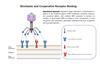
New hypothesis drills down into the contributions of phage receptor-binding proteins in recognising a bacterial cell
A new hypothesis reveals how different receptor-binding proteins may make distinct contributions when a bacteriophage recognizes a bacterial cell.
-
 News
Horizon Awards 2026: Professor Chris Greening named as winner of WH Pierce Prize
Professor Chris Greening, Professor of Microbiology at Monash University in Australia, has been named as the winner of the WH Pierce Global Impact in Microbiology Prize.
-
 News
Winners of Applied Microbiology International Horizon Awards 2026 announced
The winners of the Applied Microbiology International Horizon Awards 2026 have been announced. These awards celebrate the brightest minds in the field and promote the research, group, projects, products and individuals who continue to help shape the future of applied microbiology.
-
 News
Free webinar: How living conditions can shape microbiomes
A fascinating free webinar will reveal how microbiomes are not based only on biology - but how we live. ‘Microbiomes, Inequity, and Structural Conditions: Rethinking What Shapes Health’ underlines that microbiomes don’t exist in isolation — they reflect the systems we live in.
-
 News
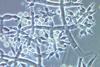
Fungi that colonise human faeces: first scientific study lays the groundwork for myco-sanitation
Filamentous fungi can colonise fresh human faeces, and the choice of fungal species shapes how the material changes, according to a new study. Depending on the species, the fungi accelerated degradation, reduced faecal indicator bacteria, suppressed faecal odour or changed the appearance of the material.
-
 News
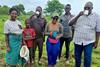
Wine-like terroir: Influence of wild plants results in distinctive microbial and flavour signatures in Munkoyo
Wild plants traditionally used as natural starter cultures for fermentation of Munkoyo, a traditional non/very low-alcoholic fermented cereal beverage consumed in parts of Africa, can influence not only the initiation of fermentation but also the microbial communities and flavour characteristics of the final beverage.
-
 Careers
Food and innovation: Reflections from FOODMicro 2026
AMI Food Security Advisory Group member Professor Marciane Magnani, a Full Professor of Food Science at the Federal University of Paraíba (UFPB), Brazil, reflects on her experiences of FOODMICRO 2026 in Slovenia.
-
 News
AMI celebrates accreditation recognising strong EDI culture
Applied Microbiology International is celebrating after being awarded Investors in Diversity’s Silver for Charities accreditation - the highest level of accreditation available for small charities under the small charities scheme.
-
 News
Scientists use bacteria to produce muconic acid from plants
Researchers have engineered a soil bacterium to synthesize muconic acid, a valuable chemical in the manufacturing industry, from plant matter.
-
 News
Soil Stars join forces to develop ambitious challenges to tackle global soil degradation
Scientists, farmers, policymakers, business leaders, investors and leading voices from science and culture have joined forces to develop ambitious new challenges designed to harness the power of soil microbes to tackle global soil degradation.
-
 News
New dynamic vision of the rhizosphere moves beyond the drive to just add more inputs
A new Perspective argues the case for an expanded view of the rhizosphere as a dynamic system, paving the way for a vision of sustainable soil management that moves beyond simply adding more fertilizers, microbial products, or other inputs.
-
 News
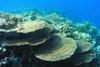
Corals show ‘vaccine-like’ responses after pathogen exposure
To boost the resilience of corals in the face of increasing sea temperatures and the spread of disease, researchers have found that controlled, low-level exposure to dead pathogenic cells can help corals resist future infection.
-
 Careers
Horizon Award winners one year on: What are they up to?
The nominations for the Horizon Awards are in - and the judges are making their decisions. While we await the big announcement, we’ve been catching up with the superstars who won in 2025.
-
 Careers
Meet the Global Ambassadors: our Q&A with Sanjib Bhakta
The Microbiologist gets to know our Global Ambassador for the UK, Professor Sanjib Bhakta who is Professor of Molecular Microbiology and Biochemistry at Birkbeck, University of London.