
When microbiologists study traditional fermented foods, are we simply documenting natural biodiversity, or are we also accessing a form of cultural heritage, asks Tara Spencer-Drakes, PhD.
Fermented foods are natural repositories of diverse microbial species that transform raw ingredients into food products with distinctive flavours, textures and smells. They have formed a cornerstone of the human diet for thousands of years, with evidence pointing to barley beer fermentation in ancient Mesopotamia around 3000 BCE.
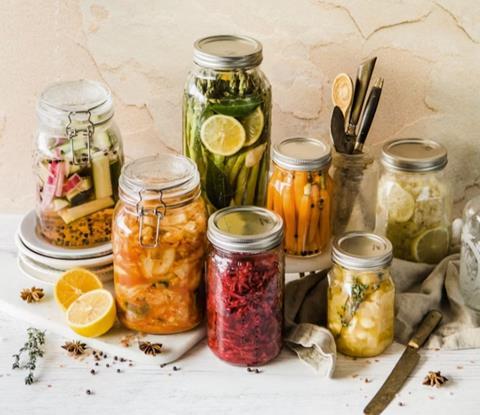
Across generations, inherited cultural practices and community knowledge have maintained diverse fermented foods. Fermented foods and beverages are therefore products of two types of culture: microbial and human.
Yet, in the laboratory, we treat fermented food systems primarily as objects of molecular characterisation, employing them to discover useful metabolites, and unearth foundational principles of microbial ecology and evolution. This raises an uncomfortable question: when microbiologists study traditional fermented foods, are we simply documenting natural biodiversity, or are we also accessing a form of cultural heritage? What is lost when microbial culture is extricated from human culture at the laboratory bench?
How we answer these questions could open a new arena for fermented food microbiome research – one in which studies move beyond extractive sampling towards cross-disciplinary research conducted in meaningful partnership with the communities whose knowledge made that microbial diversity possible.
Molecular view
This molecular view of fermented foods has been extraordinarily productive. Fermented foods offer naturally assembled microbial communities that are sufficiently complex to reveal fundamental ecological processes, yet simple enough to reconstruct and manipulate under laboratory conditions.
Cheese rind communities, for example, have been employed to investigate ecological succession, and pairwise and higher-order microbial interactions within communities. Studies have shown that fungal hyphae facilitate bacterial dispersal, that fungal metabolites can alter bacterial fitness, and that phage-resistance mutations can change how bacteria interact with neighbouring fungi.
Similarly, reconstructed bacterial-yeast consortia from kombucha have been used to determine how community composition affected volatile metabolites and sensory characteristics. Multi-omics approaches have also connected community members with metabolites involved in flavour and product quality, while large-scale metagenomics has uncovered extensive genomic diversity within food-associated microorganisms. Fermented foods are therefore accessible experimental ecosystems for investigating fundamental ecological processes.
Shaped over generations
Simultaneously, traditional fermented food microbiomes were not assembled by chance. They were shaped, often without knowledge of the underlying microbiology, over generations of deliberate and repeated methods, including ingredient selection, reuse of specific vessels and tools, back-slopping, starter maintenance, and timing. Traditional preparation methods have been intentionally adapted to local environmental and seasonal conditions.
Sensory judgment is also foundational to ferment production long before it could be quantified or described in molecular terms. Although the expertise required to consistently produce high-quality ferments may not be expressed in the language of microbial succession or metabolism, it nevertheless represents a sophisticated understanding of how to sustain a functioning ecosystem.
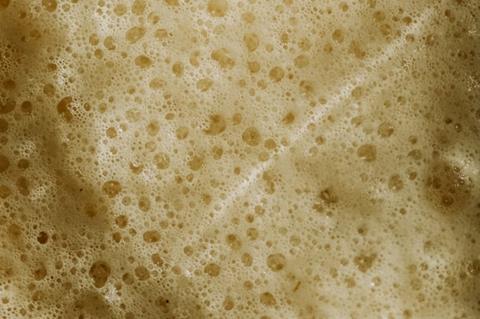
Therefore, a strain isolated from a traditional food may be considered a novel biological discovery in the laboratory, but the conditions that selected, preserved and propagated it were created through generations of traditional human practice. In other words, the laboratory may identify the organism, but the community maintained the ecosystem that made its discovery possible.
Shared microbes
This history becomes especially important when food-associated microbes acquire scientific or commercial value. Open-science principles encourage the sharing of microbial isolates and sequence data because broad access accelerates discovery and may generate safer foods, improved starter cultures, probiotics or useful enzymes.
But does openness automatically guarantee fairness? An openly shared microorganism collected from a traditional food may eventually appear in a commercial product, while the community whose practices sustained it receives little recognition or benefit.
Microorganisms themselves may not belong to any one group of individuals; yet, the knowledge that guided researchers towards them is rarely culturally neutral.
Research must therefore consider the following questions: Who should be credited when a commercially useful strain is isolated from a traditional food? Should obligations to the community persist after sampling ends? Does scientific publication alone constitute an adequate return?
Starter cultures and procedures
A similar tension arises from standardising methods and isolates in fermentation. By translating traditional fermentation processes into controlled laboratory systems, scientists have developed defined starter cultures and standardised procedures that improve food safety, shelf life, quality and consistency.
However, uniformity may come at the cost of locally adapted microorganisms, and household and region-specific practices that contribute distinctive flavours. Thus, microbial diversity can itself be considered a product of cultural practices, and may be compromised by standardisation.
Certainly, traditional variation should not be romanticised, particularly where genuine safety risks exist. However, it should not automatically be dismissed as inferior or unscientific.
Our challenge as responsible scientists, then, is to improve safety and reliability without erasing the microbial diversity and cultural practices that give traditional fermented foods their identity.
Sharpening science
Separating microbes from cultural context is more than an ethical omission, given that tradition can sharpen science itself. A frozen isolate or metagenomic sequence cannot fully explain common fermentation challenges, including why seasons impact fermentation, why one vessel consistently produces a better product or how producers recognise failure before it becomes visible to non-experts.
MICROBIOLOGY NEWS: Register with The Microbiologist for more free articles
Local knowledge may reveal intentional methodology variations and which environmental factors have shaped the fermentation over time. Cultural context may therefore generate better hypotheses and support more accurate interpretations and higher-quality fermented food products.
A collaborative model could involve both producers and scientists before sampling. Research questions could be developed jointly, with clear discussions about the storage, sharing, use and reuse of samples, isolates and sequence data. Furthermore, local knowledge holders should be treated as intellectual collaborators rather than simply as sources of specimens.
Fermented food microbiologists might also adopt a standard practice of documenting historical and sensory knowledge alongside scientific data, and discussing findings and possible commercial applications in forms accessible to the communities from which the ferments originate.
Microbial discovery
No part of this model requires microbiologists to stop studying fermented food communities. Rather, it asks us to recognise that microbial discovery begins long before a sample reaches the bench.
Fermented foods are simultaneously biological ecosystems and records of human experimentation and inherited knowledge. It is pertinent that the future of fermented food microbiome research not only asks which microorganisms are present and what they can do, but whose knowledge sustained them and whose stories accompany them.
Dr. Tara Spencer-Drakes (PhD) is a Senior Scientific Officer at the Barbados Living Laboratory Inc. and sits on Applied Microbiology International’s Food Security Advisory Group.
Topics
- Applied Microbiology International
- Bacteria
- Barbados Living Laboratory
- biopiracy
- Commercialising the microbiome
- Community
- cultural heritage
- ethics
- Food and Fermentation
- Food Security
- Fungi
- metabolites
- Microbes and Culture
- open science
- Starter Cultures in Fermentation
- The Americas
- traditional fermented food microbiomes




No comments yet