
All Food and Fermentation articles
-
 News
NewsLocal microbes persist in wine despite commercial yeast
A new study has demonstrated that regional microbial imprints can remain detectable under commercial winemaking conditions. The new research shows that inoculated fermentations do not “override” native microbial diversity and that vineyard management and environmental conditions matter in wine quality.
-
 News
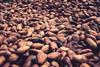
NewsSmoky off-flavors in cocoa aren’t caused solely by smoke - overfermentation can be the cause
Researchers have shown that overfermentation of cocoa beans can cause smoky, leathery, and cheesy off-flavors. Smoky flavors, therefore, are not necessarily attributable to smoke contamination.
-
 News
NewsGreen hydrogen production and storage using alcohols, iron, and baker’s yeast
A new recyclable system uses baker’s yeast to store H₂ in organic molecules and iron ions to release it when needed - offering a promising route toward more sustainable hydrogen production and storage.
-
 News
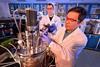
NewsIndustrial-scale biotech production of proteins and vitamins economically viable
Researchers are developing biotechnological methods called “power-to-protein” and “power-to-vitamin” processes which use microbes to produce proteins and vitamins for human consumption using basic chemical ingredients – entirely bypassing livestock farming and agriculture.
-
 News
NewsBreakthrough in engineering color-sensing yeast
In a new study, scientists engineered baker’s yeast to sense and respond to different colours of light, enabling new ways to control cellular behavior with red and blue light.
-
 Opinion
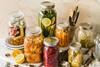
Whose culture is it? Rethinking the study of traditional fermented food microbiomes
When microbiologists study traditional fermented foods, are we simply documenting natural biodiversity, or are we also accessing a form of cultural heritage, asks Tara Spencer-Drakes, PhD.
-
 News
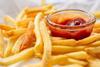
NewsProtein-enriched ketchup gets a boost from algae extracts
Added protein is showing up in foods from breakfast cereal to pasta, but not many condiments … yet. Researchers have now developed an enriched tomato ketchup by incorporating protein extracted from microalgae.
-
 News
NewsAnaerobic dry processing unlocks flavor precursors in Arabica coffee beans
A research team has mapped how four post-harvest processing methods reshape flavor precursors in Arabica coffee beans, showing that anaerobic fermentation substantially increases key non-volatile metabolites linked to aroma, flavor, acidity, body, and balance.
-
 News
NewsGut microbiomes follow distinct trajectories during urbanization across South Asia
An international team of researchers studied communities across India and Sri Lanka to understand the impact of urbanization, local diets, and culture on the gut microbiome.
-
 News
NewsPrebiotic sodas typically contain as much sugar as fiber
Prebiotic sodas have become more popular in recent years. According to a new analysis, however, many of these beverages contain relatively little prebiotic fiber content and more sugar than marketing claims might imply.
-
 Careers
Member Q&A: Tanja’s pathway to policy-oriented papers
Head of Bioresources Unit of the AIT Austrian Institute of Technology Tanja Kostić, PhD, reveals how AMI membership has supported her professional development and career journey.
-
 News
NewsResearchers find estrogen-like mycotoxin in every pregnant woman tested
Consuming common foods such as corn chips and popcorn may put pregnant women at risk of being exposed to mycotoxins. A study found hormone-mimicking mycotoxins in 100% of participants.
-
 News
NewsRoasted and browned: how gut bacteria break down heated foods
Heating food generates new dietary compounds. A study shows that an enzyme in gut bacteria can expand its functional repertoire to process them.
-
 News
NewsResearchers launch global initiative to study disappearing heritage diets
The world’s ‘heritage’ diets could hold vital clues to better health. Researchers from 12 countries have launched the World Diet Initiative, a global effort to document and study these diets before this knowledge is lost.
-
 News
NewsWasted pumpkin peel can keep your food fresh
Researchers have turned agricultural by-products into a biodegradable food packaging material, offering a potential approach to both food loss and plastic pollution.
-
 News
NewsWild yeast discovery enables non-GM brewing of ornithine-enriched craft beer
Researchers have uncovered a naturally derived yeast mutation that boosts ornithine production while preserving brewing performance for value-added fermentation.
-
 News
NewsThe nose knows: Electric schnoz can smell when your food’s gone bad
A new “electronic nose” can detect the scents associated with spoiled food much more accurately than the human nose. It can also sniff out the presence of common food allergens, like walnuts and peanuts, which can be deadly for those with sensitivities.
-
 News
NewsFermentation science may offer new route to better lower-alcohol wine
In addition to finding ways to ferment grape juice without producing as much alcohol, one scientist is exploring novel yeasts and methods to overproduce aromas to compensate for their eventual loss when reducing alcohol through grape juice dilution.
-
 News
NewsProfessor Kaneko’s sake and wine earn honors at French Japanese Sake Competition for second consecutive year
At “Kura Master,” a Japanese sake competition held in France for French consumers since 2017, “Aldebaran,” a wine produced from grapes grown in the city of Ibara, in Okayama Prefecture, and supervised by Professor Akihiro Kaneko, won a Gold Award in the Muscat Bailey A category.
-
 News
NewsInternational leaders in probiotic and prebiotic science to gather in Tokyo for one-day symposium
To help strengthen global collaboration and showcase innovative biotics research, The International Scientific Association for Probiotics and Prebiotics (ISAPP) is organizing a scientific symposium on October 6, 2026 in Tokyo, Japan in conjunction with its annual meeting.