
We catch up with food microbiologist Professor Marciane Magnani of the Federal University of Paraíba in Brazil who has just been appointed as a Deputy Editor of Letters in Applied Microbiology.
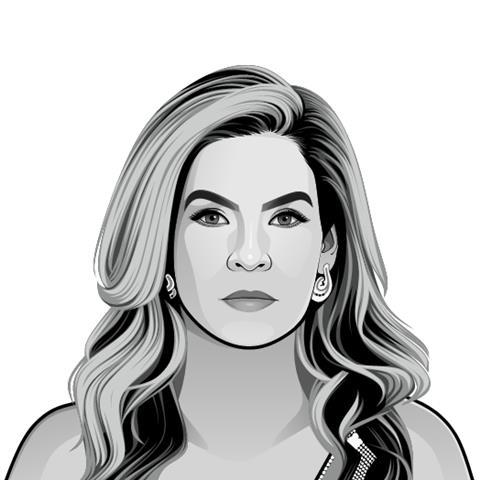
An Associate Professor at the Federal University of Paraíba (UFPB), affiliated with the Department of Food Engineering, she coordinates the Laboratory of Microbial Processes in Foods (LPMA-UFPB) and serves on the faculty of the Graduate Programs in Food Science and Technology and Nutrition Sciences.
Her research activities have achieved national and international recognition in the fields of Food Science and Food Microbiology, with a strong emphasis on food safety, predictive microbiology, fermented and functional foods, and microbiome-related approaches. Her work integrates microbial survival responses, fermentation, and One Health perspectives, with particular attention to the valorization of native biodiversity and the development of sustainable food systems.
Prof. Magnani holds a CNPq Research Productivity Fellowship (Level 1A) and serves as Coordinator in Food Science at CAPES/Ministry of Education, Brazil. In addition, she is a FAO/WHO roster expert in Microbiological Risk Assessment (JEMRA) and a member of the FAO/WHO Joint Expert Meetings on the use of omics-based technologies.
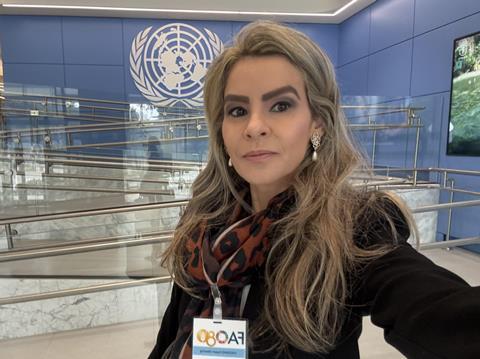
She actively contributes to international scientific committees and collaborative networks across Europe, the Americas, and Asia, including experience as a visiting researcher in Spain, France, and Chile. She has participated in projects supported by national and international funding agencies, encompassing collaborations with the U.S. Food and Drug Administration (FDA) and Horizon 2020 initiatives.
Prof. Magnani has played a consistent role in the evaluation and dissemination of scientific knowledge. She has authored more than 300 peer-reviewed publications and serves as Associate or Executive Editor for several high-impact journals, as well as Deputy Editor of Letters in Applied Microbiology.
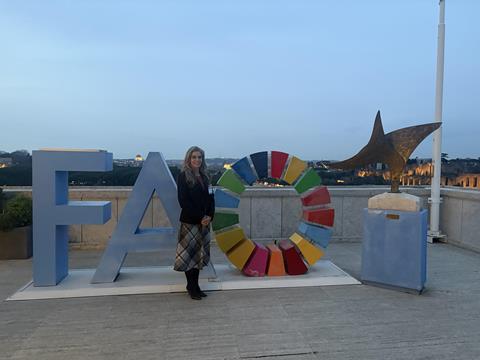
Her contributions to graduate education and the training of highly qualified human resources have been recognized through Honorable Mentions at the CAPES Thesis Award (2020 and 2023) and the Lenilde Duarte de Sá Award (UFPB, 2025). She is listed among the Top 2% Scientists (Stanford/Elsevier, 2023 and 2025) and is a recipient of the Péter Murányi Award – Food (2025).
What drew you to become a mentor for LAM and what excites you about the role?
For me, this role is about shaping how science is evaluated, not just how it is produced. Mentorship within LAM offers a rare opportunity to help early career researchers develop editorial judgment, which is ultimately what defines the quality, integrity and direction of our field.
What excites me most is contributing to a new generation of editors who are not only technically strong, but also aware of the broader responsibility of science, its societal impact, its ethical dimensions, and its role in addressing global challenges.
What first sparked your interest in microbiology and how did your career develop?
My interest in microbiology began with a fundamental question: how can something invisible have such a profound impact on human life? That curiosity quickly evolved into a more applied perspective, particularly within food systems.
My career has focused on bridging microbiology with real-world challenges, from food safety to sustainable food production. A central part of my work has been the valorisation of underutilised biodiversity, especially native fruits from Brazil, transforming them through microbial processes into functional, safe and economically valuable products.
What’s the microbe that most fascinates you and why?
I am less fascinated by individual microorganisms and more by microbial ecosystems, particularly those involved in food fermentation and the gut microbiome. These systems challenge us to move beyond reductionist thinking. They show us that functionality emerges from interaction, which is a powerful concept not only scientifically, but also when we think about sustainability and resilience in food systems.
What real-world problem would you eventually love to solve with microbiology?
I am deeply committed to using microbiology to reduce inequalities within food systems. In many regions rich in biodiversity, such as parts of Latin America, valuable natural resources remain underutilised due to lack of technology and infrastructure.
My goal is to help transform these resources into safe, functional foods through microbial biotransformation, creating value chains that generate income, promote food security, and support sustainable local development.
How important do you think the role of applied microbiology could be in solving some of the world’s problems?
Applied microbiology is not just important, it is foundational to solving some of the most pressing global challenges. From enabling safer and more sustainable food systems to supporting circular bioeconomies and climate-resilient production, microorganisms are at the core of transformative solutions. However, the real challenge lies in translating scientific knowledge into accessible, scalable technologies that can reach diverse communities.
What makes LAM unique in supporting ECRs to become good editors?
LAM has created something quite distinctive: a space where early career researchers are actively trained to think as editors, not just reviewers. This combination of mentorship, real editorial responsibility, and exposure to high-quality science creates a strong foundation for developing critical thinking, independence, and confidence, all essential for the future of scientific publishing.
Looking in your crystal ball, what new areas of research can you see emerging in the next few years?
We are moving toward a new phase where microbiology will play a central role in designing food systems rather than just analysing them. Microbiome-informed food design, integration of omics with predictive modelling, and the use of microorganisms in circular bioeconomy strategies are all rapidly advancing. Importantly, I believe we will also see a stronger integration of microbiology with social and environmental agendas, particularly aligned with the Sustainable Development Goals.
Is there anything else you would like to add?
If I could highlight one point, it would be this: the future of microbiology will be defined by impact. Scientific excellence alone is no longer enough, we need science that is inclusive, translatable, and capable of addressing real societal needs. This requires not only interdisciplinary collaboration, but also a shift in how we connect science with communities, policy, and global priorities.
Interested in getting some publishing experience? Sign up for Publishing News to be the first to find out when we are advertising for new Junior Editors. Sign up form at the bottom of this page https://appliedmicrobiology.org/publishing-resources/ami-journals.html.




No comments yet