
Tyler Myers, an MPhil Candidate at the University of Cambridge, reports back from the Royal Society of Biology’s Voice of the Future event at Parliament, where he served as a guest panelist representing Applied Microbiology International.
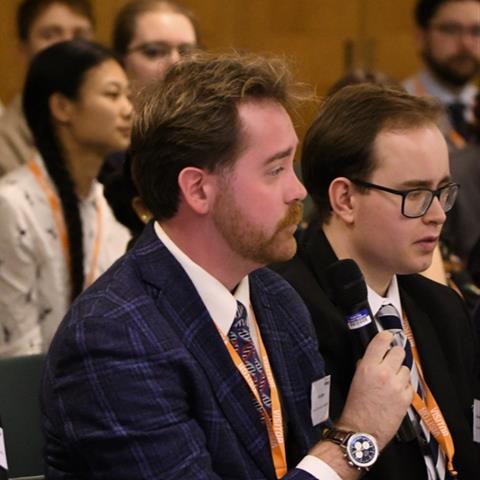
Since my undergraduate studies, I have been deeply interested in blending my research in microbiology and molecular neurobiology with STEM policy. While much of my work focuses on mechanistic questions on topics like host–microbe interactions, psychopharmacology, and microbial determinants of human health, I have come to realize that a broader impact of this work lies in translation. Infectious disease prevention, mental health outcomes, nutritional access, and the advancement of biomedical research lay at the mercy of the relationship between science and policy.
Several weeks ago, I had the privilege of representing Applied Microbiology International (AMI) at the Royal Society of Biology’s Voice of the Future, an annual STEM policy forum that brings early-career scientists into direct conversation with policymakers and government officials.
Hosted in Portcullis House, just across the street from Big Ben, the setting alone underscored the importance of our discussions. Eleven scientific organizations each sent a delegate to participate in a panel session with Members of Parliament and senior health officials. The session was chaired by Susan Rabin MRSB, and the panel featured an impressive group of policymakers and scientific leaders, including:
- Victoria Heath FRSB, Chief Healthcare Science Officer of Wales
- Prof. Catherine Ross CBiol CSci FRSB, Chief Scientific Officer of Scotland
- Emily Darlington MP, representing the Science, Innovation and Technology Committee
- Dr. Lauren Sullivan MP, representing the Parliamentary Office of Science and Technology
- The Viscount Stansgate, member of the House of Lords Numeracy Select Committee
One of the most engaging aspects of the event was the opportunity to pose questions directly to the panel. I first asked how the UK is preparing to respond to increasingly severe influenza surges, as observed with this past flu season. The response highlighted Scotland’s proactive strategy: collaborating with Southern Hemisphere countries like Australia and New Zealand to analyze clinical data from their earlier flu seasons, while also investing in emergency hospital infrastructure ahead of the UK’s next peak season. It was a compelling example of the importance of international data sharing to inform national preparedness to diseases and natural disasters.
The gut microbiome and beyond
My second question was based on my work with the gut microbiome, a system we now understand to be a key driver of many facets of human health but highly dependent on diet. I then asked how the UK government might more effectively promote healthy eating, not just through guidelines, but through systemic change.
This sparked a particularly rich discussion. While the UK reinforces strong food safety regulations and well-developed dietary recommendations, panelists acknowledged that these measures fall short when access to healthy food is limited.
A striking example came from Scotland’s attempt to implement a “food prescription” program for patients facing chronic noncommunicable diseases. While conceptually promising, the initiative faced high attrition rates due to logistical barriers, particularly the difficulty of transporting fresh, healthy food over long distances from the grocery store to people’s homes.
The takeaway was clear: improving public health requires not only good policy design, but also a rethinking of practical infrastructure that enables equitable access.
Pressing issues
Beyond my own questions, the broader panel discussion touched on several pressing issues:
- Strengthening climate policies to protect biodiversity
- Maintaining rigor in medical education amid increasing digitalization and the rise of artificial intelligence
- Rebuilding collaborative bridges between UK researchers and European tech sectors
- The need to better incentivize PhD graduates to remain in the UK research ecosystem
What stood out most to me was the shared recognition that early-career scientists have a crucial role to play in shaping these conversations. Both AMI and RSB are actively working to empower researchers to engage with policymakers, offering training sessions and opportunities to develop science communication skills.
I highly recommend that my peers investigate the opportunities offered by both AMI and RSB to see how you can incorporate them into your own professional development.
The world outside the lab
Reflecting on the experience, I was struck by how valuable it is to step outside the lab and into spaces where decisions are made. In the rapidly evolving political and technological climate of the 21st century, the ability to translate complex scientific ideas into actionable policy discussions is not just a complementary skill; it’s essential.
I left this event with a refreshing perspective on the meaning of my work as a scientist. Beyond generating knowledge, scientific research is fundamentally a public service, one that carries a responsibility to inform, protect, and improve society.
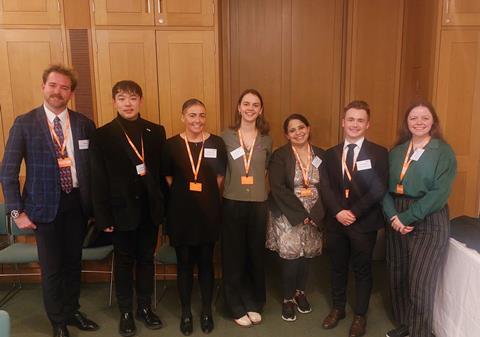
Sessions like Voice of the Future not only offer opportunities for dialogue but also help fill that responsibility by ensuring that scientific insight reaches the people who shape public policy. Engaging directly with policymakers reinforces the idea that our work does not exist in isolation, but as part of a broader societal mission to advance public health, equity, and well-being.
I am incredibly thankful for Applied Microbiology International for allowing me to participate in this unique experience, and I look forward to exploring more ways to get involved with STEM and health policy!
If you’re interested in having the opportunity to network with fellow ECRs and meet MPs in parliament, we are looking for a representative (UK based) to attend Parliamentary Links Day on June 16! Get in touch at policy@appliedmicrobiology.org by May 10 to get the chance to attend parliament yourself.
Topics
- Applied Microbiology International
- Be inspired
- Catherine Ross
- Community
- Early Career Research
- Emily Darlington
- Food Security
- Gut Microbiome
- Infectious Disease
- Lauren Sullivan
- One Health
- People News
- Policy
- Royal Society of Biology
- Science Communications
- Science Education & Outreach
- Susan Rabin
- Tyler Myers
- UK & Rest of Europe
- University of Cambridge
- Victoria Heath
- Viscount Stansgate
- Voice of the Future




No comments yet