
All Science Education & Outreach articles
-
 News
NewsProfessor Jack Gilbert leaves a lasting legacy of collaboration and global engagement at AMI
As Professor Jack Gilbert steps down as President of Applied Microbiology International, he leaves a legacy of collaboration, generosity and an unwavering commitment to strengthening our global community.
-
 News
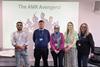
NewsFrom local waterways to future therapies: Inspiring the next generation of scientists through phage discovery
Coventry University welcomed students from schools across the West Midlands for an immersive outreach experience focused on bacteria, viruses, AMR, and the potential of bacteriophages as a future tool in combating antibiotic-resistant infections.
-
 News
NewsMicrobe-mapping project transforms entire university campus into a “living lab”
An innovative citizen science project is combining large-scale microbe sampling with metagenomics workshops and utilising the power of students to map out the varied microbiomes of the University of Milano-Bicocca’s campus - including those within the students themselves. Source: Giulia Ghisleni and Antonia Bruno Student sampling microbes from ...
-
 News
NewsHow YouTube shapes public understanding of avian influenza
A new study analyzing more than 11,000 YouTube videos and comments found that online narratives surrounding avian influenza evolved alongside major outbreak developments, including increasing reports of infections in mammals, sporadic human cases, and economic consequences.
-
 News
NewsShare your story: Neurodivergent STEM professionals invited to take part in video project
Applied Microbiology International (AMI) is inviting researchers, students and professionals across the STEM community to take part in a new video series exploring the experiences of neurodivergent people working in science, technology, engineering and mathematics.
-
 Opinion
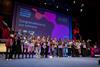
Building sector infrastructure: The MLSFF model
Members of the MLSFF Steering Committee explores the sustainability problem that plagues equity initiatives in STEM - and the solutions presented by the infrastructure partnership that delivers Europe’s only conference for minoritised life scientists.
-
 News
NewsBrazilian medical students increase vaccine confidence
Vaccination coverage in Brazil has declined in recent years. Medical students at the University of Pernambuco designed and delivered a low-cost, two-hour educational intervention for 25 parents and caregivers waiting for routine appointments at a Family Health Unit in Recife.
-
 News
NewsKnowledge gaps expose vulnerable populations to tick-borne disease risks in northern China
While awareness of tick biology is relatively high in Northeast China and Inner Mongolia, a new study reveals alarming gaps in public knowledge about preventing tick-borne diseases—with rural residents and high-risk groups paradoxically showing the lowest protective awareness.
-
 News
NewsWhere people get their news influences their beliefs about vaccines
People who follow “new right” media outlets are more than twice as likely to be vaccine-hesitant compared to those who never engage with those outlets, a new study finds. Hesitant adults were more likely to rely on non-authoritative sources for health information.
-
 Careers
From one bench to another: Representing early-career scientists at Parliament’s Voice of the Future
Tyler Myers, an MPhil Candidate at the University of Cambridge, reports back from the Royal Society of Biology’s Voice of the Future event at Parliament, where he served as a guest panelist representing Applied Microbiology International.
-
 News
NewsThe giants of the reef: New citizen science project races to document centennial corals
Coral reefs hide “scientific treasures” that have survived for centuries, yet many of these giant, ancient organisms remain largely unknown to science. A new study introduces a pioneering citizen-science initiative to find these giant coral colonies before they are lost to escalating global pressures.
-
 News
NewsGlobal Virus Network launches expanded “Global Guardians for Pandemic Preparedness” program for Florida high school students
The Global Virus Network (GVN) announced the launch of its expanded Global Guardians for Pandemic Preparedness initiative, with applications now open for high school students across the state of Florida.
-
 News
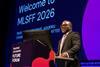
NewsHundreds of scientists gather in Edinburgh for the Minoritised Life Scientists Future Forum 2026
Hundreds of scientists gathered at Edinburgh International Conference Centre (EICC) this week for a three-day conference aimed at showcasing the contributions of life scientists from marginalised and underrepresented communities.
-
 News
NewsVaccine uptake: Why conspiracy theories can be so irresistible
New research has found that understanding how someone processes information can be a strong predictor of whether they are drawn to conspiracy beliefs that can influence vaccine uptake, trust in institutions and responses to emergencies.
-
 News
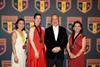
NewsThree women named Britain’s Brightest Young Scientists, each winning ‘unrestricted’ £100,000 Blavatnik Awards prize
The Blavatnik Family Foundation and The New York Academy of Sciences has announced the three 2026 Laureates of the Blavatnik Awards for Young Scientists in the United Kingdom, who each receive £100,000 – the nation’s largest unrestricted prize for science. The three Laureates with Sir Leonard Blavatnik ...
-
 News
NewsProposals for exploring viruses and skin as the next experimental quantum frontiers share US$30,000 science award
Viruses exist at the boundary between living and non-living matter, while skin is a living interface between physics and biology, making them perfect—but until now overlooked—arenas for testing the interplay between quantum physics, biology and life.
-
 News
NewsUS study finds declining perception of safety of COVID-19, flu, and MMR vaccines
A sizable majority of Americans think the three vaccines that combat potentially deadly illnesses flu, Covid-19 and measles are safe to take, although perceptions of the safety of all three vaccines showed a statistically significant drop over the past three years.
-
 News
NewsEMBL pays tribute to Peer Bork (1963—2026)
The European Molecular Biology Laboratory has paid tribute to its Interim Director General, Professor Peer Bork who passed away in January. The institution reflects on the extraordinary impact Peer had on the world of science.
-
 News
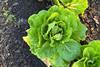
NewsTexas-grown cabbage meets global tradition in kimchi research
Researchers are turning Texan produce into kimchi as part of a study that links fermentation science, food safety and new market opportunities for U.S. farmers. The research examines how Texas-grown cabbage and other leafy greens perform during kimchi fermentation.
-
 News
NewsEmbedding critical thinking from a young age will help solve world problems, microbiologists say
Scientists from around the world have called for a radical refocus of school curricula from early years to high school to include more critical thinking and learning skills to empower students to ‘think outside the box’.