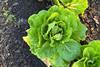
A head of napa cabbage grown in Texas may not seem destined for a Korean staple. But researchers in the Texas A&M College of Agriculture and Life Sciences Department of Food Science and Technology are turning local produce into kimchi as part of a study that links fermentation science, food safety and new market opportunities for U.S. farmers.

Seockmo Ku, Ph.D., assistant professor in the department, leads the research, which examines how Texas-grown cabbage and other leafy greens perform during kimchi fermentation.

Kimchi, a fermented vegetable dish commonly made from napa cabbage, originated in Korea and remains a daily staple for many. In recent years, shrinking farmland and reduced cabbage production have strained the domestic supply in South Korea.

Ku’s research is in response to kimchi production shifting outside of South Korea and focuses on food safety and flavor development. He is also determining if kimchi made with U.S. ingredients can meet consumer expectations traditionally associated with Korean-made products.

“The core of this project is supporting farmers by increasing the value of what they grow,” Ku said. “Fermentation allows us to transform crops like napa cabbage into foods with longer shelf life and broader market potential.”

Global demand, local opportunity

The shift to global production of kimchi consumed in South Korea has fueled consumer concerns about quality and safety, Ku said.

“Our research asks whether kimchi made in the United States can match the quality and flavor people expect,” he said.

Ku said the U.S. offers key advantages, including widespread leafy green production and strict food safety regulations. The team believes those two conditions create a strong foundation for high-quality kimchi production.

Fermentation under the microscope

Doctoral student Min Ji Jang brings experience from South Korea’s World Institute of Kimchi, where she studied kimchi fermentation and safety systems before beginning her doctorate at Texas A&M.

“Kimchi was one of the first foods regulated under hazard analysis and critical control point systems in Korea,” Jang said. “Food produced in the U.S. also follows strict safety controls, which support consistent and safe fermentation.”

The research tracks how microbial communities develop during fermentation when locally grown cabbage and Texas-based environmental conditions come into play. The team studies pest-free crops sourced from Texas growers and monitors fermentation outcomes. Rather than assuming quality outcomes, the team measures microbial activity, processing conditions and sensory characteristics.

“This work requires scientific justification,” Ku said. “We need data on microbiology, processing and sensory quality.”

Predicting the future of kimchi

Doctoral student Sehyeon Song studies how fermentation science may shape kimchi’s future. As lead author of a recent peer-reviewed study, Song analyzes how microbiome mapping and artificial intelligence can help predict fermentation outcomes and quality.

His work examines how regional ingredients influence kimchi fermentation, similar to how climate and environment affect wine and spirits.

“Kimchi made with local ingredients reflects dietary patterns in the United States,” Song said. “Fermented foods also align with growing interest in gut health.”

Working with farmers

To connect research with agriculture, Ku’s team works with local farmers near College Station and in South Texas to source cabbage for lab-scale kimchi production. The researchers aim to determine whether American-made kimchi could succeed in domestic or export markets.

The team has submitted multiple grant proposals to expand the work, including consumer acceptance studies and collaborations with nutrition scientists to evaluate potential health impacts.

READ MORE: First-in-North-America resource touts research into health benefits of fermented foods

READ MORE: New clinical study confirms the anti-obesity effects of kimchi

Beyond research, Ku’s lab leverages fermentation as an educational tool. He and his team of Jang, Song and post-doctoral researchers Hye Kim,Ph.D., Ariful Haque, Ph.D. and Abdur Razzak, Ph.D.collaborated with associate professor Hyunyi Jung, Ph.D., from the Texas A&M College of Education and Human Development to co-design authentic math and science modeling activities centered on kimchi fermentation for middle school learners.

Students, scientists and educators

These activities were implemented in partnership with the Boys and Girls Clubs of the Brazos Valley’s director of programs Fatima Burgueno and program manager Evencia Robledo. Students were able to engage directly with scientists and educators while exploring core mathematical and scientific concepts.

“Fermentation helps students see math and science through healthy food and culture,” Ku said.

As Texas-grown cabbage ferments in Texas A&M labs, the research highlights how local agriculture can intersect with global food traditions, and how fermentation science can support both.