
It can be the quiet moments that give you time to pause, ponder and sort through your tangled thoughts. For Professor Chris Greening, that moment came during a long bike ride last August.
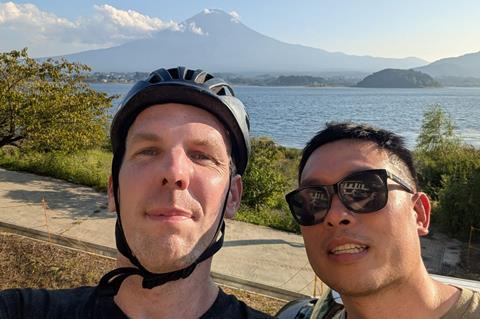
In what he now describes as a classic ADHD moment, the Monash University microbiologist returned home, still sweaty in his cycling gear, and wrote a candid LinkedIn post reflecting on his neurodivergence and how sharing his experience might help others.
“When I got home, I just sat down and wrote the post in about half an hour. I didn’t think much about it or the potential risks,” he told Applied Microbiology International. “But the overwhelming response really surprised me. It clearly resonated with a lot of people, so I’m glad I shared it.”
Well-meaning comments
In the post, he illustrated how most neurotypical people in society have only a shallow understanding of ADHD. One well-meaning therapist had once told him: ‘You can’t possibly have ADHD. You’re far too successful!’
“What they didn’t realise is that many of the most “successful” people in the world live with ADHD. Some have found ways to turn what society labels as a disability, embarrassment, or excuse into a genuine strength. But it’s not easy,” he explained.
READ MORE: Scientists find microbes enhance the benefits of trees by removing greenhouse gases
READ MORE: The fart factor: researchers get wind of hydrogen’s role in the gut
Chris is best known within Applied Microbiology International as the Global Ambassador for Australia and the director of the Microbial Solutions for a Changing World conference. He leads the One Health Microbiology group at Monash University’s Biomedicine Discovery Institute.
Perfect trajectory
After completing a first-class degree at the University of Oxford, followed by a doctorate at the University of Otago, Chris built an academic career spanning Otago, CSIRO and the Australian National University before joining Monash. From the outside, it looked like a perfect trajectory.
Yet, as his post revealed, that success came at a cost.
Reflecting on life before the pandemic, Chris said: “I didn’t have those strategies. I lived by the ‘Pareto principle’ taken to the extreme: long stretches of distraction and frustration, staring blankly at screens, followed by bursts of deadline-driven productivity that felt almost superhuman,” he wrote.
Hidden cost
“The cycle was unsustainable. I neglected relationships, hobbies, and fitness, and there were many times I wanted to quit academia altogether. While others praised my outputs, they never saw the hidden cost. They would have been horrified at what I put myself, and occasionally others, through.”
That experience contrasts sharply with recent years, which he describes as more balanced and sustainable.
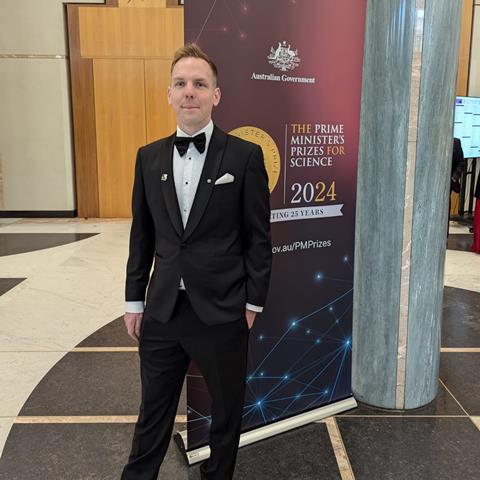
“I’m productive and supportive at work, but I also have healthy relationships and a great partner, meaningful hobbies, and I’m finally getting fit,” he wrote.
“I’m ‘on’ maybe half the time during a typical week, and in those moments I’m present, focused, and effective. The rest of the time, my brain drifts between untangling chaotic thoughts, planning ahead, or simply recharging. I’ve learnt to accept that rhythm rather than resent it, and as a result, I’m more productive than ever in a way that is both sustainable and enjoyable.”
Pretending to be ‘normal’
Much of this shift came from understanding himself better, especially with the help of both a friend and a therapist who had lived experience with ADHD. But openness has also helped.
“Pretending to be ‘normal’ is exhausting, and sharing my story has connected me with others who face similar challenges, often far more severe. I’ve learnt to lean into the upsides of ADHD: the ability to spot hidden connections, generate creative ideas, read people, and keep learning relentlessly, while also moderating the downsides,” he wrote.
He still wrestles with sensory overload, especially bright artificial lighting, and the occasional low-energy crash, but says these challenges are now manageable. “At last,” he wrote, “I love my life and I love my job.”
Closed doors
But for many people with ADHD, the outcome can be less positive.
“For every story like mine, there are many who don’t get the same chance. I could easily have ended up unemployed, in prison, or even dead.” He elaborated to AMI: “Doors get shut on so many people with ADHD, some literally: around a fifth of prisoners may have ADHD.”
“What made the difference? Perseverance, supportive people, relentless self-reflection, and yes, a great deal of luck. I had opportunities and second chances that others never receive.
“The least we can all do is extend understanding and compassion, because ADHD is real yet often invisible. Support can make the difference between someone thriving and someone being written off.”
Under the radar
Raised in the northwest of England, Chris was never diagnosed as a child like so many of his generation.
“Back then, I think there was less awareness of the condition and I ended up flying under the radar despite having pretty overt signs. A few teachers brought it up to my parents at parents’ evening, but they always responded defensively,” he says.
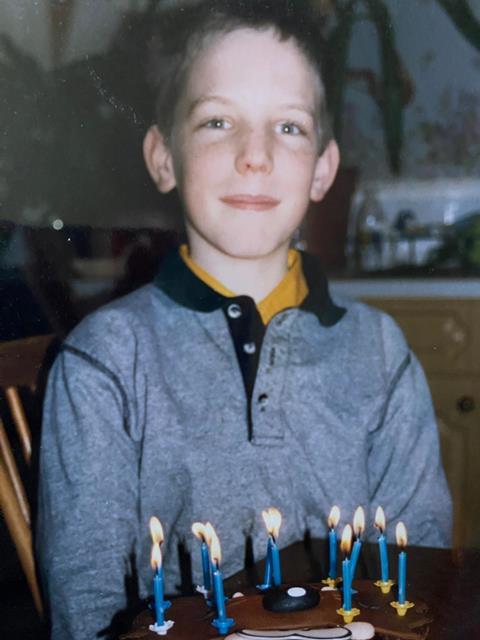
He describes his childhood self as a mix of “suppressed emotion and excess energy”.
“I grew up in a rough part of northwest England where you’ll only get bullied if you show any sort of weakness. But I had all the signs of a hyperactive child and got into a lot of trouble at school. I remember the one kid diagnosed with ADHD in my class once joked he never met anyone so manic! Not a great sign,” he laughs.
Super divisive
“I was super divisive among my teachers,” he tells AMI. “Half just wrote me off as a troublemaker. The other half loved me – they saw this bundle of potential and often were great at channelling my energy. People like that helped me excel in my exams and are one of the reasons I’m here today.”
“My music teacher, who sadly passed away a few years ago, saw an incident where I threw a chair at someone who was trying to bully me. Pretty alarming stuff. But she didn’t write me off and instead sought to understand me, bring out my potential.
“Thanks to her, I ended up learning a few instruments and went on to tour the world with a youth orchestra. When I could put my energy into something productive, that was when I excelled.
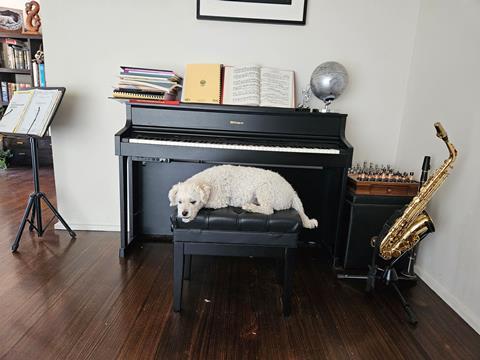
“For so many kids with ADHD, that compassion, understanding, and second chances can make all the difference. Between success and happiness. And, you know, ending up unemployed, in prison or worse.”
Investigating the symptoms
Like so many others, he first recognised the possibility himself, aware that there was something different and reading around what it might be.
“Among my most overt symptoms was sensitivity to artificial light and hyperfocus, so I wondered if I might be autistic, but it didn’t fit the other symptoms. For example, I had a lot of empathy and wanted freedom rather than structure,” he says.
“Then I looked up the criteria for ADHD and I realised I ticked every box. That was actually a bit of a revelation. For the first time in my life, I finally understood myself and could rationalise all that chaotic behaviour. It also opened ways to manage my behaviour. But it was still quite a bit longer before I got the formal diagnosis.”
Daunting diagnostic process
At the time he was deterred by the prospect of what appeared to be a long and complex process of diagnosis – and he procrastinated.
“I’m terrible at life admin and getting a diagnosis almost seemed antithetical to having ADHD. So I put things off until a couple of years ago. In the end, I found a great psychiatrist who was able to see me relatively promptly and talked through everything in a very compassionate, non-judgemental way,” he says.
By then, he felt relatively secure in his career. “I didn’t feel too much stigma overall. At the time I got diagnosed, I guess I didn’t have too much to ‘prove’ anymore.”
“For me, I don’t treat it as this label that defines or constrains me. Rather, having the diagnosis allows me to better understand myself and manage my symptoms. And these days at least, it’s not something I’d ever want to change. ADHD causes me a lot of difficulties, but can also be a powerful asset in life and work.”
Spectrum of outcomes
Neurotypical people will often assume that if someone is a highly achieving and intelligent academic, they couldn’t have ADHD. But the roll-call of high achievers tells a different tale.
“There’s a tremendous spectrum of outcomes of ADHD – some people are heavily impaired, others are top performers. But many of the most high achieving people in society – whether the swimmer Michael Phelps to the entrepreneur Richard Branson – have it. They, like me, learned how to channel their excess energy into something productive,” Chris says.
”In my view, the varied outcomes often reflect society more than the person. By definition, ADHD will cause some day-to-day impairment. But this can be greatly moderated in enabling societies.”
Self-fulfilling prophecy
“Our society doesn’t understand neurodivergence well. Our education systems, our workplaces, even our noisy restaurants can be disabling rather than enabling for people. So many people with ADHD get written off.
“But if you really enable, trust, and believe in people – giving a few second chances along the way – they can have totally satisfying lives and careers. If you write them off, it will become a self-fulfilling prophecy. Society can make us feel broken and we need champions to build us up.
“I say this to all parents faced with ADHD kids, employers with ADHD workers, believe in them - as well as anyone who may be dealing with ADHD themselves. Try to believe in yourselves.”
Rollercoaster of life
Day to day life can be something of a rollercoaster, he reveals: “My head is constantly running at full capacity, I’m quite an emotional person and often fidgeting. That can be both exhilarating and exhausting. But now I know myself well enough to regulate without the massive crashes I used to have.”
But there are many positives with ADHD, he points out: “One that’s often talked about is that heightened perception and the ability to make connections most don’t – that’s really served me well in my research, allowing us to scale and collaborate in ways most can’t possibly.
“But it’s also good for managing a team. I’m good at building people up. When I see a person, I see their past, the present, and their multiple futures, using a strengths-based framework to help them make the most of themselves. We’ve now had multiple happy and successful people spinout their own independent programs.
Diagnosis isn’t a box
“But it also is quite useful day-to-day too - meaning I can be a good, if occasionally exhausting, partner or friend.”
And his message to other people who might be wondering about an ADHD diagnosis for themselves?
“Everyone’s experience is different, but from my perspective, there’s no downside to exploring it,” he says.
“A diagnosis doesn’t have to be a box you’re put in. It can simply be a tool to better understand yourself, whether or not you choose medication, and it can open up ways to manage life more effectively. For me, that understanding has been invaluable.”





No comments yet