
All Microbes and Culture articles
-
 News
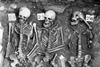
NewsNew study uncovers the complex history of the plague after the Black Death
A new study sheds fresh light on the long and complex history of the plague by analysing the DNA of the bacterium. Researchers reconstructed 26 genomes of Yersinia pestis from archaeological sites in Estonia, Russia, England, the Netherlands, and Switzerland.
-
 News
NewsLocal microbes persist in wine despite commercial yeast
A new study has demonstrated that regional microbial imprints can remain detectable under commercial winemaking conditions. The new research shows that inoculated fermentations do not “override” native microbial diversity and that vineyard management and environmental conditions matter in wine quality.
-
 Features
Under the Microscope: Microbes in fashion
In the dawn of a new era, the fashion industry is turning its sights to harnessing the power of microbes to produce cruelty-free fur and leather alternatives, to create pigments that will replace toxic dyes and even being used to more sustainably recycle textile waste.
-
 Careers
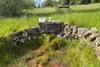
A day in the life: Discovering the hidden microbes of Britain’s historic waters
PhD student Wewerly Fernandes outlines her investigations into the microorganisms living in Britain’s historic wells and natural springs - once believed to hold healing properties and linked to legends of Merlin and renowned figures like Robert Burns.
-
 Opinion
Whose culture is it? Rethinking the study of traditional fermented food microbiomes
When microbiologists study traditional fermented foods, are we simply documenting natural biodiversity, or are we also accessing a form of cultural heritage, asks Tara Spencer-Drakes, PhD.
-
 Features
The living wooden cellar: microbiota of high-elevation artisanal cider in Slovenia
In the subalpine region of Carinthia, in northern Slovenia, cider is produced on remote family farms at altitudes of 500 to 860 metres - above the range in which the country’s vineyards operate. Here, cider-making is not a specialty product but a long-standing regional practice, historically shaped by a climate unsuited to winegrowing.
-
 Features
How globalisation is reshaping traditional diets, our food culture, and gut microbiome
Globalisation has transformed not only the way we trade, travel and eat, but also the microbes that live with us. As food systems become increasingly interconnected, traditional diets that have shaped human gut microbiomes for generations are increasingly being replaced by a globalised food culture dominated by ultra-processed foods.
-
 News
NewsAncient smallpox genomes reveal how European colonisation brought the disease to the Americas
Researchers have recovered and analysed the first ancient smallpox virus genomes ever identified in the Americas, providing the strongest direct evidence to date that the disease was introduced through European colonisation.
-
 News
NewsResearchers launch global initiative to study disappearing heritage diets
The world’s ‘heritage’ diets could hold vital clues to better health. Researchers from 12 countries have launched the World Diet Initiative, a global effort to document and study these diets before this knowledge is lost.
-
 News
NewsChikungunya fever: Etiology, pathogenesis, and management, with evidence-based application of traditional Chinese medicine
Traditional Chinese medicine (TCM) offers complementary strategies for acute symptoms and chronic polyarthralgia in Chikungunya infection. A review synthesizes current knowledge on etiology, pathogenesis, clinical features, and management.
-
 News
NewsFree webinar: The mystery of the missing microbes - and the answers that can be found in the Amazon
An intriguing free webinar this July will explore what happens when key members of the human gut microbiome are lost, and what we can learn from populations where this loss has not occurred.
-
 News
NewsGenetics: Oldest-known evidence of plague outbreaks in prehistoric communities
Plague outbreaks dating back to around 5,500 years ago documented in hunter-gatherer communities from southeast Siberia are described in a paper. The findings, based on an analysis of ancient DNA, may be the oldest known evidence of the plague and could shed light on its origins.
-
 News
NewsMicrobes frozen in ancient rubbish heaps help reconstruct ancient Greenlanders’ farms, seal hunts, and toilets
The microbiome of ancient middens in Greenland sheds new light on the daily life of Paleo-Inuit and old Norse communities. Researchers say the middens in the cold Arctic acted like long-term natural experiments, with human- and animal-associated bacterial signals remaining detectable many centuries later.
-
 Opinion
Biopiracy in microbiology: Who owns nature’s resources?
A growing global debate over “biopiracy” is raising urgent questions for microbiologists, researchers, industry and policymakers alike — and Applied Microbiology International is calling on members to help shape the conversation. Biopiracy refers to the unauthorised or unethical use of biological materials — including seeds, plants, ...
-
 News
NewsWhat dental calculus can tell us about the oral microbiomes of ancient Japan
Microbe DNA from ancient dental calculus offers insights into the past oral microbiomes of the Japanese people, including the phylogeny of the periodontal disease-associated archaeon, Methanobrevibacter oralis.
-
 News
NewsÖtzi and his microbiome: a 5,300-year-old relationship
Researchers have obtained a detailed picture of the microbial community associated with the Iceman mummy Ötzi. The study provides insights into a complex microbiome, ranging from the gut flora of a Copper Age human to cold-adapted yeasts.
-
 News
News‘Baked’, printed, ready – premiere of architecture made from yeast
Researchers have developed a new, entirely bio-based material from a somewhat unexpected ingredient: yeast. The material is 3D printed and customised for use in architectural and interior design elements that are currently made from non-renewable or fossil-based materials, such as plaster, plastic or synthetic textiles.
-
 News
NewsResearchers link specific microbiomes to archaeological bone degradation
Well-preserved archaeological bone samples have different microbial communities than heavily degraded bone samples, providing a new understanding of how microbes contribute to bone degradation, according to a study.
-
 News
NewsThe ocean’s pharmacy: scientists chart a new path for marine peptide drug discovery
A review surveys how new extraction, chromatography, and bioinformatics tools are accelerating the discovery of bioactive peptides from the sea. Researchers provide an integrated overview of how marine bioactive peptides are produced, purified, and evaluated, and how bioinformatics is reshaping the discovery pipeline.
-
 News
NewsModern medicine makes gut microbial diversity plummet
Even minimal exposure to modern medicine can rapidly change the human microbiome. Researchers reveal that the gut microbes of remote Amazonian Indigenous communities began shifting toward patterns more commonly seen in urban, industrialized populations after only a few medical visits.