
Plague outbreaks dating back to around 5,500 years ago documented in hunter-gatherer communities from southeast Siberia are described in a paper published in Nature. The findings, based on an analysis of ancient DNA, may be the oldest known evidence of the plague and could shed light on its origins.

Plague accounts for some of the deadliest disease outbreaks in history; the study of ancient DNA has aided our understanding of the origin and evolution of the disease. Previous research had identified Yersinia pestis, the bacteria that causes plague, in prehistoric Europe.
Some of the oldest documented strains date back up to 5,300 calibrated years before present (5300 cal BP), but these strains may have lacked classic virulence genes (sequences that cause disease).
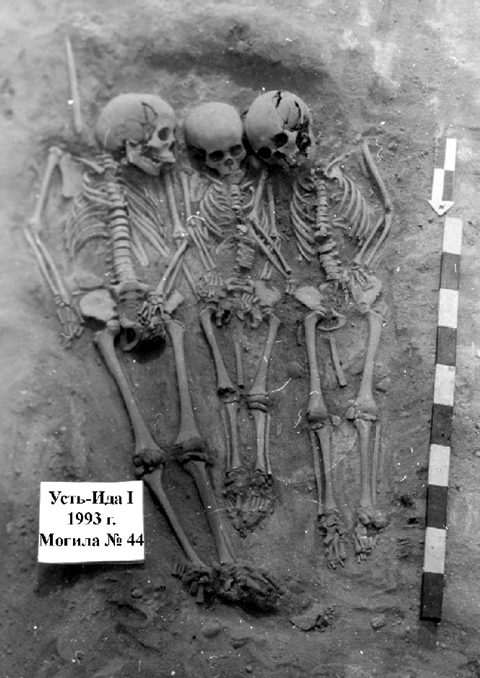
Ruairidh Macleod, Eske Willerslev, and colleagues analysed ancient DNA from 42 hunter-gatherers from four cemeteries around Lake Baikal in Siberia. They identified Y. pestis in 18 individuals, at higher levels than any other pathogen, which indicated two separate plague outbreaks dated to 5520–5265 cal BP and 5315–4235 cal BP.
Family groups
The authors reconstructed kinship among the individuals and were able to show that small family groups were affected, aligning with human-to-human transmission of the disease. They found related individuals buried in separate graves, suggesting they died in different events and not in a single outbreak.
They also indicate that the most acute infections appear to have occurred in children aged 8–11 years. They note that the Y. pestis genomes associated with these two outbreaks differ from currently known ancient and modern plague strains and suggest that this particular strain emerged before approximately 5,700 years ago.

The authors suggest that their findings demonstrate that plague outbreaks occurred in prehistoric hunter-gathers hundreds of years before infections were observed in Neolithic populations. They note that this challenges the idea that high population densities and the agriculture transition observed during the Neolithic were necessary for plague epidemics.






No comments yet