
All Yersinia pestis articles
-
 News
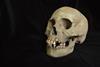
NewsGenetics: Oldest-known evidence of plague outbreaks in prehistoric communities
Plague outbreaks dating back to around 5,500 years ago documented in hunter-gatherer communities from southeast Siberia are described in a paper. The findings, based on an analysis of ancient DNA, may be the oldest known evidence of the plague and could shed light on its origins.
-
 News
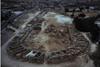
NewsPaper sheds light on human impact of first known ancient pandemic
A new paper examines the Plague of Justinian and its consequences for ancient Jordan. Focusing on the first-known outbreak of bubonic plague in the Mediterranean world, it adds to the historical record on what caused the devastating outbreak that killed millions within the Byzantine Empire.
-
 News
NewsHow did Bronze Age plague spread? Ancient sheep might solve the mystery
Researchers have found the first evidence of a Bronze Age plague infection in a non-human host. The scientists discovered Y. pestis DNA in a 4,000-year-old domesticated sheep from Arkaim, a fortified settlement located in the Southern Ural Mountains of present-day Russia.
-
 News
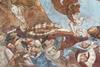
NewsVolcanic eruptions set off a chain of events that brought the Black Death to Europe
Researchers have used a combination of climate data and documentary evidence to paint the most complete picture to date of the ‘perfect storm’ that led to the deaths of tens of millions of people, as well as profound demographic, economic, political, cultural and religious change.
-
 News
NewsMyths about rapid spread of the Black Death influenced by single ‘literary tale’, experts show
Modern portrayals of the Black Death quickly moving across Asia, ravaging Silk Route communities, following the course of traders, have been incorrect because of centuries of misinterpretation of a rhyming fourteenth-century literary tale, experts have found.
-
 News
NewsNew research rewrites origins of world’s first recorded pandemic - the Plague of Justinian
For the first time, researchers have uncovered direct genomic evidence of the bacterium behind the Plague of Justinian — the world’s first recorded pandemic — in the Eastern Mediterranean, where the outbreak was first described nearly 1,500 years ago.
-
 News
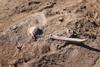
News4,000-year-old sheep reveals that livestock played a role in prehistoric plague infections
An ancient Yersinia pestis genome recovered from sheep sheds new light on a mysterious infectious disease that plagued prehistoric Eurasia for over 2000 years.
-
 News
NewsResearchers develop mRNA-based vaccine against a deadly plague-causing bacterium
Researchers have used the platform developed for COVID-19 vaccines to create the world’s first mRNA-based vaccine against the deadly, antibiotic-resistant bacterium behind pneumonic plague.
-
 News
NewsPrairie dogs carry genes linked to surviving plague
A study of the genetic basis of plague immunity in prairie dogs has broad implications for conservation. By comparing whole-genome sequences, the authors identified genetic variants associated with survivorship.
-
 News
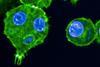
NewsHow the plague bacillus became less virulent, prolonging the duration of two major pandemics
Scientists have discovered that the evolution of a gene in the bacterium that causes bubonic plague, Yersinia pestis, may have prolonged the duration of two major pandemics. Modifying the copy number of a specific virulence gene increases the length of infection.
-
 News
NewsPlague transmission may have begun a century before the Black Death, study shows
Evidence from 13th-century chroniclers and physicians indicates plague may have been involved in epidemics a century before the Black Death, a new study shows. Source: Dschingis Khan und seine Erben (exhibition catalogue), München 2005, p. 253 Conquest of Baghdad by the Mongols 1258. Right part of a double-page ...
-
 News
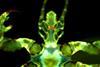
NewsBody lice may be bigger plague spreaders than previously thought
A new laboratory study suggests that human body lice are more efficient at transmitting Yersinia pestis, the bacterium that causes plague, than previously thought, supporting the possibility that they may have contributed to past pandemics.
-
 News
NewsScientists ID risks of human flea infestations in plague-endemic areas of Madagascar
The abundance of human fleas in Madagascar is primarily associated with households that have a traditional dirt floor covered by a plant-fiber mat, as opposed to households with cement or board floors, a study finds.
-
 News
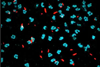
NewsResearchers unmask an old foe’s tricks to thwart new diseases
Researchers are studying Yersinia pestis, the bacterium that causes bubonic and pneumonic plague, to better understand its ability to evade the immune system and apply that understanding to control other pathogens.
-
 News
News4,000-year-old plague DNA found – the oldest cases to date in Britain
Researchers have identified three 4,000-year-old British cases of Yersinia pestis, the bacteria causing the plague – the oldest evidence of the plague in Britain to date.
-
 News
NewsResearchers develop world’s first mRNA vaccine for deadly bacteria
A team of researchers has developed an mRNA-based vaccine that is 100% effective against a type of bacteria that is lethal to humans.
-
 News
NewsResearchers scour more than 600 genome sequences in quest for origins of Black Death
Researchers seeking to better understand the origins and movement of bubonic plague have completed a painstaking granular examination of hundreds of modern and ancient genome sequences, the largest analysis of its kind.
-
 News
NewsStudy reveals how plague spreads through wild rodent populations
Mathematical modeling reveals how fleas with early-stage Yersinia pestis infections are insufficient to drive epizootic outbreaks but can help promote a low level of enzootic plague.