
A group of Cornell College students and their professor have discovered surprising results in their research on antimicrobial peptides, which are being studied as a method of combating antibiotic resistance. These peptides, part of the innate immune system, could be used to kill bacteria on their own or to create channels for other antibacterial drugs to enter bacteria.
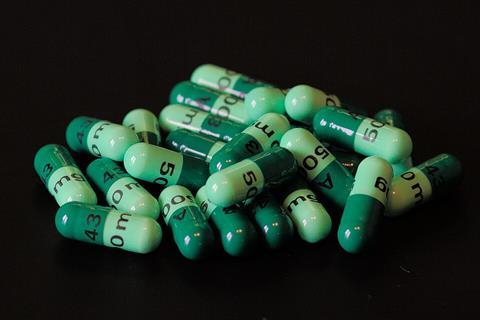
“Antibiotics are overused, which has led to bacteria becoming antibiotic-resistant, so looking into other treatment methods is vital,” said senior Sophie Stumbo. “That’s where this research comes in, figuring out how an antimicrobial peptide, Magainin 2, forms pores in the cell wall of bacteria and how that affects the cell.”
Stumbo, along with Ryan Zurick, Jonathan Azenon, Jonathan Raper, and Associate Professor of Biochemistry Catherine Volle, published the results in AppliedPhys.
Antimicrobial peptides
The researchers found that when exposed to high concentrations of the antimicrobial peptide, bacteria became more rigid instead of softer, contradicting previous assumptions.
“One of the things that sets our research apart is that we aren’t looking at how the antimicrobial peptide is working because we know what it does,” Volle said. “We’re looking at how the bacteria are responding to these different concentrations. Finding that there was a completely different biomechanical response was surprising.”
The team used the well-studied E. coli bacterium in their research, testing how it responded to the antimicrobial peptides at low, medium, and high concentrations, with the high concentration being a vital part of the study.
“If antimicrobial peptides, like Magainin 2, were to be used in a clinical setting to help fight bacterial infection, much higher concentrations must be administered to ensure that bacterial infections are well fought off,” Zurick said.
MICROBIOLOGY NEWS: Register with The Microbiologist for more free articles
At the high dose, the student researchers expected the magainin to form pores in E. coli and make it more “squishy.” However, instead of getting softer, the cell became more rigid, and the cell sealed itself off from larger molecules, which would make any kind of co-treatment with additional antibiotics ineffective.
“You can imagine if you poke a bunch of holes in a basketball, it’s going to get squishier,” Volle said. “That’s what happens with bacteria when we treat them with these lower concentrations of antimicrobial peptides. They stay stiff for about five or 10 minutes, and then they get real squishy. However, when we treat them at high concentrations, we see that instead of getting squishier, they become stiffer. So it’s like if we overinflated that basketball, it gets bigger and much harder.”
Clinical settings
The team says it’s important to better understand how bacteria respond, especially given interest in using antimicrobial peptides in clinical settings, either alone or in tandem with other antibacterial compounds. They caution that much more information and research are needed before scientists can say that antimicrobial peptides could serve as a new antibiotic.
“If we could understand the right concentration of Maganin 2 to drug ratio, we could create an effective therapy for bacterial infections,” Azenon said. “This is really crucial because of the increase in antibiotic-resistant infections across the globe. Antibiotics, our old trusty solution, can no longer be the solution. Bacteria are evolving past our only line of defense, and we need to evolve our weapons or face the scourge of infections again.”
It’s a tricky balance of gathering data and figuring out how to apply it to patients within the healthcare world.
“I think it is important for the general public to understand this research because it demonstrates just how complicated it is to develop new ways to kill bacteria, even when you have a promising avenue,” Zurick said. “Just because we have a category of peptides that seem to generally be very effective at killing bacteria, doesn’t mean that our understanding of them will translate well to clinical settings.”
Topics
- Antibiotics
- antimicrobial peptides
- Antimicrobial Resistance
- Antimicrobials
- Catherine Volle
- Disease Pathology
- Disease Treatment & Prevention
- E. coli
- Immunology
- Infection Prevention & Control
- Infectious Disease
- Jonathan Azenon
- Jonathan Raper
- magainin
- Medical Microbiology
- One Health
- Pharmaceutical Microbiology
- Research News
- Ryan Zurick
- Sophie Stumbo
- USA & Canada







No comments yet