
The study began with the screening of an extensive library of myxobacterial extracts against the tuberculosis pathogen, Mycobacterium tuberculosis. In the process, the researchers identified corramycin as a promising candidate.
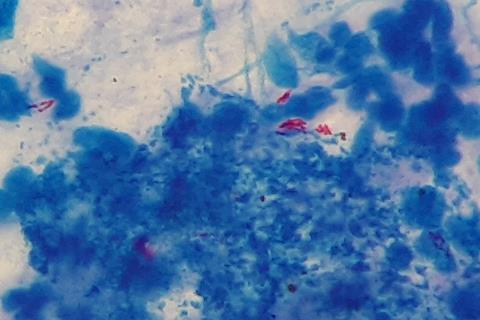
In the laboratory, the natural compound is effective against various forms of the tuberculosis pathogen, including strains from clinical samples that are already resistant to common antibiotics. The results thus suggest that corramycin could be effective even where established drugs reach their limits.
The study was conducted in close collaboration between HIPS and Dr. Stéphanie Petrella of the Institut Pasteur in Paris and Université Paris Cité, as well as partners from the German Center for Infection Research (DZIF), including research groups led by Prof. Jan Rybniker of the University Hospital of Cologne and Prof. Norbert Reiling of the Research Center Borstel, Leibniz Lung Center. The project highlights the success of collaborative research within DZIF and also on an international level. HIPS is a site of the Helmholtz Centre for Infection Research in collaboration with Saarland University.
Antibiotic activity
“We already knew that corramycin is a naturally occurring substance with antibiotic activity. What’s new is that we’ve now been able to demonstrate its pronounced activity against Mycobacterium tuberculosis and, at the same time, elucidate how the substance damages the pathogen,” says Dr. Franziska Fries, a researcher in the department “Microbial Natural Products” at HIPS.
“What’s particularly exciting is that corramycin attacks its cellular target, DNA gyrase, in a different way than fluoroquinolones—antibiotics already in clinical use that also target DNA gyrase. This also explains why corramycin remains effective against fluoroquinolone-resistant bacteria.”
DNA gyrase is an enzyme that bacteria need to replicate their genetic material. The research team was able to show that corramycin not only inhibits this enzyme but also puts it into a state in which it harms the bacterium itself. The natural compound binds to the gyrase after it has cut the DNA and prevents the enzyme from correctly rejoining the DNA strands. This causes severe damage to the genetic material, ultimately leading to the death of the bacteria. Cryo-electron microscopy provided important insights into this mechanism. With its help, the researchers were able to visualize exactly how corramycin binds to DNA gyrase.
Action against Gram-negative bacteria
Corramycin had already been investigated in an earlier development program in collaboration with Sanofi/Evotec, at that time with a focus on Gram-negative bacteria that cause urinary tract infections. Despite its apparent pharmaceutical potential, further development was not pursued at the time due to high production costs.
However, the activity demonstrated against Mycobacterium tuberculosis now provides a reason to revisit corramycin under new circumstances.
“Our results show that corramycin is a promising starting point for the development of new active compounds against drug-resistant tuberculosis,” says Prof. Rolf Müller, Scientific Director of HIPS and Head of the department “Microbial Natural Products”. “However, before it can be developed into a drug, the production of the substance, its activity in the human body, and its pharmacokinetic properties, in particular, must be further optimized.”
MICROBIOLOGY NEWS: Register with The Microbiologist for more free articles
The study thus not only provides an explanation for corramycin’s antituberculous effect but also lays an important foundation for the further development of this class of natural products. At the same time, it demonstrates the potential of microbial natural products in the search for new mechanisms of action to combat drug-resistant pathogens.
Topics
- Antibiotics
- Bacteria
- corramycin
- DNA gyrase
- Franziska Fries
- German Center for Infection Research
- HIPS
- Infection Prevention & Control
- Infectious Disease
- Institut Pasteur
- Jan Rybniker
- Leibniz Lung Center
- Mycobacterium tuberculosis
- Norbert Reiling
- One Health
- Pharmaceutical Microbiology
- Research News
- Rolf Müller
- Stéphanie Petrella
- UK & Rest of Europe
- Université Paris Cité
- University Hospital of Cologne






No comments yet