
All Mycobacterium tuberculosis articles
-
 News
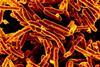
NewsTuberculosis transmission may hold the key to prevention
Scientists have discovered the specific mechanisms that enable the bacteria responsible for tuberculosis to not only survive drying but also to generate mutations linked to antibiotic resistance.
-
 News
NewsNew blood test for tuberculosis could reduce the spread of this top global infectious-disease killer
A new study found that a simple blood test could accurately identify tuberculosis (TB) — a leading cause of death worldwide — among patients with varying degrees of exposure to the disease.
-
 News
NewsFighting the world’s deadliest infection with PAC-MAN and AI
Researchers have developed techniques that can speed up the search for better tuberculosis drugs. They first measure which chemical compounds are able to slip across the outer membrane and then use those measurements to predict other compounds that can get into the Mtb cell.
-
 News
NewsThe early immune clues that determine who develops TB
An early view of the immune response to bacteria in the lungs provides clues as to why some people keep TB in check, while others develop disease, suggesting new ways to intervene earlier and stop TB.
-
 News
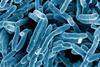
NewsOrdinary enzyme evolves into a ‘control switch’ revealing a new weak spot in tuberculosis
A protein that acts as a ‘control switch,’ preventing Mycobacterium tuberculosis from accessing the energy sources it needs to survive, has been identified by researchers. The discovery points to a specific vulnerability in the bacterium that could be targeted by new TB treatments.
-
 News
NewsResearchers discover how to turn one germ’s drug resistance into an Achilles’ heel
As Mycobacterium tuberculosis mutates to protect itself from rifampicin, it also creates new weak points that other therapies could exploit. A new study shows that the most common rifampicin-resistance mutation slows bacterial RNA polymerase, creating vulnerabilities that future combination therapies may be able to target.
-
 News
NewsResearchers identify immune ‘energy signature’ linked to tuberculosis protection
Researchers found that circulating monocytes from people with latent TB remain metabolically flexible, allowing them to mount strong antibacterial responses, whereas cells from people with active TB disease show impaired metabolism and weaker responses to infection.
-
 News
NewsUnderstanding and exploiting tuberculosis superspreading
A new perspective piece introduces the idea of “superspreading niches”, specific parts of community contact networks where highly infectious individuals intersect with highly susceptible contacts, as a key framework for understanding TB superspreading and designing new TB control interventions.
-
 News
NewsAging immune systems show reduced ability to clear tuberculosis during treatment
Immunosenescence increases susceptibility to infectious diseases like tuberculosis (TB) in older adults and hinder effective containment of Mycobacterium tuberculosis during therapeutic intervention.
-
 News
NewsPortable TB test matches lab accuracy in just minutes
A portable device called MiniDock MTB can deliver accurate TB test results in less than half an hour. Researchers show the device is as effective as a laboratory test and can detect cases even among people who have trouble producing phlegm samples from deep within their lungs.
-
 News
NewsNew biosensor for detecting active tuberculosis
A research team is developing a sensor that paves the way for the rapid, selective and cost-effective detection of active tuberculosis. The device detects the presence of a protein secreted by Mycobacterium tuberculosis, the bacterium that causes the disease.
-
 News
NewsUltrasensitive test reveals evidence of previously undetected tuberculosis in Boston Hospital patients
Researchers have discovered an unexpectedly high prevalence of Mycobacterium tuberculosis DNA (TB DNA) in patients hospitalized in Boston, suggesting that tuberculosis disease may be significantly underdiagnosed in the United States.
-
 News
NewsNovel biosensing platform enables fingertip blood-based micro-volume t-cell immune monitoring
A new platform, known as Tip Optofluidic Immunoassay Interferon-Gamma Release Assay (TOI-IGRA), could revolutionize how people monitor their immune health. The platform allows for the precise quantification of pathogen-specific T-cell responses using a mere 15-25 μL of fingertip blood.
-
 News
NewsStudy maps how tuberculosis bacteria power themselves
A new study provides the first detailed 3D structure of a protein called EtfD, which the bacterium Mycobacterium tuberculosis uses to extract energy from lipids (fats), along with the first laboratory test capable of directly measuring its activity.
-
 News
NewsEmerging class of antibiotics to tackle global tuberculosis crisis
Researchers investigated how three naturally occurring antibiotic compounds – ecumicin, ilamycin and cyclomarin – act on a vital protein degradation machine inside Mycobacterium tuberculosis, the bacterium that causes TB.
-
 News
NewsFirst evidence of fungal pathogen becoming more deadly when co-infected with tuberculosis
Co-infection of Mycobacterium tuberculosis, together with Cryptococcus neoformans, is a grave public health concern, increasing the risk of death significantly. Researchers have found that in the presence of Mycobacteria, the fungus changed its cell density, cell diversity, and capsule size.
-
 News
NewsResearchers develop new inhalable treatment for TB
Researchers have developed an inhalable, immunomodulating, biocompatible nanoparticle system encapsulating rifampin, one of the most important TB drugs.
-
 News
NewsHow Mtb safeguards itself from foreign DNA
Researchers have discovered how a key protein in the tuberculosis bacterium helps protect it from the influence of foreign DNA inserted into its genome. Understanding how this protein – called Lsr2 – functions could help develop drugs that target it, thereby aiding in the fight against TB.
-
 News
NewsNew test shows which antibiotics actually work
Drugs that act against bacteria are mainly assessed based on how well they inhibit bacterial growth under laboratory conditions. A critical factor is whether the active substances actually kill the pathogens in the body. Researchers have presented a new method for measuring how effectively antibiotics kill bacteria.
-
 News
NewsTB harnesses part of immune defense system to cause infection
Scientists have made a discovery that helps explain why humans and animals are so susceptible to contracting tuberculosis – and it involves the bacteria harnessing part of the immune system meant to protect against infection. They team discovered that MTB survives within the cells of its host by targeting Dectin-1.