
All Starter Cultures in Fermentation articles
-
 News
NewsDairy waste to fuel: New process unlocks potential of 95,000 tonnes of salty whey
A company that helped design how astronauts grow and recycle food in space is now applying that thinking to the critical problem of dairy waste here on Earth. Scientists turned salty whey, a high-volume by-product from cheese production, into bioethanol.
-
 News
NewsLocal microbes persist in wine despite commercial yeast
A new study has demonstrated that regional microbial imprints can remain detectable under commercial winemaking conditions. The new research shows that inoculated fermentations do not “override” native microbial diversity and that vineyard management and environmental conditions matter in wine quality.
-
 News
NewsSmoky off-flavors in cocoa aren’t caused solely by smoke - overfermentation can be the cause
Researchers have shown that overfermentation of cocoa beans can cause smoky, leathery, and cheesy off-flavors. Smoky flavors, therefore, are not necessarily attributable to smoke contamination.
-
 Opinion
Whose culture is it? Rethinking the study of traditional fermented food microbiomes
When microbiologists study traditional fermented foods, are we simply documenting natural biodiversity, or are we also accessing a form of cultural heritage, asks Tara Spencer-Drakes, PhD.
-
 News
NewsAnaerobic dry processing unlocks flavor precursors in Arabica coffee beans
A research team has mapped how four post-harvest processing methods reshape flavor precursors in Arabica coffee beans, showing that anaerobic fermentation substantially increases key non-volatile metabolites linked to aroma, flavor, acidity, body, and balance.
-
 News
NewsResearchers launch global initiative to study disappearing heritage diets
The world’s ‘heritage’ diets could hold vital clues to better health. Researchers from 12 countries have launched the World Diet Initiative, a global effort to document and study these diets before this knowledge is lost.
-
 News
NewsWild yeast discovery enables non-GM brewing of ornithine-enriched craft beer
Researchers have uncovered a naturally derived yeast mutation that boosts ornithine production while preserving brewing performance for value-added fermentation.
-
 News
NewsFermentation science may offer new route to better lower-alcohol wine
In addition to finding ways to ferment grape juice without producing as much alcohol, one scientist is exploring novel yeasts and methods to overproduce aromas to compensate for their eventual loss when reducing alcohol through grape juice dilution.
-
 News
NewsProfessor Kaneko’s sake and wine earn honors at French Japanese Sake Competition for second consecutive year
At “Kura Master,” a Japanese sake competition held in France for French consumers since 2017, “Aldebaran,” a wine produced from grapes grown in the city of Ibara, in Okayama Prefecture, and supervised by Professor Akihiro Kaneko, won a Gold Award in the Muscat Bailey A category.
-
 News
NewsInternational leaders in probiotic and prebiotic science to gather in Tokyo for one-day symposium
To help strengthen global collaboration and showcase innovative biotics research, The International Scientific Association for Probiotics and Prebiotics (ISAPP) is organizing a scientific symposium on October 6, 2026 in Tokyo, Japan in conjunction with its annual meeting.
-
 News
NewsCheese bacteria could offer health benefits
Scientists identified the microbial and biochemical profiles of three artisan cheeses made locally in Oxfordshire across their maturation process, and found that the bacteria responsible for a cheese’s character could also benefit the people who eat it.
-
 News
NewsMicrobes contribute a surprisingly large array of proteins in fermented foods
A study examining the proteins found in fermented foods like yogurt, cheese and bread found that a surprisingly large number, and percentage, of microbial proteins contribute to their overall protein content.
-
 News
NewsNew lactic acid bacteria for plant-based yogurt alternatives
Researchers find that a particular type of lactic acid bacteria has considerable potential for producing plant-based yoghurt alternatives. The bacteria inhibit potentially harmful bacteria and break down sugars that can cause stomach discomfort.
-
 News
NewsA bacterium from bumblebees can produce vitamin B2 in soya drinks
Researchers have developed a new method that can reduce the time needed to find new bacteria for fermentation. They have now identified a bacterium that can be used both for acidification and to increase the vitamin B2 content of soya drinks.
-
 News
NewsHow fermentation reshapes golden flower white tea aroma
Golden flower white tea is a relatively new tea product made by applying the traditional Fu brick tea flowering process to white tea. That process includes steaming, pressing, microbial fermentation, and drying, and it is known to trigger complex biochemical changes associated with the growth of Eurotium cristatum.
-
 News
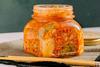
NewsKorean live microbes survey finds less inflammation from consuming fermented foods
A new study that analyzed South Korean health data to determine whether live microbe intake from fermented foods like kimchi is associated with certain health indicators, found a link between increased consumption of live microbe-rich foods and lower systemic inflammation.
-
 News
NewsKimchi-derived probiotic found to promote binding and excretion of intestinal nanoplastics
Scientists have announced that a lactic acid bacterium isolated from kimchi can help promote the removal of nanoplastics from the body by binding to them in the intestine.
-
 News
NewsWorld’s first rum brewed with high ginjo-aroma–producing fission yeast Schizosaccharomyces japonicusponicus
Researchers at Kumamoto University have announced the world’s first rum produced using the fission yeast Schizosaccharomyces japonicus, marking a breakthrough in fermentation science and craft spirits innovation. The new product, “JAPONICUS RHUM AGRICOLE,” goes on sale February 27, 2026. Source: Kumamoto University Professor Tokio Tani (left) holds the ...
-
 News
NewsHealthier, tastier kelp: food scientists boost nutrition and flavour of kombu
A team of food scientists has found a way to unlock the trapped nutrients in the edible seaweed, kombu, and replace the strong odours with more appealing scents, directly overcoming the two major challenges – limited nutrient bioaccessibility and poor sensory experience.
-
 News
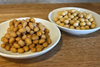
NewsResearchers probe how natto produces supersulfide molecules in fermentation
Natto, a Japanese food made from soybeans fermented with the Bacillus subtilis var. natto microorganism, is rich in supersulfide molecules, which are attracting attention in the medical and nutritional fields. Researchers extensively analyzed supersulfide content in natto fermentation using various methods.