
Shigella has long been a taxonomic oddity, a genus that has survived more by historical habit than biological coherence. For over 70 years, we’ve treated the Shigella species (S. dysenteriae, S. boydii, S. flexneri and S. sonnei) as distinct from Escherichia coli, even though genomics has been shouting the opposite for decades.
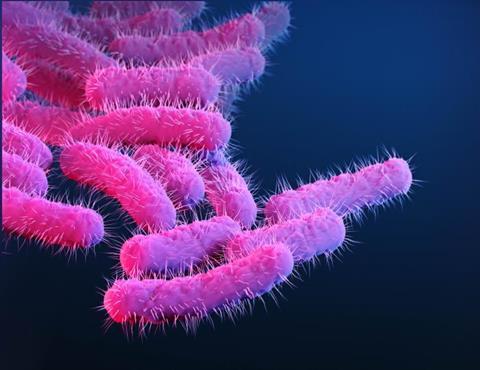
In an era where evolutionary relationships can be resolved down to the single-nucleotide level, Shigella stands out as a relic of phenotype-based classification: a label built on lost traits rather than shared ancestry.
We now know these “species” are not a unified lineage at all, but multiple independent branches of highly specialised enteroinvasive E. coli (EIEC) that converged on a similar lifestyle after acquiring the same invasion plasmid. Yet the genus persists, defended by appeals to “clinical utility”. The real question is whether those arguments still hold in a world where genomics increasingly underpins clinical microbiology, outbreak response and public‑health surveillance?
The family tree
First, let’s make sure we are on the same page about the phylogenetics.
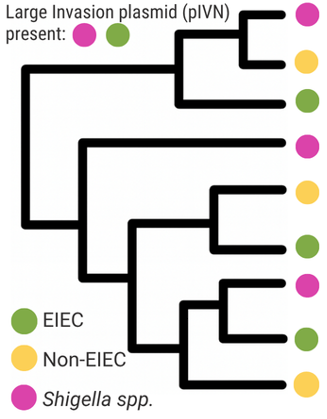
Shigella lineages are polyphyletic, having emerged independently from multiple E. coli ancestors (see left) through acquisition of a large invasion plasmid (pINV), contradicting the fundamental taxonomic principle of shared evolutionary history.
Loss of characteristics such as motility and lactose fermentation reflects reductive evolution associated with the intracellular lifestyle enabled by pINV. Once these traits no longer confer a survival advantage, their genes can become inactivated. This also explains the phenotypic overlap between Shigella and EIEC, which also possess pINV.
Shigella exceed the species thresholds used in modern genome-based taxonomy; sharing ≥ 96% average nucleotide identity and ≥ 70% digital DNA-DNA hybridization with multiple E. coli strains. This is particularly significant given that, of the ~25,000 gene families found across the E. coli species complex, fewer than 2% occur in every strain.
Embedded for decades
So, does clinical utility still justify keeping Shigella separate?
Some barriers to reclassification are undeniable. Shigella has been embedded in diagnostic pathways and surveillance systems for decades; reclassification could cause confusion, disrupt historical datasets and complicate long-term trend interpretation. Updating surveillance systems, protocols and training would also carry substantial financial and operational costs. But are these barriers greater than the potential benefits of aligning nomenclature with evolutionary reality?
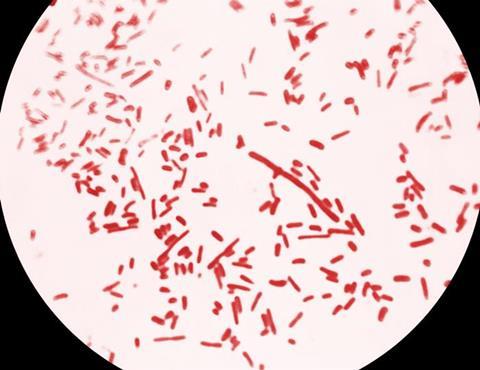
The name Shigella is sometimes argued to have a clinical gravitas that E. coli lacks, aiding triage, treatment and infection control. Yet clinical presentation, severity and treatment are determined primarily by virulence factors such as the Shiga toxin, which is present in Shiga Toxin producing E. coli (STEC), but not in all Shigella species. Similarly, although most E. coli (including EIEC) have a much higher infectious dose, STEC shares Shigellas incredibly low infectious dose of 10–100 CFU.
Since most acute diarrhoeal infections are self-limiting, supportive hydration is standard care; when antibiotics are indicated, prescribing decisions are informed by antimicrobial susceptibility testing and virulence factors, not species designation. How, then, does maintaining this dichotomy provide clinical benefit?
A question of species
It’s worth remembering species are not inherent categories in nature; taxonomy and nomenclature are anthropogenic communication tools, and their application differs across stakeholder groups such as researchers, clinicians, epidemiologists and policymakers. For Shigella, acknowledgement of its genetic similarity with E. coli already varies dramatically within and between sectors, a communication risk worth addressing regardless of formal reclassification.
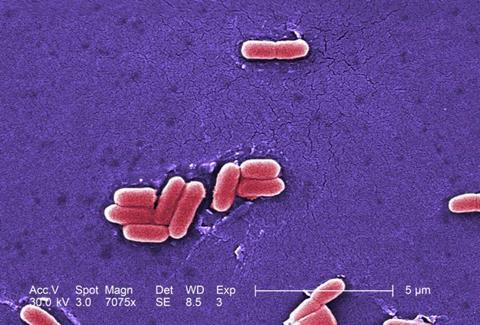
Standard biochemical methods already struggle to distinguish Shigella from E. coli, requiring all potential shigella isolates be sent to reference laboratories for genetic sequencing. Whole‑genome sequencing, through approaches such as k-mer analysis and core-genome multilocus sequence typing, provides the most robust means of resolving Shigella/E. coli at the strain level. Crucially, genomics can simultaneously identify clinically important virulence determinants, such as Shiga toxins stx1 and stx2, while molecular serotyping can preserve continuity with historically important serotypes used in surveillance.
Genomic data can therefore support diagnosis, treatment decisions, surveillance, and outbreak control within a single framework. As sequencing becomes faster, cheaper and more portable, microbiology is increasingly moving toward genomics as its central evidential base. A taxonomy grounded in evolutionary relationships therefore seems not only scientifically coherent, but more future-proof.
Laboratories across the globe
One important caveat is equity. Genomic infrastructure is not equally available worldwide, meaning many laboratories in low-resource settings, will continue to rely on biochemical identification. A genome-based taxonomy should not disadvantage laboratories lacking sequencing capacity, reinforcing the need for standardised nomenclature, robust phenotypic proxies, and continued compatibility with historical surveillance data.
MICROBIOLOGY NEWS: Register with The Microbiologist for more free articles
Merging Shigella into Escherichia coli would harmonise taxonomy with genomic evidence while preserving clinically relevant information through virulence determinants, molecular serotyping and phenotypic proxies.
Such a shift would strengthen communication across laboratories, clinicians and public‑health agencies without erasing the practical needs of settings that rely on biochemical identification. As genomics becomes increasingly central to microbiology, surely a classification that reflects true evolutionary history provides the most coherent and durable path forward.
Georgina Donovan is a final year Biological Sciences (BSc) student at The University of the West of England, Bristol.






No comments yet