
Disease X is less a biological uncertainty than a governance stress test. The real question is whether the WHO Pandemic Agreement has corrected the failures exposed during COVID-19.
“Disease X” is often framed as the next unknown pathogen demanding rapid sequencing, accelerated modelling and swift countermeasure development. The assumption is that preparedness is primarily a scientific challenge. COVID-19 unsettled that view. Scientific progress was extraordinary: SARS-CoV-2 was sequenced within weeks; diagnostics were rapidly adapted; vaccines were developed in record time.
Yet coordination broke down. Export bans multiplied. Data sharing became selective. Manufacturing capacity turned into leverage. Vaccine access followed power, not epidemiology. The main bottlenecks were not technical. They were political.
That experience frames the Pandemic Agreement, adopted in 2025 and presented as a corrective. It strengthens commitments on surveillance, pathogen and data sharing, equitable access and technology transfer. It has been described as a revival of multilateralism.
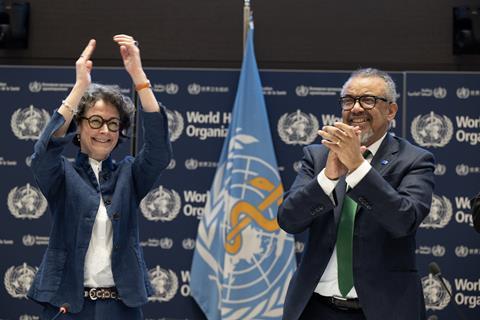
But optimism should be tempered. Although legally binding, the Agreement does not fundamentally change how states behave under pressure. Key provisions on intellectual property and technology transfer were softened during negotiation. The Pathogen Access and Benefit Sharing system remains politically sensitive. Major powers negotiated cautiously, mindful of national advantage.
Pandemics require collective action. Political accountability, however, remains national. Under acute stress, governments prioritise domestic populations. Leaders who fail to secure vaccines or protective equipment for their own citizens face immediate consequences. Those who fail to ensure global equity rarely do.
“Legal obligation alone does not override these incentives. When non-compliance carries a limited cost, rules weaken. Any framework that depends on political goodwill at the peak of a crisis is fragile.”
Geopolitical asymmetries make this fragility more visible. States with manufacturing capacity and regulatory power can turn health technologies into strategic assets. States without such capacity, many of them low- and middle-income countries, depend on negotiated access. Unless these imbalances are addressed through enforceable distribution mechanisms, future crises will reproduce unequal access and prolonged transmission.
Preparedness, therefore, cannot rest on commitments alone. It requires pre-agreed rules that can be activated automatically.
Clear thresholds for data sharing, pathogen transfer, emergency financing and regulatory coordination should take effect once predefined criteria are met. Pre-commitment would not remove political tension, but it would reduce delay and limit opportunistic behaviour when pressure is highest.
This is not a rejection of sovereignty. It is recognition that discretion is most distorted at the height of a crisis. Without automatic triggers, cooperation relies on restraint precisely when restraint is hardest to sustain.
For microbiologists, this is not abstract institutional design. Surveillance systems work only if data moves quickly across borders. Sequencing networks depend on timely access to samples and metadata. Technology transfer requires regulatory alignment and trust between scientific institutions and public authorities. When geopolitical caution interrupts these flows, science slows.
In WHO’s framing, Disease X refers not to a specific pathogen but to the emergence of a novel threat capable of triggering a Public Health Emergency of International Concern or a pandemic. Scientific capacity to detect and characterise such threats has advanced considerably. The uncertain variable is whether governance systems can sustain cooperation once a threat is recognised.
Preparedness metrics often measure infrastructure: stockpiles, laboratory capacity, and legal frameworks. They rarely measure behaviour under stress. Yet behaviour under scarcity determines whether cooperation endures or fractures.
The Pandemic Agreement is an important diplomatic step. It shows that negotiation remains possible in a fragmented world. But multilateralism is most stable when costs are manageable. Health emergencies reverse that condition. Scarcity intensifies national incentives and strains cooperative norms.
Disease X will not primarily test laboratories. It will test whether global governance can restrain nationally rational choices when collective risk escalates. If cooperation once again depends on political goodwill at the height of crisis, fragmentation will return. Preparedness requires automatic mechanisms that are activated before pressure distorts decision-making, not renewed negotiation during emergency. The next global health crisis will reveal whether the world has merely updated its language or truly redesigned its rules.
Further reading:
- Martin McKee, Tiago Correia, Universal duties in a fragmented world: why Europe must reclaim Kantian ethics for global health governance, European Journal of Public Health, 2026;, ckag019, https://doi.org/10.1093/eurpub/ckag019
- Correia, T., Buissonnière, M. and McKee, M. (2025), The Pandemic Agreement: What’s Next?. Int J Health Plann Mgmt, 40: 1029-1032. https://doi.org/10.1002/hpm.70000




No comments yet