

Director General of the Chilled Food Association, Karin Goodburn MBE, who sits on AMI’s Food Security Advisory Group, reveals why the publication of new Listeria guidance for the UK food industry is regarded as a landmark moment.
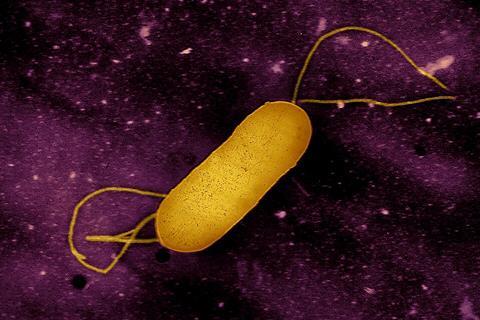
Listeria monocytogenes (Lm) is at the heart of why the Chilled Food Association (CFA) exists. In 1987-9 a major outbreak in the UK linked to imported pâté resulted in more than 200 cases and over 17 deaths.
The product wasn’t made by what would later become CFA member companies, yet it set a precedent: food safety is a shared responsibility that transcends individual businesses.
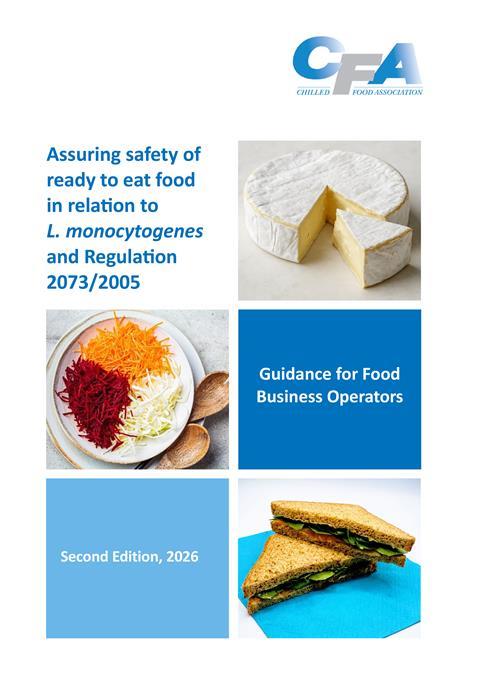
Nearly 37 years on, that lesson remains vital. CFA has just released its new Listeria monocytogenes Guidance (Second Edition, 2026) —downloaded more than 500 times in its first week and welcomed by industry and trade as a ‘landmark moment’. Its rapid uptake shows how essential clear, science-based, and practical guidance remains for our sector.
The weight of responsibility
I’ve worked in food safety assurance for decades, and Lm remains uniquely challenging. It’s remarkably resilient - growing at -2°C, surviving freezing, thriving in high salt concentrations, flourishing without oxygen for example in vacuum-packed products. Most significantly, there’s the human cost when control fails.
The world’s largest reported listeriosis outbreak from 2017–2018 in South Africa - over 1,000 infections and more than 200 deaths — exposed gaps in food safety governance in that country and led to systemic reforms. Closer to home, but related to another bacterium, the UK last year experienced a £10 million recall of short-shelf-life products, highlighting how vigilance must never waver.
Statistics are one thing, but they translate into real human stories: families grieving, vulnerable individuals losing their lives and sequelae – the last effects of illness. These tragedies remind us that every technical control and monitoring regime represents more than compliance — it protects people and businesses.
The daily balancing act
There’s an important story to tell about the complex decisions food businesses navigate daily. Lm forms biofilms on surfaces and can randomly break off and contaminate products despite rigorous cleaning and disinfection. Symptoms can take up to three months to appear, making source tracking extremely challenging despite the availability full traceability data given reliance on people’s recollections of what food they ate.
From July 2026, businesses in Northern Ireland and the EU face an amendment to Criterion 1.2b of Regulation 2073/2005. While the fundamental requirements remain similar (Lm limit of 100 cfu/g for ready to eat food for the general population), the emphasis on the need for robust shelf-life evidence is stronger, with Competent Authorities having a strengthened penalty for non-compliance, being the requirement for Lm to be Not Detected throughout shelf life instead of at the point of production as currently. This creates urgency for businesses to ensure their validation methods are comprehensive.
Businesses are forever balancing food safety against food waste, consumer demands for preservative-free products against appropriate shelf-life, commercial realities against regulatory compliance. Every decision requires careful consideration.
Why our approach works
Despite these pressures, the UK continues to maintain stable listeriosis rates, while across much of Europe they have more than doubled in recent years. Remarkably, we’ve not had UK outbreaks from retailed food of the scale of that from imported pâté since 1989 — a record grounded in world-leading standards and continuous industry collaboration.
Retail chilled prepared foods in the UK have some of the shortest shelf lives globally and are typically made to order and are without preservatives. This system delivers what consumers demand but leaves limited margin for error.
The new CFA guidance directly supports this operational reality, translating the Four Cs — Cleaning, Cooking, Chilling, Cross-contamination prevention, plus using high microbial quality ingredients — into actionable practices that work within modern production environments. Developed with strong input from food producers, retailers, trade associations, government agencies, it also aligns with evolving regulatory expectations.
Moving forward together
Guidance alone is not enough. Continuous collaboration between industry, the trade, enforcers, regulators, and scientists is essential to make food safety systems robust in practice, not just on paper. The new guidance has therefore been written for both food business operators and enforcement officers, providing each with tools that support consistent interpretation, evidence-based decision-making, and alignment with regulatory expectations.
READ MORE: CFA publishes timely new industry-led UK Ready to Eat Foods Safety and Shelf Life Guidance
READ MORE: Meet the Advisory Groups: Our Q&A with Karin Goodburn
Public understanding also matters: maintaining safety can mean accepting trade-offs — greater investment in hygiene measures including by suppliers of ready-to-eat foods, shorter shelf lives, stricter temperature control, or investment in more resilient processes and usage of verification data.
Since CFA’s founding in 1989, and the early establishment of the European Chilled Food Federation in 1991, our sector has continually evolved. Today’s guidance reflects 35+ years of accumulated expertise in managing Lm. It doesn’t promise elimination — that’s biologically unrealistic given the ubiquity of Lm - but it delivers practical, science-based resources for both businesses and enforcement authorities to manage the pathogen intelligently and effectively.
The challenge of Lm may be an inconvenient truth, but it continues to drive innovation, collaboration, and world-class safety performance. Protecting public health depends on all of us — food producers, the trade, enforcers, and scientists alike — working from the same evidence base and toward the same goal.
Karin Goodburn MBE is Director General of the Chilled Food Association and sits on AMI’s Food Security Advisory Group - https://www.chilledfood.org/
The CFA’s new Listeria Guidance (Second Edition, 2026) is available at https://tinyurl.com/CFAlisteria







No comments yet