
All Disease X articles
-
 News
NewsCOVID-19 immunity may help protect against other bat coronaviruses
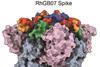
Scientists have found that bat coronaviruses most likely to infect a wide range of animal species are those most closely related to SARS-CoV-2 and most likely to be recognised by immunity generated through COVID-19 infection.
-
 News
NewsMeet the Global Ambassadors: our Q&A with Luay Abu-Qatouseh
The Microbiologist gets to know our Global Ambassador for Jordan, Associate Prof. Dr. Luay Abu-Qatouseh of the Faculty of Pharmacy and Medical Sciences, University of Petra.
-
 News
NewsDrought is reshaping the spread of infectious diseases
A review study reveals how drier conditions could make humans and wildlife more vulnerable to certain infectious diseases, even though many parasites and disease-carrying organisms depend heavily on water to survive.
-
 News
NewsBeyond COVID-19: Fundamental principles that shape pandemics
Researchers have compiled 10 fundamental mechanisms that can be used to describe the development of pandemics, bringing together insights from epidemiology, sociology, mathematics, physics, political science, psychology, and public health.
-
 News
NewsU.S. disease tracker launches to strengthen monitoring of vaccine-preventable diseases
A new website will track the spread of vaccine-preventable diseases across the United States to offer the public, the media, healthcare providers, public health officials, and policymakers reliable and visual information about current disease trends.
-
 News
NewsScientists bring Florida high school students to the front lines of pandemic preparedness
Thirty outstanding high school students from 18 communities across Florida arrived in Tampa last week for the Global Virus Network (GVN) Global Guardians for Pandemic Preparedness Program, curious about viruses and considering careers in science.
-
 News
NewsClimate change is redrawing the malaria map in Africa, study finds
A study quantifying climate change’s historical and future impact in sub-Saharan Africa’s children finds that climate change has slightly increased malaria overall. Rising temperatures could increase the malaria risk in southern and East Africa while reducing it where it is most rampant today.
-
 News
NewsDeadly superbug CR-hvKP: new framework says ‘watch virulence, not just resistance genes’
Carbapenem-resistant hypervirulent Klebsiella pneumoniae (CR-hvKP) represents one of the most alarming evolutionary developments in modern infectious diseases—a “superbug” that combines high-level antibiotic resistance with enhanced virulence.
-
 News
NewsWHO Member States continue negotiations on the Pathogen Access and Benefit Sharing Annex
WHO Member States have advanced negotiations on the Pathogen Access and Benefit Sharing (PABS) annex, while agreeing that continued discussions are needed to finalize a framework that supports a faster, more effective and equitable response to future pandemics.
-
 Features
Advancing animal disease outbreak management in support of a One Health approach
Animal health is often overlooked, with global expenditure reaching just a fraction (around 0.4 percent) of total human health spending, yet it is a crucial component of the World Health Organization’s (WHO) One Health approach. The One Health initiative highlights the commonalities between human, animal and environmental health and aims ...
-
 News
NewsEmerging tick-borne virus raises concern
A study shows how a family of tick-borne viruses known as orthonairoviruses can evade immune defenses, offering important insights into emerging infectious disease threats and the potential pandemic risk posed by these viruses.
-
 News
NewsChikungunya fever: Etiology, pathogenesis, and management, with evidence-based application of traditional Chinese medicine
Traditional Chinese medicine (TCM) offers complementary strategies for acute symptoms and chronic polyarthralgia in Chikungunya infection. A review synthesizes current knowledge on etiology, pathogenesis, clinical features, and management.
-
 News
NewsNo entry: Blocking viruses from entering cells
The Volkswagen Foundation funds a project by UdS, HIPS, and HZI to create an innovative platform for developing viral entry inhibitors—specifically targeting respiratory viruses and other viruses that pose a pandemic risk.
-
 News
NewsKorea University College of Medicine Vaccine Innovation Center selected to lead KDCA-funded hantavirus vaccine development project
The Vaccine Innovation Center at Korea University College of Medicine has been selected by the Korea Disease Control and Prevention Agency (KDCA) as the lead institution for a national hantavirus vaccine development project.
-
 Article
COVID-19 vaccine boosters may help protect against future animal coronaviruses
COVID-19 vaccine boosters not only protect against SARS‑CoV‑2 but may also help protect against some future coronaviruses that risk spreading from animals to humans, researchers have shown.
-
 News
NewsHantavirus in the South Atlantic: A one health and microbiome wake‑up call
The hantavirus pulmonary syndrome outbreak on MV Hondius shows how global travel and environmental change are reshaping how zoonotic viruses emerge. In a new commentary, Professor Lu proposes four initiatives aligned with Microbiome and One Health.
-
 Opinion
Why cruise ships remain vulnerable to viral outbreaks - and how new technologies could help
A dream holiday can quickly become a public health challenge when thousands of people share the same dining rooms, elevators and living spaces. Recent viral outbreaks on cruise ships have shown just how vulnerable these floating cities remain to infectious diseases.
-
 News
NewsOropouche virus has already infected more than 5 million people in Brazil, study suggests
The recent Oropouche virus outbreak in 2023 has drawn attention in Brazil and other Latin American countries because of its scale and rapid spread. Researchers estimate that since 1960, the virus has infected approximately 9.4 million people in Latin America and the Caribbean.
-
 News
NewsReservoir of drug-resistant germs IDed in national surveillance collaboration
Researchers who screened more than 2,000 samples across 42 states say there is a rapidly evolving, plasmid-driven epidemic of community-associated multidrug resistant Klebsiella pneumoniae across the United States.
-
 News
NewsJust 10 viral particles can cause H5N1 avian flu infection in cows
Just 10 viral particles of the H5N1 bird flu that caused hundreds of influenza outbreaks in U.S. dairy cattle can cause infection in cows, a new study shows. The research also hints at why the outbreaks have confounded scientists, farmers and livestock handlers hoping to contain and prevent the disease.