
Antimicrobial resistance (AMR), especially resistance against antimicrobials critically important for human medicine, is becoming increasingly problematic. One group of essential antibiotics are third-generation cephalosporins (3GCs), which among other things are used to treat pneumonia, sepsis, and meningitis.

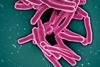
Resistance to 3GCs is conferred by enzyme-encoding genes. Such genes can readily spread between bacteria. One group of bacteria – sometimes labelled ESKAPE – is especially resistant to antibiotics and can ‘escape’ antibacterial agents. One bacterium of this group, Klebsiella pneumoniae, which can cause severe infections in humans, has spread far beyond places and systems directly exposed to antibiotics, a new Frontiers in Microbiology study showed.
“We isolated a high-risk ST307 clone of K. pneumoniae and NDM-5 carbapenemase, an enzyme variant that can inactivate antibiotics, from wildlife living far from human activity,” said Dr Mauro Conter, an associate professor at the Department of Veterinary Medical Sciences at the University of Parma. “This confirms the role of wildlife as reservoirs of clinically relevant resistance, which means that wildlife surveillance could provide an early warning system of resistance spreading beyond clinical settings.”
Antibiotic resistance heralds
The researchers examined almost 500 fecal samples from wildlife, stemming from red foxes (184 samples), crows and magpies (209 samples), and several species of water birds (100 samples). The team used samples from these animals as they move through urban, rural, and wild areas alike, and ‘collect’ AMR across ecosystems and regions without receiving antibiotics themselves. Foxes contribute to short-range AMR dissemination on the ground, whereas birds can spread resistance across long distances by air.
Samples were collected from animals’ guts and tested for Klebsiella spp., a genus of bacteria including K. pneumoniae and other opportunistic pathogens. Klebsiella spp. can produce carbapenemases, which are enzymes that neutralize carbapenem antibiotics which are often last-resort antibiotics for treating severe infections caused by multidrug-resistant bacteria.
The researchers found Klebsiella spp. bacteria in 32 samples. Bacterial species belonging to certain genera were more or less prevalent in certain animals, with K. pneumoniae being present in waterbirds and foxes. The bacterium was found in 2% of samples.
“Even a 2% prevalence in wildlife represents environmental contamination by high-risk clones. K. pneumoniae readily spills over through water and waste routes, creating a continuous human-animal-environment resistance cycle,” Conter pointed out.
Exceeding clinical resistance rates
The researchers also found that K. pneumoniae isolates in this study exhibited higher levels of resistance against nearly all antibiotic classes compared to surveillance data from 2024. The team said this trend is not surprising, but predictable across humans, animals, and the environment.
“Our study showed that wildlife resistance exceeds clinical rates,” explained Conter. “100% of K. pneumoniae isolates from wildlife in our study were resistant to 3GCs. Compared to this, only 19.6% of K. pneumoniae isolates from human patients in Italy were resistant to 3GCs, according to the latest European Centre for Disease Prevention and Control surveillance data.”
Resistance to fluoroquinolones, a different group of antibiotics used to treat severe UTIs and pneumonia, also was at 100% in isolates from wildlife, compared to 17.4% in isolates from human patients.
Combatting the spread of AMR bacteria
To combat the spread of AMR bacteria into ecosystems that are not directly exposed to antibiotics, we need to reduce antibiotic pollution of wastewater, improve sewage treatment, and promote more prudent use of antimicrobials in livestock, the researchers stressed. This also includes restricting critically important antibiotics to human medicine.
The team pointed out that their study was not designed to identify direct transmission links between wildlife and humans, and that the prevalence of resistance rates may have been underestimated. Due to the sampling approach, the isolated bacteria also may not represent the true diversity of bacteria in the environment. In the future, larger studies that link human to animal to environment transmission – both on national and international scales – are needed but challenging to implement.
“What we see is a complex problem that requires ‘one health’ solutions addressing antibiotic pollution, climate-driven wildlife behavioral changes, and bacterial population dynamics,” concluded Conter. “Our data justify routine wildlife AMR monitoring as a public health early warning system, guiding environmental interventions before resistance reaches clinical settings.”


No comments yet