
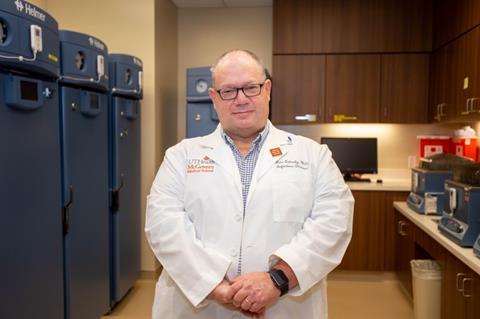
Luis Ostrosky, MD, division chief of infectious diseases at McGovern Medical School at UTHealth Houston and chief epidemiology officer for Memorial Hermann Health System addresses the Ebola outbreak in Congo and Uganda and how the United States could be affected through travel.

As of early June 2026, an Ebola outbreak has surpassed 1,000 cases in Central Africa, with the epicenter in the Democratic Republic of the Congo. The last time an Ebola infection was detected in the United States was in 2014, when 11 people were treated and two died. This is one of the largest and fastest outbreaks on record.
Typically, Ebola outbreaks begin in a small village or city, where public health infrastructure can contain them. This time, however, the virus has spread into larger cities and even capital cities, increasing the potential for wider transmission. The current strain, called Bundibugyo, is a new Ebola virus strain. Testing shows that, unlike previous strains, there is no available vaccine or targeted treatment.
What is Ebola virus?
Ebola is a severe, often fatal, viral illness that causes hemorrhagic fever, internal bleeding, and organ failure. Ebola is extremely infectious through contact with bodily fluids, particularly in patients in whom the infection is more severe. So the sicker you are, the more infectious you’re going to be. But the good news is that you’re not infectious before you show any symptoms. It’s also not airborne like the respiratory viruses.
The incubation period for Ebola virus is two to 21 days. The Bundibugyo strain is showing shorter periods around two to four days.
What are the symptoms?
Dry symptoms include fever, chills, muscle aches, and profound fatigue. Wet symptoms include vomiting, diarrhea, cough, rash, and bleeding. Ebola can mimic other infectious diseases such as typhoid and malaria, which can delay diagnosis and worsen outcomes.
What is the treatment?
Current monoclonal antibodies for Ebola do not cover the Bundibugyo strain, and no approved therapeutics exist for this variant. While this makes the virus more concerning, early reports suggest it may be less severe, with mortality rates of 25% to 45%, compared with 80% in previous strains.
For now, treatment focuses on supportive care: hydration, electrolyte correction, and management of bleeding. Some engineered antibodies have shown promise in laboratory settings but are not yet approved.
What is the risk of spreading Ebola during World Cup travel to Houston?
The risk is very low. You are more likely to catch norovirus than Ebola, but with FIFA officials expecting more than 500,000 visitors to Houston for the World Cup, the risk of Ebola is not something to take lightly.
How are Houston health officials preparing?
Ebola response follows federal and regional guidance from the CDC and U.S. Department of Health and Human Services. Any U.S. hospital is prepared to identify, isolate, and provide supportive care for a suspected Ebola case until transfer to a regional treatment center.
Internationally, the WHO, Doctors Without Borders, CDC, European Centre for Disease Prevention and Control, and Africa CDC are coordinating a robust response, including treatment centers, contact tracing, and sanitation efforts.
The United States has also implemented a temporary travel ban for travelers from affected countries. U.S. citizens may return but must enter through designated airports for enhanced screening.
The Texas Department of State Health Services (DSHS) is partnering with The University of Texas Health System to offer a free hotline for Texas providers managing suspected infections related to the 2026 FIFA World Cup.
Call the hotline: 866-213-3368
- Availability: 24/7 through July 31, 2026
- Staffing: Adult and pediatric infectious disease specialists
- Purpose: Clinical recommendations and escalation guidance
Note: The hotline does not replace infectious disease consultation or mandatory public health reporting.
Seek information from reputable sources, and do not attempt to treat yourself at home. For more information, visit the CDC or DSHS for local information.
Luis Ostrosky, MD, is professor and division chief of infectious diseases, Memorial Hermann Chair, director of the Laboratory of Mycology Research, and vice chair of medicine for health care quality at McGovern Medical School at UTHealth Houston. He also serves as chief epidemiology officer for Memorial Hermann Health System.





No comments yet