
All Disease X articles – Page 2
-
 News
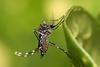
NewsAs California warms, cases of dengue fever are expected to grow
Historically, dengue fever has been rare in California. But according to new research, a warming climate is making parts of the state more hospitable to the illness — and the mosquitoes that carry it.
-
 News
NewsClimate-driven dengue surge: Predicting future outbreak risk across Costa Rica
Scientists have developed a practical framework for predicting how shifting temperature and precipitation patterns could influence dengue fever outbreaks across Costa Rica.
-
 News
NewsChina’s psittacosis knowledge gap: A scoping review calls for coordinated action
Psittacosis—a bacterial pneumonia transmitted from birds to humans—is experiencing a notable resurgence in China. A new review presents a sobering picture: psittacosis is epidemiologically substantive, clinically serious, and chronically underserved by institutional resources and public health infrastructure.
-
 News
NewsFirst-in-human clinical trial shows promising results for new Lassa fever vaccine
Researchers have reported encouraging results from an early clinical trial that tested a new dual vaccine against Lassa fever and rabies. The study found that the vaccine was safe and induced immune responses against both viruses. There are currently no vaccines against Lassa fever on the market.
-
 News
NewsNew model could help track deadly viruses back to their source
A new predictive model could help scientists more efficiently identify the reservoirs of emerging zoonotic viruses and dangerous pathogens like Ebola that can spill over from animals into humans. It relies on detailed information collected on suspected reservoir species to identify key windows.
-
 News
NewsT cells may be key to stopping measles virus—and its deadly relatives
Scientists have discovered how T cells target paramyxoviruses, a viral family that includes measles virus and Nipah virus. Instead of vaccinating against one virus at a time, the researchers found that activating “cross-reactive” T cells may protect against the wider paramyxovirus family.
-
 News
NewsPan-European One Health Network established to bolster infectious disease response
iiCON: the Infection Innovation Consortium has successfully secured funding from COST to establish a unique pan-European COST Action network with over 70 collaborators from 21 countries and international organisations to harmonise the European response to infectious disease threats.
-
 Careers
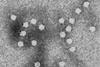
A week in the life of a Parvovirus researcher
Alejandro Fernández Llorente works as a predoctoral researcher at Centro de Biología Molecular Severo Ochoa (CBM-CSIC), a prestigious biomedical research centre located in Madrid, Spain.
-
 News
NewsExperts convened by WHO advise on candidate treatments and vaccines for Ebola disease caused by Bundibugyo virus
In response to the current outbreak of Ebola disease caused by Bundibugyo virus, WHO convened several of its expert and advisory groups to assess potential vaccines and therapeutics for both prevention and treatment of Bundibugyo virus disease (BVD).
-
 Features
Equity and the response to Covid 19 - Preparing for the next pandemic in Aotearoa New Zealand
Aotearoa New Zealand enacted an effective response to the Covid-19 pandemic. The government approach to the first few cases in March 2020 was to implement a swift ‘go hard and go early’ response. Borders were closed to non-residents, lockdowns were enforced, and infection was effectively eliminated within 76 days of ...
-
 News
NewsNorth America and Europe could become hotspots for chikungunya virus due to climate change
Enabled by global heating, mosquito-borne chikungunya virus is likely to spread into temperate regions. Under climate change models, the virus will further expand northward into temperate regions, especially northeastern North America, central Europe, and East Asia, researchers say.
-
 News
NewsScientists harness T cells to help the body fight entire viral families
Scientists have discovered that combining key vaccine ingredients could give the body the tools it needs to fight the entire family of arenaviruses with a single vaccine, protecting against life-threatening infections from Lassa virus, Junin virus, and other arenaviruses with pandemic potential.
-
 News
NewsHealthcare utilization disruptions continue in post-COVID China
Although China’s stringent public health policy, Dynamic Zero-Covid, was lifted in late 2022, researchers have discovered substantial, long-term declines in outpatient clinic visits and hospitalizations compared to expected levels from 2020 to 2024 in China.
-
 News
NewsGlobal Virus Network experts urge rapid regional action as Bundibugyo Ebola outbreak raises cross-border concerns
The Global Virus Network (GVN) calls for greater global financial, logistical and research support for the local response to the rare Bundibugjo Ebola virus outbreak in Africa. The spread of this virus, largely undetected, was declared a global public health emergency by the World Health Organization.
-
 News
NewsCOVID racism driven by more than fear of infection
Anti-Asian discrimination and violence increased during COVID, and new research has revealed one key psychological driver. Rather than being driven by a fear of infection, aggressive forms of discrimination appeared to be more strongly associated with anger.
-
 News
NewsClimate change and emerging diseases pose challenges for physicians
Climate change is affecting the local ecology in Canada, contributing to emerging tick- and mosquito-borne diseases and infections in humans, argue scientists.
-
 News
NewsNew report charts path for climate-disease preparedness
Changing patterns of temperature and precipitation, along with sea level rise and more extreme weather events, are impacting the ecology, evolution, distribution and prevalence of infectious disease reservoirs, hosts, vectors and pathogens. As a result, new diseases are emerging, and others are reappearing in regions where they were once uncommon.
-
 News
NewsMeasuring SARS-CoV-2 diversity in wastewater improves disease surveillance
Tracking the genetic diversity of SARS-CoV-2 in wastewater, rather than just viral abundance, dramatically improves the ability to monitor and predict COVID-19 outbreaks, researchers report.
-
 News
NewsExperts call on WHO to revisit its approach to airborne risk in light of hantavirus outbreak
In light of the hantavirus outbreak, public health experts have called on the World Health Organization (WHO) to shift its default response to emerging respiratory viruses. The starting point should not be to downplay the risk of airborne transmission until it is definitively proven, they warned.
-
 News
NewsEurope advances genomic surveillance of CCRE with landmark multi-country study
New survey results provide the most comprehensive genomic picture to date of carbapenem- and/or colistin-resistant Enterobacterales (CCRE) across hospitals in Europe.