
All Disease X articles – Page 3
-
 News
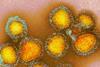
NewsFlu signals in wastewater offer an early warning for community outbreaks
A research team has demonstrated that measuring influenza viral RNA in wastewater can be used to estimate community influenza incidence. The approach may help identify outbreak trends about one week earlier than publicly available patient report data.
-
 News
NewsWhat the Andes hantavirus outbreak reveals about pandemic risk
The outbreak of Andes hantavirus aboard the international MV Hondius cruise ship underscores how little scientists still know about the viruses circulating silently in wild rodent populations before they spill into humans.
-
 News
NewsGlobal outbreaks may fuel violence against women — but most cases go unmeasured
Violence against women and girls may increase during infectious disease outbreaks — as economic strain, isolation and disrupted services reshape daily life — yet those impacts remain largely unmeasured, according to a new study.
-
 News
NewsResearchers flip the CRISPR script to develop world’s first DNA-guided gene editing tool for precise infectious disease diagnosis
A research team has successfully developed the world’s first DNA-guided CRISPR-Cas system capable of programmable RNA targeting and cleavage. This breakthrough overturns the conventional CRISPR paradigm, which uses RNA as a guide to target DNA.
-
 News
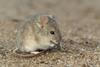
NewsClimate change increases spillover risk of rodent-borne arenaviruses
Climate change is likely to drive rodent-borne arenaviruses into parts of South America that have never faced these diseases, according to an early risk projection model that incorporated climate projections, shifting rodent populations and the risks of human infection.
-
 News
NewsStudy finds four of the CDC’s seven measles elimination status indicators missed
After public health experts declared measles eliminated in the U.S. in 2000, the U.S. CDC established seven indicators of measles elimination status to ensure that the country remained on track. Now researchers find that the U.S. missed four of the seven criteria, with the others at risk.
-
 News
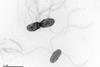
NewsWhy antibiotics may soon fail to curb the plague bacterium - and where we can find new strategies
A new review shows that while most infections caused by the Yersinia plague bacterium can currently be treated with antibiotics, concerns about rising antimicrobial resistance mean that we need to come up with new ways to disarm the bacteria instead of killing them.
-
 News
NewsThe handbook that can prepare countries for the next pandemic
A new handbook has been published to pave the way for better decision-making and greater preparedness for the next pandemic. It provides practical guidance on how mathematical models can be used to inform decision-making, and how the results can be communicated in times of crisis.
-
 News
NewsBeyond outbreaks: zoonotic disease prevention at the human–animal interface in China
A study synthesizes evidence on 93 zoonotic diseases currently monitored by China’s public health, agricultural, and forestry sectors, and argues that meaningful risk reduction will require shifting from reactive outbreak response toward earlier prevention at the human–animal–environment interface.
-
 News
NewsGlobal Virus Network statement on H5N1 vaccine developments
The new vaccine momentum reflects the growing urgency of avian influenza (H5N1) threat and reinforces the need for coordinated global preparedness.
-
 News
NewsStudy of influenza D in human cells and tissue hints at spillover potential
The influenza D virus that researchers say has been flying under the radar since its detection in animals in 2011 can vigorously make copies of itself in human cells and lung tissue samples, a new study shows.
-
 News
NewsNew study examines measles vaccination coverage after a postelimination outbreak
In 2022–2023, a large postelimination measles outbreak occurred in central Ohio. A study found that 20 months after the outbreak, MMR coverage across the entire primary care network (PCN) population remained well below herd immunity levels, with minimal gains.
-
 Opinion
Reversing the threat: How to stop measles from spreading again
As the Global Virus Network issues a stark warning over the significant resurgence of measles in the US and globally, William J. Moss, Sten H. Vermund, and Maggie L. Bartlett set out what needs to be done if the preventable harms of the current surge are to be reversed.
-
 News
NewsScientists find a new way coronaviruses can get into human cells
An international team of researchers has identified an East African bat coronavirus capable of entering human cells. Whilst the virus can bind to a cell receptor found in the human lung, preliminary testing in Kenya suggests it has not spilled over into the local human population.
-
 News
NewsRising measles cases highlight gaps in vaccination coverage and public health system vulnerabilities
The Global Virus Network (GVN) is closely monitoring a significant resurgence of measles in the United States and globally, reflecting a growing vulnerability in public health systems.
-
 News
NewsMillions suffering needlessly with curable hepatitis C, new analysis reveals
Millions of Americans are still battling potentially deadly hepatitis C even though they could be cured with antiviral drugs they are not receiving, a new analysis reveals.
-
 News
NewsSevere childhood malaria linked to cognitive impairment later in life
New findings suggest children who survive cases of cerebral malaria and severe malarial anemia experience cognitive and academic impairment that persists into adolescence.
-
 News
NewsNew biosensor for detecting active tuberculosis
A research team is developing a sensor that paves the way for the rapid, selective and cost-effective detection of active tuberculosis. The device detects the presence of a protein secreted by Mycobacterium tuberculosis, the bacterium that causes the disease.
-
 News
NewsMaternal RSV vaccination cuts infant hospitalization risk by over 80%, major study finds
The largest real-world study of its kind shows that maternal vaccination against respiratory syncytial virus (RSV) reduces the risk of hospitalisation in young infants by over 80% when given at least two weeks before birth.
-
 Features
Clinical considerations for the next pandemic: challenges facing Japan and strategic preparedness
Multiple global pandemics over the past century – the Spanish influenza (1918), Asian influenza (1957), Hong Kong influenza (1968), H1N1 influenza (2009), and COVID‑19 (since 2019) – have increasingly underscored the necessity for healthcare systems worldwide to be resilient, rapidly responsive, and forward‑facing.