
A new study examined measles vaccination coverage following a large postelimination outbreak, primarily affecting unvaccinated children. Findings from the study were presented during the Pediatric Academic Societies (PAS) 2026 Meeting, taking place April 24-27 in Boston.
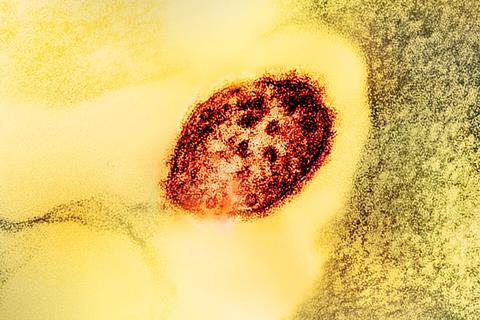
Measles, one of the most contagious vaccine-preventable diseases, requires ≥93% population immunity to prevent sustained transmission. In 2022–2023, a large postelimination outbreak occurred in central Ohio. Public health interventions—including outbreak notifications, quarantines, and expanded vaccination access—were implemented.
However, robust local estimates of measles–mumps–rubella (MMR) vaccination coverage are limited. Prior outbreak reports identified children of Somali-descent as disproportionately affected, underscoring the need to assess subgroup disparities to sustain elimination, strengthen immunization systems, and inform surveillance.
The study found that 20 months after the outbreak, MMR coverage across the entire primary care network (PCN) population remained well below herd immunity levels, with minimal gains. These findings highlight the fragility of measles elimination, showing that even after a postelimination outbreak, system-wide immunity deficits persist and require sustained, equity-focused strategies.
Gaps in immunity
“Our findings show that measles outbreaks reveal, but do not resolve, underlying gaps in population immunity,” said Rosemary Martoma, MD, fellow at Boston Children’s Hospital and Harvard Medical School and lead author of the study. “Addressing these gaps requires coordinated public health efforts, including vaccination, timely awareness in healthcare settings, early identification of cases, and community-centered outreach.”
This work was supported by the Eunice Kennedy Shriver National Institute of Child Health and Human Development (NICHD) of the National Institutes of Health (NIH) under award number T32HD040128.
Additional information is included in the below research abstract. The PAS Meeting connects thousands of leading pediatric researchers, clinicians and educators worldwide. View the full schedule in the PAS 2026 program guide.
The study
The objective was to quantify changes in timely first-dose (MMR1), timely second-dose (MMR2), and any-dose (≥ 1 valid dose) MMR vaccination coverage in an extensive primary care network (PCN) over 20 months following a postelimination measles outbreak, and to assess differences in coverage trends between children of Somali descent and their peers.
Electronic medical record (EMR)-based repeated cross-sectional surveillance of children < 15 years in a central Ohio PCN at outbreak onset (Oct 2022), 12 months, and 20 months. Inclusion: ≥1 well-child visit in the prior 24 months. Vaccination status from EMR using CDC definitions. Timely MMR1: receipt at 12–< 16 months; timely MMR2: ≥28 days after MMR1 and < 84 months. Given prior epidemiologic findings, Somali descent (identified from language/ethnicity fields) was included. Outcomes were analyzed with binomial generalized linear models; results reported as absolute risk differences (RD) with 95% CIs. P< 0.05 was significant.
The findings
At outbreak onset (t=0; n=133,476), timely MMR1 coverage was 53.6%—well below herd immunity—and did not change at 12 or 20 months (RD=0.1 pp; 95% CI, –0.3–0.4; p=.76). Timely MMR2 rose modestly from 57.9% to 60.2% at 20 months (RD=2.3 pp; 95% CI, 1.7–2.8; p<.001). Any-dose coverage by 84 months increased slightly from 77.3% to 77.9% (RD=0.6 pp; 95% CI, 0.2–1.0; p=.003) (Figure 1). Somali children had ~20 pp lower timely MMR1 than peers at all time points (p<.001), whereas Somali–non-Somali differences for MMR2 and any-dose coverage were small and not significant by 20 months (Figure 2).
20 months after the outbreak, MMR coverage across the entire PCN population remained well below herd immunity levels, with minimal gains. These findings highlight the fragility of measles elimination, showing that even after a postelimination outbreak, system-wide immunity deficits persist and require sustained, equity-focused strategies.
Co-Authors: Joshua Martoma, Undergraduate Researcher, University of California Berkeley; Maimuna Majumder, PhD, Assistant Professor, Harvard Medical School
This work was supported by the Eunice Kennedy Shriver National Institute of Child Health and Human Development (NICHD) of the National Institutes of Health (NIH) under award number T32HD040128.
Topics
- Boston Children’s Hospital
- Disease X
- Early Career Research
- Emerging Threats & Epidemiology
- Harvard Medical School
- Immunology
- Infection Prevention & Control
- Infectious Disease
- Joshua Martoma
- Maimuna Majumder
- measles
- MMR vaccine
- One Health
- Research News
- Rosemary Martoma
- university of California Berkeley
- USA & Canada
- Vaccinology
- Viruses





No comments yet