
Soil viral ecology has been one of the most neglected areas of microbiology, but technological advances are opening up fertile new frontiers, says AMI Healthy Land Advisory Group member and CNRS researcher Christina Hazard.
Viruses are found everywhere. They inhabit the oceans, the atmosphere, polar ice cores, and deep subsurface rock kilometres below the surface. They infect all cellular life, from prokaryotes to plants and animals, and, in the case of virophages, other viruses.
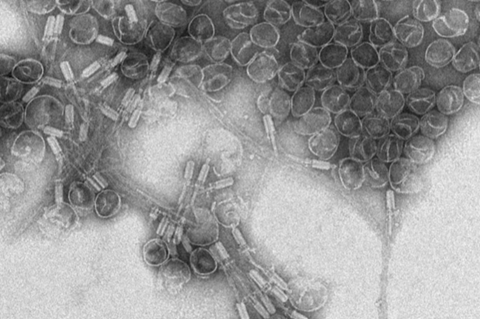
Yet one of the most diverse and ecologically consequential viral ecosystems on the planet has received a fraction of the attention it deserves. Soil viral ecology, the study of the viruses that infect, kill, and modify microbial communities beneath our feet, has largely been neglected.
The reasons are partly technical. Soil is one of the most analytically challenging environments in biology. It is a dense, heterogeneous matrix in which viral particles can bind tightly to soil particles, making isolation or accurate enumeration difficult. Most soil microorganisms cannot be cultured by conventional means, and the viruses that infect them are therefore similarly unculturable.
There is also no equivalent of the small sub-unit rRNA gene to serve as a universal marker gene. Research priorities have also compounded this with virology concentrated on human, animal, and crop diseases, and within soil microbiology itself, prokaryote and fungal ecology has long been the major focus.
Why everything is changing
Two technological advances have changed this over the last decade. Metagenomic sequencing has removed the requirement of cultivation for virus discovery, and improved computational tools have enabled the reconstruction and classification of viral genomes directly from complex environemntal samples. Together, these advances have revealed that soils contain billions of distinct viral populations and a diversity that likely exceeds that observed in any other ecosystem.
The ecological significance of soil viruses that infect microorganisms is becoming clearer. In marine systems, kill-the-winner or Lotka-Voltera dynamics, where viruses preferentially predate the most abundant prokaryote populations, maintaining community diversity, is well established. Whether viruses in soil follow similar rules is an open question. The physical complexity and heterogeneity of soil microhabitats may fundamentally alter host-virus encounter rates and infection dynamics, producing outcomes that diverge considerably from marine models. What seems increasingly clear is that viral predation influences microbial community composition in soil, but precisely how remains to be determined.
Viral lysis
Viral lysis drives microbial turnover in ways that may directly shape soil community dynamics. In marine systems, the viral shunt, in which the contents of lysed cells are utilized by microbial communities rather than transferred to different trophic levels, is well established as a significant driver of nutrient cycling. Evidence that analogous processes operate in soil is growing, though the extent to which viral lysis influences decomposition, nutrient availability, and community succession across different soil types and conditions remains to be characterized.
Viruses are also well-established vectors of horizontal gene transfer via transduction, though whether rates of viral-mediated gene transfer in soil exceed other horizontal transfer mechanisms, as has been suggested, requires more direct empirical support.
What does seem clear is that the functional gene pool of a soil microbial community is not entirely fixed by the organisms present at any given moment, and that viral activity may play a role in shaping metabolic flexibility, adaptation, and resilience, though the magnitude of that role in soil specifically remains an open question.
Driving the cycles
The implications extend well beyond community ecology. Soils store more carbon than the atmosphere and all terrestrial vegetation combined, and drive the nitrogen, phosphorus, and sulphur cycles that underpin ecosystem productivity and agriculture.
The microbial communities governing these processes are extraordinarily diverse in function, from methanogens producing methane, to methanotrophs consuming it, to nitrifiers, denitrifiers, and sulphur-oxidising bacteria, each regulating fluxes of greenhouse gases and nutrients with global consequences.
These communities, and the biogeochemical processes they mediate, are sensitive to composition and turnover dynamics that viral predation may directly influence. Through lysis and transduction, viruses shape which microorganisms are present, which functional genes circulate through the community, and the magnitude and rates of nutrient and gas fluxes moving through the system.
Models of soil biogeochemical cycles that do not account for viral dynamics are missing a regulatory layer, and given the significance of soil carbon to climate projections and soil nutrients to global food security, that is a gap that must be taken seriously.
Fertile frontier
Soil viral ecology is, in the truest sense, fertile ground, not just as a biological environment, but as a scientific frontier on which the most important questions remain open. The 3rd International Soil Virus Conference, to be held in Saint-Loup-Lamairé, France, on June 16–18, 2026, brings together virologists, soil microbiologists, ecologists, and bioinformaticians to share findings, sharpen questions, and build the collaborative frameworks needed to tackle the hard mechanistic work ahead. The ground is fertile. Now comes the digging.
A member of AMI’s Healthy Land Advisory Group, Christina Hazard is CNRS Researcher and Group Leader at the Microbial Ecology Laboratory, Lyon 1 University Claude Bernard, France. She chairs the organizing committee for the 3rd International Soil Virus Conference.
Topics
- 3rd International Soil Virus Conference
- Agriculture
- Applied Microbiology International
- biogeochemical cycle
- Christina Hazard
- Community
- Computational Biology
- Ecology
- Healthy Land
- horizontal gene transfer
- Lotka-Voltera dynamics
- Metagenomic
- Microbes of the Earth
- soil viral ecology
- UK & Rest of Europe
- unculturable
- viral predation
- Viruses



No comments yet