
The future of applied microbiology takes centre stage in Manchester next month as the Letters in Applied Microbiology Early Career Scientist Research Symposium (LAMECS) returns for its fifteenth year.
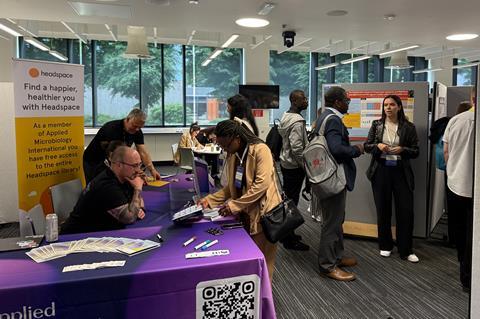
Taking place on 18 June 2026 at the Manchester Metropolitan University Business School, the annual symposium has become a key event for students, PhD researchers and early career scientists looking to showcase their work, expand their networks and explore career opportunities beyond the laboratory.
This year’s programme reflects the breadth and ambition of modern microbiology, with research spanning human health, food systems, environmental science, biotechnology and microbial ecology. Alongside oral presentations and poster sessions, delegates will hear from scientists working at the cutting edge of astrobiology, infectious disease, public health and science policy.
One of the highlights of the event will be the keynote lecture from Dr Michael Macey, whose talk, Hypersaline Frontiers: Analogue Environments and the Search for Habitability, explores how microbes survive in extreme saline environments that resemble conditions on early Mars.
The lecture will examine how resilient microorganisms adapt and evolve under harsh conditions, offering insights into planetary exploration, planetary protection and new biotechnological discoveries. By bridging astrobiology with applied microbiology, the session promises to show how studying Earth’s most extreme habitats could help answer questions about life beyond our planet — while also delivering practical applications closer to home.
Kickstart your career
But LAMECS is about more than research alone. The event is designed to provide a welcoming and supportive environment for scientists at the start of their careers, whether they are presenting for the first time or attending their first research conference.
A dedicated careers strand will feature invited talks from professionals who have taken microbiology expertise into policy, local government and healthcare science. Among them are Cerys Maryan, discussing the transferability of research skills beyond academia; Dr Helen Rickard, exploring the transition from PhD research to government policy; and Phillipa Burns, reflecting on nearly 25 years in NHS public health microbiology.
The symposium will also spotlight some of the most promising emerging research in the field. Flash poster presentations will tackle subjects ranging from multidrug-resistant bacteria and cystic fibrosis infections to antimicrobial compounds from fermented foods and fungal glycosylation.
Volcanoes and babies
Meanwhile, the top-scoring abstracts selected for full talks showcase the increasingly interdisciplinary nature of microbiology research. Topics include antiviral therapies, engineered microbial metabolism, iron transport in infant microbiota, volcanic soil microbial communities as models for early planetary biospheres, and metabolite discoveries from Antarctic subglacial sediments more than two kilometres beneath the ice.
The event will strengthen the growing network of early career microbiologists across the UK and beyond. With affordable registration, CPD accreditation and student travel bursaries available for eligible Applied Microbiology International members, LAMECS 2026 is expected to attract a diverse audience of researchers eager to share ideas, gain experience and build collaborations.
For many delegates, it may also offer something equally important: the chance to discover where a career in microbiology could lead next.
LAMECS takes place on June 18 at Manchester Metropolitan University Business School. To find out more and book your place, click HERE.

No comments yet