
All Microbes and Space articles
-
 News
NewsScientists want to 3D print houses on Mars with the help of yeast
Researchers have developed a recipe that could one day be used to 3D print houses on Mars. combining Martian rocks with gelatin and yeast. Once dried and hardened, this living building material is as strong as low-grade concrete and can be broken down, recycled, and brewed again for new construction.
-
 News
NewsFrom soil to outer space: our interview with JAM Systems Microbiology Lead Editor Janet Jansson
We get to know Janet Jansson, who has been appointed as new Lead Editor in Systems Microbiology at the Journal of Applied Microbiology.
-
 News
NewsThe SETI Institute and ETH Zurich join forces to search for the origin of life
ETH Zurich and the SETI Institute have announced a strategic scientific partnership investigating the origins of life on planet Earth.
-
 Features
Earth’s “little Marses”: how extremophiles are shaping astrobiology
There are places on our planet where the environmental conditions closely resemble those on Mars. These terrestrial analogues have become natural laboratories where scientists study the possibility of extraterrestrial life.
-
 News
NewsEarthly microbes could survive on the moon
Microbes likely to hitch a ride to space with human explorers could survive in shady spots in the moon’s south pole region.
-
 Careers
A day in the life: Discovering the hidden microbes of Britain’s historic waters
PhD student Wewerly Fernandes outlines her investigations into the microorganisms living in Britain’s historic wells and natural springs - once believed to hold healing properties and linked to legends of Merlin and renowned figures like Robert Burns.
-
 News
NewsPathogens survive conditions on extraterrestrial locations
Microorganisms from our planet could survive on celestial bodies where water is present, such as Mars, reveals a study focusing on simulated space conditions. Our immune system reacts less effectively to pathogens that have undergone such a simulated space journey.
-
 News
NewsPlants could be used to grow medicines in space, study shows
Astronauts on long space missions may one day use plants to produce fresh stocks of medicines on demand. Researchers developed a simple method to grow and repeatedly harvest plant virus-based pharmaceuticals from plants under space-like conditions, without destroying the plants or generating large amounts of waste.
-
 News
NewsResearchers evaluate NASA medication storage protocols
Researchers evaluated NASA’s medication handling practices, which currently call for removing medications from their original packaging and storing them in resealable plastic bags. The investigation found that active pharmaceutical ingredients degrade at a higher rate when stored in bags.
-
 News
NewsSpecial collection explores emerging scientific evidence for land-based origins of life
A new special collection brings together leading researchers to examine growing evidence that life may have emerged within networks of terrestrial environments on early Earth.
-
 News
NewsLAMECS 2026 set to bring the next generation of microbiologists to Manchester
The future of applied microbiology takes centre stage in Manchester next month as the Letters in Applied Microbiology Early Career Scientist Research Symposium (LAMECS) returns for its fifteenth year.
-
 News
NewsEarly life on Earth relied on a surprisingly scarce metal
A new study shows that 3.4 billion years ago, life on Earth relied on a metal called molybdenum, despite its limited availability at the time. It is the first to trace molybdenum’s use this far back in time.
-
 News
NewsSome resilient fungi might survive the long voyage to Mars
Researchers recently identified fungi in samples from spacecraft-associated environments, including cleanrooms. Conidia grown from those fungi survived after exposure to simulations of the harsh conditions of Mars and space travel.
-
 News
NewsScientists successfully harvest chickpeas from ‘moon dirt’
Scientists have successfully grown and harvested chickpeas using simulated “moon dirt,” the first instance of this crop produced in this medium. They added vermicompost and coated the chickpeas with the fungi arbuscular mycorrhizae before planting.
-
 News
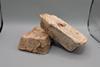
NewsGrowing buildings in space: researchers test fungi as construction material for moon, Mars
A NASA-funded project will investigate whether certain fungi can be combined with regolith — loose rock and soil found on the surface of the moon and other planets — to create materials that could one day support construction in places other than Earth.
-
 News
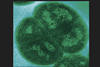
NewsLife forms can planet hop on asteroid debris – and survive
The extremophile bacterium Deinococcus radiodurans can survive the pressures developed during ejection from Mars as a result of massive asteroid impact, a study shows. It means microorganisms can survive more extreme conditions than previously thought, including launch across space after major impacts.
-
 News
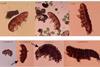
NewsWater bears reveal potential for adapting and protecting Martian resources
Microscopic tardigrades help inform how simulated Martian soil might support plant life and mitigate contaminants shedding from human explorers, researchers report.
-
 News
News How recycled sewage could make the moon or Mars suitable for growing crops
Scientists are investigating how a solution of recycled sewage interacts with simulated lunar and Martian regolith to see if the result provides a suitable medium to grow crops. Bioregenerative life support systems consist of a series of bioreactors and filters that transform sewage into a nutrient-dense solution.
-
 News
NewsNew research highlights how biofilms could influence astronaut health, drug delivery and space agriculture
A global team of scientists has identified an often-overlooked biological system — biofilms — as a critical factor in the future of human space exploration.The team examines how biofilms could pose risks to astronaut health while also serving as powerful tools to sustain life beyond Earth.
-
 News
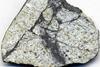
NewsMicrobes harvest metals from meteorites aboard space station
Microorganisms can harvest crucial minerals from rocks and could provide a sustainable alternative to transporting much-needed resources from Earth. Researchers have studied how those microorganisms extract platinum group elements from a meteorite in microgravity, with an experiment conducted aboard the International Space Station.