
Scientists at the U.S. Naval Research Laboratory (NRL) have completed a spaceflight biology investigation aboard the International Space Station (ISS) that reveals how microgravity fundamentally alters microbial metabolism, limiting the efficiency of biological manufacturing processes critical to future long-duration space missions. The findings were recently published in the journal npj Microgravity.
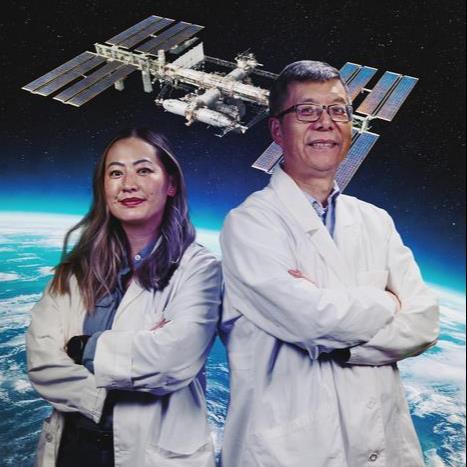
The Melanized Microbes for Multiple Uses in Space Project (MELSP), launched to the Space Station in November 2023, examined how microgravity affects the ability of engineered microbes to produce melanin, a multifunctional biopolymer known for its radiation-shielding, antioxidant, and thermal stable properties.
Results from the completed mission show that while microbes remain capable of producing melanin in space, microgravity significantly interferes with substrate transport, cellular stress responses, and metabolic balance, ultimately reducing production efficiency.
“Our findings show that microgravity doesn’t simply slow microbial growth, it rewires how cells move nutrients, manage stress, and allocate metabolic resources,” said Zheng Wang, principal investigator of MELSP and a research biologist at NRL’s Center for Bio/Molecular Science and Engineering. “These constraints must be addressed if microbes are to reliably manufacture materials, medicines, or life-support components during long-duration missions.”
Model product
Melanin was selected as a model biomanufacturing product because of its visible pigmentation and relevance to space applications, including radiation protection. In the study, NRL scientists flew engineered Escherichia coli capable of producing melanin via a tyrosinase enzyme and compared space-grown samples to identical ground controls.
Despite producing an active enzyme, ISS-grown bacteria generated significantly less melanin than ground samples.
“That was surprising,” Wang said. “The microbes did not produce as well as we expected. The space environment presents a lot of challenges that affect microbial growth and activity, and this study helped us identify those challenges so we can begin thinking about how to overcome them.”
Finding the suspect
Follow-on biochemical, proteomic, and metabolomic analyses revealed that the limitation was not enzyme production, but impaired transport and utilization of tyrosine, the molecular precursor required for melanin synthesis.
“Microgravity alters fluid behavior, leading to altered growth rates and phenotypes in the space environments,” said Tiffany Hennessa, Ph.D., NRL Research Biologist, Laboratory for Molecular Interfaces, co-principal investigator of MELSP. “Our data indicate that under these conditions, cells struggle to efficiently import and process key substrates, even when the biosynthetic machinery itself remains intact. The machinery inside the cell was there, but the inputs weren’t getting to where they needed to be, and that directly impacted melanin production.”
Stress-response proteins
Proteomic analysis showed that ISS-grown microbes increased expression of stress-response proteins, including pathways associated with oxidative stress, respiration, and DNA repair. Metabolomic profiling further revealed elevated stress markers, such as trehalose, alongside depletion of glutathione, a key molecule involved in maintaining cellular redox balance.
“We saw increased production of stress-related proteins and chemicals associated with stress responses,” Hennessa said. “That tells us the cells were under pressure in the space environment, and when that happens, survival becomes a higher priority than producing extra biomaterials.”
Collaborating on Earth
To validate the spaceflight results, NRL collaborated with Cheryl Nickerson, Ph.D., and her laboratory at Arizona State University. The team reproduced key findings using a Rotating Wall Vessel (RWV) bioreactor on Earth that simulates low-shear microgravity conditions. These experiments confirmed reduced melanin production, altered metabolism, and decreased microbial viability under microgravity-like conditions.
READ MORE: Researchers discover how a deadly strain of salmonella fine-tunes its infection tactics
READ MORE: Tough microbes found in NASA cleanrooms hold clues to space survival and biotech
“This study provides a critical reality check for space biomanufacturing,” Wang said. “Engineering microbes for space isn’t just about genes and enzymes, it’s about designing systems that account for transport, stress, and physical forces unique to the space environment.”
“These are essentially little cell factories,” Hennessa said. “If we can figure out how to help them manage stress and move nutrients more efficiently, we can make biomanufacturing in space far more reliable.”
Actionable insights
The MELSP results provide actionable insight for future efforts to engineer resilient, high-yield microbial production systems for deep-space exploration. Potential strategies include redesigning transport pathways, alleviating metabolic burden, and developing bioreactors that compensate for the absence of gravity-driven mixing.
The study contributes to a growing body of research informing NASA’s Artemis missions and broader Department of War efforts to enable sustainable human operations beyond low-Earth orbit.
Topics
- Arizona State University
- Bioengineering
- biomanufacturing
- Cheryl Nickerson
- Economic Equality
- Escherichia coli
- Healthy Land
- International Space Station
- melanin
- Melanized Microbes for Multiple Uses in Space Project
- Microbes and Space
- Microbial Metabolism
- microgravity
- Natural Products
- One Health
- Research News
- Tiffany Hennessa
- tyrosinase
- U.S. Naval Research Laboratory
- USA & Canada
- Zheng Wang






No comments yet