
More Healthy Land – Page 3
-
 News
NewsResearch into zoonotic disease risks requires a One Health approach
A new evidence brief, based on a study by the Juno Evidence Alliance conducted in collaboration with CABI’s One Health Hub, has highlighted that a One Health approach is needed in research into zoonotic disease risks around the world.
-
 News
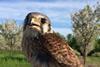
NewsMichigan cherry farmers find a surprising food safety ally: falcons
By shooing cherry-pecking birds away, kestrels also keep them from contaminating crops with their droppings, a new study shows. Kestrels were associated with a 3-fold reduction in droppings spotted on branches.
-
 News
NewsIsland-wide field surveys illuminate land-sea connections in Mo‘orea
A multi-year scientific expedition determined that land use on tropical islands can shape water quality in lagoons and rainfall can be an important mediator for connections between land and lagoon waters.
-
 News
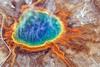
NewsEarthquakes shake up Yellowstone’s subterranean ecosystems
Researchers chronicled the ecological changes in subsurface microbial communities that took place after a swarm of small earthquakes rattled the Yellowstone Plateau Volcanic Field in 2021.
-
 News
NewsMicroplastics pose a human health risk in more ways than one
A new study shows that microplastics in the natural environment are colonised by pathogenic and antimicrobial resistant bacteria. The study team calls for urgent action for waste management and strongly recommends wearing gloves when taking part in beach cleans.
-
 News
NewsNew study reveals how a common antibiotic disrupts nitrogen cycling and boosts greenhouse gas emissions in estuaries
Antibiotics may have far reaching impacts on wetland chemistry, according to a new study that identifies the bacteria responsible for breaking down the antibiotic sulfamethoxazole and links this process to increased emissions of nitrous oxide, a potent greenhouse gas.
-
 News
NewsDr José Luis Balcazar named as winner of John Snow Public Health Innovation Prize
Dr José Luis Balcazar, Senior researcher at the Catalan Institute for Water Research (ICRA-CERCA), Spain, has been named as the newest winner of the John Snow Public Health Innovation Prize.
-
 News
NewsFive new phages discovered in university’s Botanical Gardens
Five new bacteriophages have recently been discovered in the ponds of Lund University’s Botanical Gardens. Phages thrive wherever bacteria are found, which often means ponds and watercourses that are rich in organic material.
-
 News
NewsEmerging human and canine leptospirosis in New South Wales shows separate transmission pathways
A geospatial study of leptospirosis outbreaks in New South Wales suggests that humans and dogs may have largely independent transmission pathways.
-
 News
NewsNew Arkansas Clean Plant Center partnership to boost Indian agriculture
The University of Arkansas System Division of Agriculture has entered a five-year agreement with the Indian National Horticulture Board and Ministry of Agriculture and Farmers Welfare to help farmers in India improve agricultural production by limiting spread of pathogens.
-
 News
NewsNew super pest combines broad spectrum of microbes
Researchers investigating what role the reed leafhopper’s microbial flora might have played in its rapid spread as a pest found it hosts at least seven species of bacteria and appears to be completely dependent on three of these species, which inhabit specific organs.
-
 News
NewsSoil carbon decomposition varies vastly, holding implications for climate models
A new study shows that even under uniform laboratory conditions, the rate of organic carbon decomposition in soil samples collected across the U.S. differed by up to tenfold, in part due to variations in soil mineral and microbial properties.
-
 News
NewsMicrobial nano-selenium breakthrough boosts tea quality and safety
Scientists developing selenium-enriched tea have identified a powerful selenium-reducing bacterium, Raoultella ornithinolytica S-1, capable of converting inorganic selenium into selenium nanoparticles (SeNPs) while simultaneously promoting plant growth.
-
 News
NewsThe road ahead: why conserving the invisible 99% of life is fundamental to planetary health
A new paper outlines how scientists came together to put together the first microbial conservation roadmap under the leadership of Applied Microbiology International President, Professor Jack Gilbert.
-
 News
NewsScientists develop world’s first modular co-culture platform for the one-pot production of rainbow-colored bacterial cellulose
The team engineered Komagataeibacter xylinus for bacterial cellulose synthesis and Escherichia coli for natural colorant overproduction. A co-culture of these engineered strains enabled the in situ coloration of bacterial cellulose.
-
 News
NewsLivestock manure linked to the rapid spread of hidden antibiotic resistance threats in farmland soils
Scientists have uncovered how even “low-risk” organic fertilizers like dried poultry manure can inadvertently drive a dramatic surge in dangerous antibiotic resistance genes, once released into vegetable plots used for food crops.
-
 News
NewsResearchers diagnose disease with a drop of blood, a microscope and AI
Scientists have developed an automated, high-throughput system that relies on imaging droplets of biofluids for disease diagnosis in an attempt to reduce the number of consumables and equipment needed for biomedical testing.
-
 News
NewsSmart toilet designs in Cambodia held promise, but a key piece was missing
A smart toilet design introduced in rural Cambodia was supposed to change lives—keeping families safe and protecting the environment. However, while households reported that they liked the new system, a crucial piece was missing: using it correctly.
-
 News
NewsImpact of pasteurization on dairy calves’ gut microbiota: A study of milk feeding and early microbial colonization
A new study highlights the impact of pasteurization on microbial diversity in dairy calves, underlining the importance of balancing pathogen safety and microbial health. It suggests that while pasteurization prevents pathogen transmission, it also reduces beneficial microbial transfer.
-
 News
NewsMachine learning tool can scan for signs of extraterrestrial life
A machine learning framework can distinguish molecules made by biological processes from those formed through non-biological processes and could be used to analyze samples returned by current and future planetary missions.