
More Healthy Land – Page 58
-
 News
NewsRoot microbes may be the secret to a better tasting cup of tea
Researchers have found that microbes in tea roots affect their uptake of ammonia, which influences the production of theanine, which is key for determining a tea’s taste.
-
 News
NewsResearchers map spread of potato blight prior to the Irish potato famine
The first accurate maps of outbreaks of potato blight in the USA between 1843 and 1845 are presented in a new study, improving the understanding of the spread of potato blight before the disease reached Europe.
-
 News
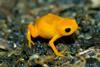
NewsDrought may drive deadly amphibian disease by disrupting skin microbiome
Progressively severe droughts are disrupting the microbiomes of the thumbnail-sized orange frogs, potentially leaving them vulnerable to a deadly fungal disease, according to a new study by an international research team.
-
 News
NewsStudy reveals how gut microbes can distinguish prion disease in deer
A new collaborative study sheds light on how chronic wasting disease in deer impacts the gut microbiome and provides a potential tool for disease surveillance.
-
 News
NewsAMI launching STEM and success entrepreneurship webinar to mark IWD
On International Women’s Day, Applied Microbiology International will host an exciting online event focusing on five women who founded their own companies, becoming successful entrepreneurs using their own research as a spin-out launchpad.
-
 News
NewsResearchers uncover a key link in legume plant-bacteria symbiosis
Researchers have identified four essential phosphorylation sites that act as the catalyst for the symbiotic relationship between legume plants and nitrogen-fixing bacteria.
-
 News
NewsBiotech start-up BugBiome secures investment for research in sustainable pest protection
BugBiome, a biotech harnessing nature’s microbial defences for pest protection to benefit human and planet health, has successfully closed a pre-seed funding round, securing £310k from Cambridge Angels and Discovery Park Ventures.
-
 News
NewsUK government awards £13m for biotechnology research to address environmental challenges
A new research centre, the first of its kind in the UK, is being formed to enhance and develop the natural abilities of micro-organisms in cleaning up our planet.
-
 News
NewsResearchers probe ancient partnership between moss and fungi - and endobacteria
Researchers tracking the subtle but distinct ways a moss interacted with its fungal neighbors found that these interactions came to depend on a unique addition to the cast — endobacteria within the fungi.
-
 News
NewsReserchers reveal how plants obtain nitrogen by supplying iron to symbiotic bacteria
A new study clarifies the underlying mechanism of iron acquisition in response to nitrogen, which provides further insight into the mechanisms of plant adaptation to the environment.
-
 News
NewsAdvisory group members lend expertise to key UK fertiliser report
A number of Applied Microbiology International Advisory Group members contributed to the POSTnote research briefing, ‘The Future of Fertiliser Use’. The full report has just been published.
-
 News
NewsInfectious gibbon ape leukaemia virus is colonising a rodent’s genome in New Guinea
A research team has discovered a recent case of retrovirus colonisation in a rodent from New Guinea, the white-bellied mosaic-tailed rat.
-
 News
NewsNew research finds that dust in atmosphere is feeding algae in mountain lakes
Dust deposition from the atmosphere acts as a fertilizer for algae in mountain headwaters, broadening its growth tolerance against other stressors, a new study shows.
-
 News
NewsHigher airborne fungal diversity found in heavy traffic conditions
Reducing vehicular traffic could be an effective measure to control airborne fungal exposure and microbial pollution, a new study suggests.
-
 News
NewsResearchers improve climate predictions by unlocking secrets of soil microbes
Scientists are using the DNA from soil microbes to model how they function and use carbon, ultimately helping to advance the accuracy of climate models.
-
 News
NewsCulprit behind cassava witches’ broom disease unveiled as fungus
In a recent breakthrough, DNA sequencing technology has uncovered the culprit behind cassava witches’ broom disease: the fungus genus Ceratobasidium.
-
 News
NewsHigh nitrogen fertilizer input enhances microbial network complexity in paddy soil
Paddy soil bacterial communities in a high-nitrogen fertilization environment form larger and more complex networks, and thus improve the stability of the microbial community, a new study has found.
-
-
 News
NewsFungal disease endangers wheat production as climate change bites
Researchers have shown that further spread of the fungal disease wheat blast could reduce global wheat production by 13% until 2050. The result is dramatic for global food security.
-
 News
NewsResearchers document microbial wonders in earth’s saltiest waters
A new study explores the largely unknown metabolic capabilities of unclassified microbial species in extreme environments, particularly hypersaline lakes, and their potential applications in biotechnology, medicine, and environmental remediation.