
More Healthy Land – Page 59
-
 News
NewsChemical signals spur soil bacteria to slam on the brakes
Scientists have lifted the lid on the miniature world of soil microbes, revealing how they sense and move in response to a variety of chemical and nutrient signals at various stages of symbiosis with legume plants.
-
 News
NewsNew study reports that Greenland is a methane sink rather than a source
Researchers at the University of Copenhagen have concluded that the methane uptake in dry landscapes exceeds methane emissions from wet areas across the ice-free part of Greenland.
-
 News
NewsSynthetic communities slash herbicide use for weed control
Synthetic microbial communities have been found to not only suppress the growth and yield of agricultural weeds, but also substantially strengthen infested wheat production.
-
 News
NewsScientists probe ‘superpower’ that allows soil bacteria to protect rice roots from pollution
Scientists have lifted the lid on how changes in cell surface hydrophobicity of a strain of soil bacterium may help to stave off heavy metal-polycyclic aromatic hydrocarbon pollution from entering rice plant roots.
-
 News
NewsTiny tornadoes around leaves spread deadly plant pathogens
A new study is the first to analyze plant spore dispersion at its source, where rain droplets shake flexible leaves to initially disperse pathogens.
-
 News
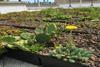
NewsFungal-rich soil may improve green roofs
Active management of green roof mycorrhizal fungi accelerates soil development faster than if mycorrhizal fungal communities are left to passively reestablish on their own, a new study shows.
-
 News
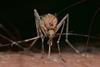
NewsNew purpose-built insectary will tackle spread of deadly diseases
Keele University is to create a new purpose-built insect research laboratory on its campus – where scientists will carry out vital research to tackle the spread of deadly diseases and reduce crop losses to pests.
-
 News
NewsFluvo-aquic soil treated with pig manure present higher risk of AMR bacteria than black and red soils
A new study demonstrates that CTC-manure induced more resistance of soil indigenous microbes in fluvo-aquic soil. Manure control is an effective way to reduce the risk of soil AMR.
-
 News
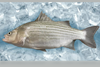
NewsGreen alternative for treating Streptococcus iniae bacteria in hybrid striped bass
Scientists at the United States Department of Agriculture (USDA)’s Agricultural Research Service (ARS) have developed a green antibiotic alternative to treat the deadly pathogen Streptococcus iniae in hybrid striped bass, the fourth most farmed finfish in the United States, according to a recent study. Source: Matt McEntire, ...
-
 News
NewsNitrogen-based fertilizers differentially affect protist community composition in paddy field soils
New research investigating the differential effects of nitrogen fertilizer types on paddy field protist communities showed that predatory protists were the major functional and most sensitive group to nitrogen fertilizers.
-
 News
NewsRising sea levels could lead to more methane emitted from wetlands
A low-salinity Bay Area estuary ecosystem is producing higher-than-expected levels of methane.
-
 News
NewsWest Nile virus emergence and spread in Europe linked to agricultural activities
The spread of West Nile virus in Europe is strongly linked to agricultural activities, urbanization, and bird migration, according to a modelling study.
-
 News
NewsMicrobiome transplants from wild and lab-reared mosquitoes spur differing gene expression in recipient mosquitoes
Mosquitoes that receive microbiome transplants respond differently depending on whether the donor was wild or lab-reared, a new study has revealed.
-
 News
NewsStudying defensive bacteria in squid and newts may help human gut health
Elizabeth Heath-Heckman has received a $1.9 million grant to support her research studying the bacteria animals like squid and newts use to protect themselves.
-
 News
NewsExperiment shows how predator mass mortality events affect food webs
A team of biologists experimentally caused a predator die-off to understand how rapid predator deaths affect freshwater ecosystems.
-
 News
NewsCooler conditions spur bacterial prey species to become the predator
In a new study, two species of bacteria grown in a lab reversed their predator-prey relationship after one species was grown at a lower temperature.
-
 News
NewsResearchers reveal how archaea toggle the nitrogen-uptake switch
By tightly regulating nitrogen uptake, microorganisms avoid overeating nitrogen and thus wasting energy. Scientists now reveal how some methanogenic archaea manage to do so.
-
 News
NewsShallow soda lakes show promise as cradles of life on Earth
A new study reports that a shallow “soda lake” in western Canada shows promise for matching the requirements for the emergence of life.
-
 News
NewsScientists uncover how gadolinium and sulfamethoxazole impact antibiotic and heavy metal resistance genes in activated sludge systems
Researchers investigated the co-occurrence of Gd and SMX in wastewater pollution by applying metagenomics to analyze the mechanisms of changes in ARGs, MRGs, MGEs, and genera in an activated sludge system.
-
 News
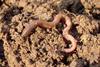
NewsStudy reveals impact of skin microorganisms on earthworm toxicity in polluted environments
Changes in the community of skin-based microbes correlate more significantly with earthworm toxicity than those in intestinal microorganisms, especially under combined soil contaminations.