
More Healthy Land – Page 71
-
 News
NewsBacteria can switch from rare earth metals to radioactive elements
Scientists have demonstrated for the first time that bacteria can use certain radioactive elements to sustain their metabolism.
-
 News
NewsTobacco plant engineered to act as drug factory
Researchers have engineered a close relative of tobacco, Nicotiana benthamiana, to churn out peptides with antibiotic activity against some of the nastiest pathogens known to medicine.
-
 News
NewsScientists ID microbes that associate with oilcane
Researchers have identified the types of microbes that associate with engineered oilcane, opening the way to new opportunities to leverage plant-microbial interactions in these feedstocks, which could increase oil yields for sustainable bioenergy production.
-
 News
NewsAfrican rhinos have retroviruses not found in their cousins
New research reveals that the genomes of African rhinos contain dozens of gammaretroviruses that are absent from the genomes of Asian rhino species, such as the Sumatran and Javan rhino, and the African black rhino has two related groups, one missing from the white rhinos.
-
 News
NewsYeast evolves into multicellular life in the lab
A fascinating long-term evolution experiment has seen model organism ’snowflake yeast’ adapt into multicellular individuals more than 20,000 times larger than their ancestor.
-
 News
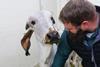
NewsMeet Ginger: the gene-edited calf resistant to BVDV
Scientists introduce Ginger, the first gene-edited calf with reduced susceptibility to a major viral pathogen.
-
 News
NewsPattern-forming bacteria used with AI as sensors
Synthetic biologists have engineered bacterial swarm patterns to visibly record environment and use deep learning to decode patterns - applications could range from monitoring environmental pollution to building living materials.
-
 News
NewsIcy microbes digest plastic at low temperatures
Scientists have found microbes that can digest plastics at low temperatures, potentially saving money and energy.
-
 News
NewsRampant fungus threatens banana trade in Africa
Researchers have warned that Fusarium wilt TR4 appears to be spreading uncontrollably in Mozambique and immediate action is needed.
-
 News
NewsNew-to-nature reaction could decarbonize industry
Researchers have engineered bacteria to produce new-to-nature carbon products that could provide a powerful route to sustainable biochemicals.
-
 News
NewsViruses may disrupt carbon cycle in warming world
Scientists describe many different ways that increasing temperatures could affect viruses and their microbial hosts, changes that could ultimately affect the responses of whole ecosystems to warming.
-
 News
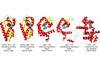
NewsBeneficial bacteria lured by siren call of plant hormones
Scientists have discovered a bacterium carrying a receptor protein that allows it to migrate towards auxins in its plant host, which act as bacterial signalling molecules.
-
 News
NewsBlack eyes in seabirds indicates bird flu survival
A new study has discovered evidence that Northern Gannets can recover from Highly Pathogenic Avian Influenza (HPAI) H5N1, with black irises indicating a previous infection.
-
 News
NewsSloth fur may carry antibiotic-producing bacteria
The fur of Costa Rican sloths appears to harbour antibiotic-producing bacteria that may hold a solution to the growing problem of antimicrobial resistance.
-
 News
NewsFungal diseases threaten global food security
Scientists have warned of the “devastating” impact that fungal disease in crops will have on global food supply unless agencies across the world come together to find new ways to combat infection.
-
 News
NewsPredatory soil protists may boost PGPB activity
Bacterivorous soil protists may regulate the activity of plant growth promoting bacteria (PGPB), boosting plant growth even further, according to a new study.
-
 News
NewsAI-powered system diagnoses tomato leaf diseases
Researchers have developed an innovative deep learning architecture to accurately distinguish between different tomato leaf diseases.
-
 Features
Microbial solutions to dryland desertification
Covering more than 45% of the Earth’s surface, drylandsare home to ~3 billion humans (~37.5% of the population) and generate ~50% of global food production.
-
 News
NewsAntibiotic resistance genes can be carried by clouds
A research team from Université Laval and Université Clermont Auvergne has shown that anbiotic resistance genes can be transported by clouds.
-
 News
NewsMachine learning helps to ID microbe preferences
Researchers have figured out a way to predict bacteria’s environmental pH preferences from a quick look at their genomes, using machine learning.