
More Healthy Land – Page 75
-
 News
NewsWhite-tailed deer carry SARS-CoV-2 variants that are extinct in humans
Researchers have found white-tailed deer – the most abundant large mammal in North America – are harboring SARS-CoV-2 variants that were once widely circulated, but are no longer found in humans.
-
 News
NewsBiorefinery uses microbial fuel cell to upcycle resistant plant waste
Researchers have developed a sustainable, inexpensive two-step process that can upcycle organic carbon waste - including lignin - transforming it into antioxidant flavonoids for nutrition and medicine. .By processing waste through a microbe-driven biorefinery, the researchers turned lignin into carbon sources that could be used in high-value, plant-derived pharmaceuticals and ...
-
 News
NewsAMI putting together recommendations to support UK government action on AMR
Applied Microbiology International is putting together recommendations for the UK to deliver its five-year action plan on tackling antimicrobial resistance (AMR) in the run-up to 2030.
-
 News
NewsNanobodies spur Nod factor receptors into forming root nodules
Engineering root nodule symbiosis into cereals has come a step closer with the use of nanobodies to spur Nod factor receptors into initiating nodule formation.
-
 News
NewsParasite common in cats causes abortion in bighorn sheep
A parasite often spread by domestic and wild cats could hamper ongoing conservation efforts in bighorn sheep.
-
 News
NewsChemical-loving bacteria were source of sulphuric acid that carved out Pyrenees cave systems
Scientists have used isotopes of sulphur to fingerprint the sources of sulphuric acid that have carved unique and beautiful cave systems in the Pyrenees mountains of southern France.
-
 News
NewsNovel strain of Shigella in gut of bottom-dwelling fish beats off competition with help of T2SS
A novel strain of Shigella isolated from the gut of a bottom-dwelling fish exposed to high loads of heavy metals and antibiotics has been found to have the first Type 2 secretion system fully documented in the bacterium.
-
 News
NewsResearchers discover how bacteria in deep-sea vents deal with toxic metal environments
A new study investigates how bacteria in deep-sea hydrothermal vents can survive and thrive in the presence of highly toxic copper and cadmium.
-
 News
NewsHundreds of newly discovered microbes could be used as natural fertilizer for poor soil
The discovery of hundreds of previously unknown microbes in a Brazilian ecosystem could potentially form a basis for the development of biological substitutes for the chemical fertilizers used by farmers, especially those containing phosphorus.
-
 News
NewsSoil organisms are key to high functioning of city parks and gardens
A new global study highlights the fundamental role of soil biodiversity in maintaining the functioning of the world’s parks and gardens.
-
 News
NewsLong-term projects reveal how warming planet will impact microbe carbon cycling
A team of researchers led by the University of Massachusetts Amherst has helped to untangle one of the knottiest questions involving soil microbes and climate change: what effect does a warming planet have on the microbes’ carbon cycling?
-
 News
NewsNew leaf: AMI’s PhD studentship winner Naina Korotania talks trees and phages
Naina Korotania, winner of the Basil Jarvis PhD Studentship, which is awarded by Applied Microbiology International, is poised to embark on a PhD at the Univeristy of Birmingham, developing novel phage-based biopesticides to target cankers in four tree species.
-
 News
NewsResearchers pinpoint enzyme that limits electrosynthesis by Shewanella
Researchers at Michigan State University have identified an enzyme that is a limiting factor to microbial electrosynthesis by Shewanella oneidensis, a bacterium that could potentially capture carbon dioxide emissions to produce useful materials.
-
 News
NewsSemi-living cyborg cells could be tools for health and environment
Biomedical engineers at the University of California have created semi-living ’cyborg cells’ retaining the capabilities of living cells, but unable to replicate.
-
 News
NewsApplied Microbiology International launches new open access journal, Sustainable Microbiology
Applied Microbiology International (AMI) is proud to announce the launch of its new journal, Sustainable Microbiology, in partnership with Oxford University Press.
-
 News
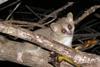
NewsMadagascar mouse lemur retroviruses surprisingly similar to ones found in polar bears or sheep
Researchers studying the mouse lemur genome have identified two endogenous retroviruses (ERVs) that are closely related to viruses found in other, very different mammals such as polar bears or domestic sheep.
-
 News
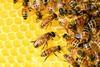
NewsUS approves world’s first vaccine to protect honey bees
The world’s first vaccine for honey bees has been approved by authorities in the US.
-
![Low-Res_Ceratocystis ficicola[6754].jpg](https://d3rmrttq0bsnxi.cloudfront.net/Pictures/100x67/1/7/0/1170_lowres_ceratocystisficicola6754_crop.jpg_433774_crop.jpg) News
NewsTwo fungi join forces to rampage through fig trees
Researchers have identified a fungus, Fusarium kuroshium, which is harmless by itself, but ravages fig trees when found together with Ceratocystis ficicola, which is transmitted by an ambrosia beetle, Euwallacea interjectus.
-
 News
NewsAlmost half of Europe’s wheat crops contaminated with Fusarium mycotoxin
Almost half of wheat crops across Europe are impacted by Fusarium Head Blight, according to a study led by fungal biologist Dr Neil Brown from the UK’s University of Bath, in collaboration with colleagues at the University of Exeter.
-
 News
NewsStudy reveals how bioenergy crop microbiomes change as you dig deeper
A new study casts fresh light on how bioenergy crop microbiomes change in deeper soil, helping scientists to understand how plant microbiomes can be used to provide environmental services and support greener agricultural systems.