
All neutrophils articles
-
 News
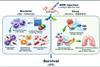
NewsOne strategy to block both drug-resistant bacteria and influenza: new broad-spectrum infection prevention approach validated
A new paper moves beyond traditional infection control strategies reliant on antibiotics and vaccines by introducing a new approach that primes the immune system before infection occurs.
-
 News
NewsHow food shortages reprogram the immune system’s response to infection
When food is scarce, stress hormones direct the immune system to operate in “low power” mode to preserve immune function while conserving energy. This reconfiguration is crucial to combating infections amid food insecurity.
-
 News
NewsResearch links tumor bacteria to immunotherapy resistance in head and neck cancer
Two new studies reveal that elevated levels of bacteria in the tumor microenvironment suppress immune response, driving resistance to immunotherapy in patients with head and neck squamous cell carcinoma.
-
 News
NewsResearch reveals fetuses exposed to Zika virus have long-term immune challenges
Researchers discovered that when a pregnant mother is infected with Zika virus, the resulting inflammatory response in the placenta permanently changes how the offspring’s immune system develops - even if the infection is mild or asymptomatic in the mother.
-
 News
NewsStudy reveals negative consequences of trained immunity in the lungs
Exposure to a common fungal molecule can reprogram immune cells in the lungs, causing them to overreact to infection-like signals and worsen lung damage, according to new research.
-
 News
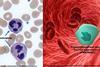
NewsSARS-CoV-2 corrupts some white blood cells to suppress immune system, suggesting path to severe COVID
A study found that neutrophils may be altered by SARS-CoV-2, the virus that causes COVID-19, to cease their normal function of destroying pathogens in the body and, instead, significantly inhibit other immune cells critical for fighting the virus.
-
 News
NewsNew discovery explains why men are more affected by severe COVID-19
Researchers have found another piece of the puzzle that explains why there are differences in immune responses in women and men when they get sick with COVID-19. This discovery has implications for treatment strategies for severe COVID-19.
-
 News
NewsA high-fat diet may impair response to infection
A new study in The Journal of Immunology reveals how a high-fat diet may impair the immune system’s ability to respond to infection by impacting the function of neutrophils, one of the first immune cells to respond to bacteria or viruses. The study demonstrated that male mice fed a high-fat ...
-
 News
NewsFungal compound could help protect against influenza
A preclinical trial uncovers how beta-glucan, a compound found in all fungal cell wall, can ‘reprogram’ immune cells to prevent lung inflammation from influenza and lower the risk of death by the host immune responses.
-
 News
NewsNew microfluidic chip method developed for sepsis prognosis and evaluation
Researchers have developed a new prognostic evaluation method for sepsis patients using a microfluidic concentration gradient chip.
-
 News
NewsGut fungi trigger long-lasting severe COVID-19 immune response
Researchers have found that the growth of fungi in the intestinal tract, particularly strains of Candida albicans yeast, trigger an upsurge in immune cells whose actions can exacerbate lung damage.
-
 News
NewsResearchers reveal how Leishmania parasite uses immune cells as Trojan Horse
A new study found that the parasite targets a receptor on the surface of the neutrophil to gain access to the cell, and once inside the parasite resists the neutrophils’ pathogen-killing molecules.
-
 News
NewsPoor gut health may drive multiple sclerosis — but better diet may ease it
Researchers have traced a previously observed link between microscopic organisms in the digestive tract — collectively known as the gut microbiome — and multiple sclerosis (MS).