
All Research News articles – Page 166
-
 News
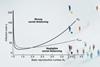
NewsProactively exposing ecosystems to mild environmental stressors appears to offer protection
Mild, proactive exposure to environmental stress can help biological communities resist severe disturbances and maintain genetic diversity, a recent study has found.
-
 News
NewsThe math behind social distancing: the rules that influence epidemic behavior
Researchers have worked out how to understand social distancing behavior. The team identified simple rules that govern how individuals adapt their behavior during an epidemic in order to balance the costs of infection and social distancing.
-
 News
NewsMotion capture: In a world first, motility apparatus of Mycoplasma mobile clarified
Mycoplasmas, including bacteria that cause pneumonia in humans, are generally nonmotile, but Mycoplasma mobile, as the species name suggests, has been found in the gills of fish and seems to move by gliding along surfaces. The molecular structure that allows it to do so has for the first time been ...
-
 News
NewsScientists probe how phytosiderophore regulates the rhizosphere dialogue between plants and microorganisms
DMA is a common phytosiderophore with the ability to activate the insoluble iron in soil, but has major limitations. A synthesized DMA analog, PDMA, is used to explore the response of rhizosphere microbes under the influence of phytosiderophores.
-
 News
NewsResearchers reveal key mechanism behind bacterial cancer therapy
A research team has elucidated the mechanism behind bacterial cancer therapy using a genetically engineered bacterial strain.
-
 News
NewsScientists track pneumonia-causing bacteria as they infect the blood stream
A new study has shown various dissemination patterns can be adopted by Klebsiella pneumoniae that causes systemic infection, i.e. bacteremia.
-
 News
NewsNew test identifies prior infection by zika virus and all four dengue virus serotypes
An alternative approach is developed to detect and distinguish between antibodies induced by the dengue and zika virus in blood samples. The strategy can be used to orient public health policy and evaluate the efficacy of dengue vaccines.
-
 News
NewsIsolated population of chlamydia-free koalas even more vulnerable to the disease
Koalas in south-western Sydney are among the very few in New South Wales (NSW) still free of chlamydia, yet a new study shows they are less likely to adapt to the disease should it arrive on their doorstep.
-
 News
NewsCold sore discovery IDs unknown trigger for those annoying flare-ups
Scientists have a new target to prevent cold sores after researchers discovered an unexpected way that the herpes virus re-activates in the body. The finding could also have important implications for genital herpes caused by the same virus.
-
 News
NewsToxic chemical pollutants detected in lichens and mosses in the Irati forest
Scientists used a species of lichen (Parmelia sulcata) and a species of moss (Hypnum cupressiforme) from Irati Forest as sentinels or biomonitors to determine the organic pollution in the atmosphere.
-
 News
NewsWe feed gut microbes sugar, they make a compound we need
Gut microbes that were thought to feed exclusively on dietary fiber are also fed sugar from our guts, from which they produce short-chain fatty acids that are crucial to many body functions.
-
 News
NewsResearchers uncover blood metabolites that may influence early childhood development
Researchers have identified small molecules in the blood that may impact early childhood development, showing how dietary exposures, early life experiences, and gut health can influence a child’s growth and cognitive milestones.
-
 News
NewsFrom dormant to danger: How VZV reactivation is driving CNS infections
Researchers conducted a comprehensive study spanning 10 years (2013–2022), to identify the VZV-related infections affecting the central nervous system. Their study reveals a marked increase in adult VZV-related CNS infections, particularly since 2019.
-
 News
NewsE. coli strain in Egyptian dairy products also found in Japan school outbreak
Researchers found E. coli prevalent in over 25% of popular milk and dairy products in Egypt. One of the E. coli strains they isolated from the samples collected in 2018 in Egypt had the same characteristics as the E. coli that caused food poisoning in Japan in 2021.
-
 News
NewsStudy compares indoor transmission-risk metrics for infectious diseases
A recent study delves into the complex world of assessing the transmission risk of infectious diseases in indoor spaces. Understanding how to accurately evaluate the effectiveness of non-pharmaceutical interventions (NPIs) has become crucial.
-
 News
NewsReactive nitrogen species dominance is key in the fight against antimicrobial resistance
The balance between two types of molecules – reactive nitrogen species (RNS) and reactive oxygen species (ROS) – plays a crucial role in tackling drug-resistant bacteria, according to a new study.
-
 News
NewsFlu vaccine offers moderate protection against strains dominant in most European countries in 2024/2025
According to interim analysis of influenza vaccine effectiveness for the 2024/2025 season in Europe, the vaccine offered moderate protection against dominant influenza A strains, and strong protection against influenza B.
-
 News
NewsTwo different sequence types of Listeria monocytogenes strains used for veterinary vaccines in Russia
Live whole-cell vaccine AUF (LWCV AUF) is used for the prevention of listeriosis in farm animals in Russian regions. A new study investigated whether the two strains used might belong to the same phylogenetic lineage and possess identical sequence types (STs).
-
 News
NewsDiscovery of a common ‘weapon’ used by disease-causing fungi could help engineer more resilient food crops
The discovery of a powerful “weapon” used by many disease-causing fungi to infect and destroy major food crop staples, such as rice and corn, could offer new strategies to bolster global food security
-
 News
NewsA new test will make it possible to detect the parasite responsible for trichomoniasis more quickly and inexpensively
A sensitive, cheap and rapid test is developed to detect the parasite, Trichomonas vaginalis, which causes one of the world’s most common sexually transmitted infections, using an innovative approach that targets highly specific molecules with short nucleic acid sequences.