
All Shandong University articles
-
 News
NewsEngineered enzyme breakthrough offers sustainable solution for polyurethane plastic recycling
A research team has elucidated, for the first time, the catalytic mechanism by which the esterase Aes72 hydrolyzes urethane bonds in polyurethane (PU), and by engineering the enzyme to further enhance its catalytic efficiency.
-
 News
NewsEngineered bacteria deliver cancer drug directly inside tumors in mice
New research suggests that Escherichia coli Nissle 1917 (EcN) may be engineered with anticancer agents to treat cancerous tumors in mice. Researchers used EcN as a base for synthesizing Romidepsin (FK228), an FDA-approved drug with anti-tumor agents.
-
 News
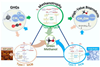
NewsMethane eating microbes turn a powerful greenhouse gas into green plastics, feed, and fuel
Methane eating microbes could help turn a powerful greenhouse gas into everyday products like animal feed, green plastics, and cleaner fuels, according to a new scientific review of fast moving research on these unusual bacteria.
-
 News
NewsChristensenella tenuis inhibits gut-derived endotoxins to alleviate metabolic disorders
The gut probiotic Christensenella tenuis significantly alleviates endotoxemia and metabolic disorders by modulating gut bile acids (BAs) metabolism and suppressing lipopolysaccharide (LPS) translocation across the gut barrier, a new study finds.
-
 News
NewsPurified immunoglobulin F(ab′) 2 prevents lethal staphylococcal enterotoxin B intoxication in mice and rhesus monkeys
Purified F(ab′)2 fragments are an effective antidote to lethal SEB doses in mice and rhesus monkeys, and therefore might be a favorable candidate for treating patients with severe SEB intoxication, a new study suggests.
-
 News
NewsThe hidden battle in your gut: How one bacterium outsmarts its rivals
Scientists have undertaken a deep dive into the inner workings of the ‘microbial arms race’ in your gut, revealing an elegant strategy that gut microbes use to stay a step ahead of their neighbors.
-
 News
NewsNew discovery reveals unexpected ocean algae help cool the Earth
A common type of ocean algae plays a significant role in producing a massively abundant compound that helps cool the Earth’s climate, new research has discovered.
-
 News
NewsResearchers develop an efficient host-vector system for a model archaeon by solving CRISPR-based host-plasmid conflict
The replicase gene of pRN1, an archaeal cryotic plasmid, carries a DNA segment to be targeted by the host I‐A CRISPR system, and the CRISPR-based host-plasmid conflict is responsible for instability of pRN1‐derived vectors in the archaeon Saccharolobus islandicus REY15A.
-
 News
NewsScientists reveal interaction mechanism between intestinal microbial environment and tumor immune microenvironment
Scientists have unveiled the mechanism of tumor immune evasion mediated by the microorganism C. scindens in colorectal cancer. Additionally, they developed a phage-based intervention method.
-
 News
NewsMaleimide derivative shows promise for treating clinical candidiasis
A new study demonstrates the efficacy of a novel maleimide analogue as a novel antifungal compound, highlighting its potential as a promising option for the treatment of clinical candidiasis.