
All Toxoplasma gondii articles
-
 News
NewsWealth and health aren’t the only indicators of national happiness – there are also cats. And their parasites!
National happiness is influenced by complex relationships beyond basic economic factors, according to a study that finds that cats and their parasites are strongly correlated with both positive and negative happiness scores worldwide.
-
 News
NewsCellular break-in: Parasite strategies for host invasion
Before the parasite Toxoplasma gondii can invade a cell, it has to know it has reached the right place. New research from the Whitehead Institute reveals that the parasite doesn’t simply recognize a ready-made doorway into the cell. Instead, it helps create the conditions for its own entry.
-
 News
NewsMethylation puts parasites in motion
Researchers identify a molecular mechanism that enables single-celled parasites to switch on the machinery they need to move and invade host cells.
-
 News
NewsHow the most widespread parasite on earth reads its genome
Researchers have uncovered new details about how Toxoplasma controls the timing of protein production, ensuring the right molecular tools are available exactly when they are needed. Two protein complexes manage this process.
-
 News
NewsHigh-resolution DNA typing uncovers hidden diversity of Toxoplasma gondii in China
An international research team has revealed previously hidden genetic diversity in Toxoplasma gondii, a globally distributed zoonotic parasite, in China.
-
 News
NewsGene sheds light on how parasites exit host cells
Researchers have elucidated the parasite exit process - known as egress - after identifying an essential gene, MIC11. To clearly explain egress, the behaviors of Toxoplasma gondii were assessed.
-
 News
NewsFluorescent imaging reveals how a global parasite develops, opening new paths for drug treatment
Researchers adapted a fluorescent imaging system typically used to study human cells, enabling real-time observation the parasite’s growth, a promising breakthrough against an organism that that infects both humans and animals.
-
 News
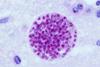
NewsScientists find hidden diversity inside common brain parasite
Scientists have found that Toxoplasma gondii is far more complex than previously believed. Until now, cysts were believed to contain a single, uniform type of parasite lying dormant until reactivated, but have now been found to contain multiple distinct subtypes of parasites, each with different biological roles.
-
 News
NewsThe brain’s sneakiest houseguest: how a parasite rewrites neuron messages and alters neuroplasticity
A new study describes how Toxoplasma gondii manipulates the behaviour and brain function of its hosts. It explored a new angle by looking at nanoparticles called extracellular vesicles, which cells use to send messages to one another, and carry small regulatory molecules known as microRNAs.
-
 News
NewsCommon brain parasite can infect your immune cells. Here’s why that’s probably OK
Researchers have determined how our immune systems fight back against the parasite Toxoplasma gondii when it makes it inside the CD8+ T cells meant to destroy it.
-
 News
NewsNew study reveals that parasite-produced dopamine can alter host behaviour
A new study has shed light on how Toxoplasma gondii, the causative agent of toxoplasmosis, can alter host behaviour. The research findings show that such behavioural changes are achieved, at least in part, through dopamine manipulation caused by dopamine produced by the parasite itself.
-
 News
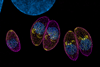
NewsToxoplasmosis: How a deadly parasite infects its host cells
Researchers have discovered how the parasite Toxoplasma gondii builds a specialised structure that allows it to move and invade host cells. They identified two proteins that control how the conoid complex is assembled - this acts like an engine for movement and cell-invasion.
-
 News
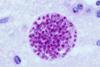
NewsToxoplasmosis: how the pathogen exploits its own envelope
Researchers have developed a novel imaging technique that allows reliable visualization of the process of endocytosis in Toxoplasma for the first time. The material enters the pathogen through a micropore in its cell membrane.
-
 News
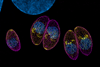
NewsScientists discover how cells use a secret weapon to fight off some pathogens
New research shows that mitochondria detect invading pathogen Toxoplasma gondii and ramp up competition for vitamin B9, depriving it of the nourishment it needs to grow. A researcher noticed that the amount of mitochondrial DNA in a mitochondrion increased during infection.
-
 News
NewsPair of malaria parasite proteins could lead to targeted therapies
Scientists have made an advance in the basic understanding of Plasmodium falciparum, the parasite responsible for the deadliest form of human malaria, that could make novel, highly targeted anti-malarial therapies possible.
-
 News
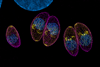
NewsHow a common brain parasite disrupts neural communication
Scientists reveal how the Toxoplasma parasite can significantly disrupt brain function, even when it infects only a small number of neurons. The team found the parasite interferes with essential communication between brain cells.
-
 News
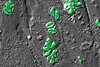
NewsStudy shows how genetic defects in Toxoplasma are rescued by co-infection
Toxoplasma gondii parasites can use secreted factors to compensate for genetic defects in neighbouring parasites, highlighting a limitation of pooled CRISPR screens.
-
 News
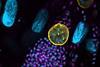
NewsToxoplasma gondii parasite uses unconventional method to make proteins for evasion of drug treatment
A new study sheds new light on how Toxoplasma gondii parasites make the proteins they need to enter a dormant stage that allows them to escape drug treatment.
-
 News
NewsResearchers engineer ‘cat parasite’ Toxoplasma gondii to release therapeutic proteins in the human brain
In a breakthrough study by an international team of scientists, the ‘cat parasite’ Toxoplasma gondii was engineered to deliver drugs to the human brain.
-
 News
NewsAdvanced imaging reveals how a parasitic ‘kiss’ alters cell metabolism
Researchers have described how Toxoplasma infection changes host cell metabolism over the course of infection using the power of optical metabolic imaging (OMI) for the first time.