
Young Innovators & Early Career Research – Page 18
-
 News
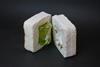
NewsCoffee grounds and Reishi mushroom spores can be 3D printed into a compostable alternative to plastics
Researchers have developed a new system for turning coffee grounds into a paste, which is inoculated with Reishi mushroom spores to form a mycelial skin. The skin turns the coffee grounds into a resilient, fully compostable 3D printable alternative to plastics.
-
 News
NewsResearchers ID key immune differences that make one West African ethnic group less susceptible to malaria
Researchers have uncovered how genetic and lifestyle factors influence immune responses to malaria in children from two large West African ethnic groups. Children showed key differences in immune cell activity offering greater protection.
-
 News
NewsNo more antibiotics? Scientists pioneer a safer way to protect cultured meat
A new study explores the use of Random Antimicrobial Peptide Mixtures (RPMs) as a safe and effective alternative to antibiotics in cultured meat production. These synthetic peptide cocktails eliminate bacterial contamination without harming stem cell viability or contributing to antibiotic resistance.
-
 News
NewsVentilation fans can significantly lower the risk of inhaling bacteria particles after toilet flushing
New research finds that unhealthy concentrations of bacteria are released into the air by toilet flushing - but active ventilation with an exhaust fan reduce the risk by 10 times.
-
 News
NewsMarine fungi that degrade plastic can train to do it faster
Researchers recently discovered that many species of fungi isolated from Hawai‘i’s nearshore environment have the ability to degrade plastic and some can be conditioned to do it faster.
-
 News
NewsNew modeling approach could help design antivirals for shape-shifting viruses
New research utilizes an innovative computational modeling approach to capture the complex and diverse shapes that viral proteins can adopt.
-
 News
NewsCold temperatures promote spread of a bird pink eye pathogen at winter feeders
A pathogen for bird pink eye remains viable on bird feeders in winter conditions much longer than in summer conditions without losing any of its severity, according to a study.
-
 News
NewsSmart bioprospecting needed to expand the search for climate-friendly microalgae
New research has highlighted microalgae’s capacity as a solution in the fight against climate change, but researchers warn that “smart microalgal bioprospecting” is needed to unlock its full potential.
-
 News
NewsStudy reveals direct gut-brain communication via vagus nerve
A new study in an animal model provides direct evidence for the role of the vagus nerve in gut microbiome-brain communication, addressing a critical gap in the field.
-
 News
NewsScientists recode the genome for programmable synthetic proteins
Synthetic biologists were able to re-write the genetic code of an organism — a novel genomically recoded organism (GRO) with one stop codon — using a cellular platform that they developed enabling the production of new classes of synthetic proteins.
-
 News
NewsBacteria, brains, and sugar: scientists uncover new connections
Using a new method to study how carbohydrates modify proteins, scientists have discovered that gut bacteria can alter molecular signatures in the brain.
-
 News
NewsStudents tackle drug resistance by teaching machine learning
Researchers using machine learning to predict drug resistance in patients have published a step-by-step machine learning tutorial for beginners.
-
 News
NewsWhale poo contains iron that may have helped fertilize past oceans
A new study suggests that nutrients that whales excrete may provide a key fertilizer to marine ecosystems. Whale excrement contains significant amounts of iron and nontoxic forms of copper, another essential nutrient that in some forms can harm life.
-
 News
NewsResearchers discover new way to customize living materials for tissue engineering, drug delivery and 3D printing
Researchers have revealed novel sequence-structure-property relationships for customizing engineered living materials (ELMs), enabling more precise control over their structure and how they respond to deformation forces like stretching or compression.
-
 News
NewsFirst success in overcoming gene therapy challenges deploys nanomachines loaded with wine ingredients
Scientists have demonstrated the ability to overcome significant challenges in gene therapy using adeno-associated virus vectors (AAV) by employing a novel smart nanomachine equipped with AAV.
-
 News
NewsLancaster University spinout secures funding to advance healthcare diagnostics
Lancaster University spin out CCI Photonics has secured significant funding to develop its diagnostic technology, which aims to improve healthcare outcomes by using AI to detect infectious diseases and determine patients’ antibiotic susceptibilities in under 15 minutes.
-
 News
NewsWhy you shouldn’t scratch an itchy rash: New study explains
New research uncovers how scratching aggravates inflammation and swelling in a mouse model of a type of eczema called allergic contact dermatitis.
-
 News
NewsStudy reveals how microbes help detoxify our atmosphere
A new study from the Greening Lab reveals at an atomic level how microbes consume carbon monoxide present in the atmosphere. They use a special enzyme, called the CO dehydrogenase, to extract energy from this universally present but highly toxic gas.
-
 News
NewsFungal protein yields new ways to modulate cell activity remotely
A new study introduces tools that remotely and non-invasively communicate with and control the activity of engineered cells once they’ve entered the body. It focuses on a fungal protein the team have developed called Melt, which can be toggled by temperature.
-
 News
NewsScientists reveals how tiny algae shaped the evolution of giant clams
Scientists have sequenced the genome of the most widespread species of giant clam, Tridacna maxima, to reveal how these creatures adapted their genome to coexist with algae living inside them.