
Young Innovators & Early Career Research – Page 21
-
 News
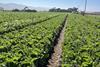
NewsResearchers develop model to evaluate food safety control strategies for produce industry
You’ve probably heard of product recalls involving lettuce, spinach, or other leafy greens. Consuming these popular vegetables are among the main causes of food poisoning, affecting thousands of people every year. Leafy greens can become contaminated with pathogenic E. coli or other bacteria through splashes of soil or contaminated irrigation ...
-
 News
NewsDiverse phage populations coexist on single strains of gut bacteria
A new study shows that a single bacterial species, the host of a phage, can maintain a diverse community of competing phage species. Several phage species coexist stably on a population of a genetically uniform strain of E. coli.
-
 News
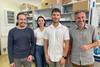
NewsNew super-enzyme could revolutionize CO₂ capture
Scientists have developed new metagenomic analysis tools to identify a super heat-resistant enzyme of biotechnological interest. The enzyme specializes in enhancing the dissolution of CO₂ in water and exhibits unprecedented stability under industrial conditions.
-
 News
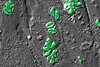
NewsStudy shows how genetic defects in Toxoplasma are rescued by co-infection
Toxoplasma gondii parasites can use secreted factors to compensate for genetic defects in neighbouring parasites, highlighting a limitation of pooled CRISPR screens.
-
 News
NewsMRI could be key to understanding the impact a gluten free diet has on people with coeliac disease
Experts have used magnetic resonance imaging (MRI) to better understand the impact a gluten free diet has on people with coeliac disease, which could be the first step towards finding new ways of treating the condition.
-
 News
NewsHow a middle schooler found a new compound in goose feces
Middle schoolers through a partnership with a local univeristy, collected and analyzed environmental samples to find new antibiotic candidates. One unique sample, goose feces collected at a local park, had a bacterium that showed antibiotic activity.
-
 News
NewsPregnancy enhances natural immunity to block severe flu
Scientists discover a natural flu defense mechanism that activates in the nasal cavity during pregnancy.
-
 News
NewsSatellite evidence bolsters case that climate change caused mass elephant die-off
New analysis showing carcass distribution and algae in watering holes points to climate-induced poisoning of over 300 African elephants.
-
 News
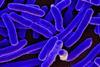
NewsBacteria ditch tags to dodge antibiotics
Bacteria modify their ribosomes when exposed to widely used antibiotics, according to new research. The subtle changes might be enough to alter the binding site of drug targets and constitute a possible new mechanism of antibiotic resistance.
-
 News
NewsPhotodynamic therapy with annatto colorant found to be effective against bad breath
A study by researchers working in Brazil shows that antimicrobial photodynamic therapy in which blue light targets annatto colorant is a feasible and effective option for treatment of halitosis in mouth-breathing children.
-
 News
NewsA new tool to predict the most effective phage cocktail
Researchers have developed a simple and effective new tool that recommends the best possible phage cocktail for a given patient. Paving the way for personalized phage therapies to treat antibiotic-resistant bacterial infections.
-
 News
NewsHot water best for sanitizing in-shell pecans, sanitizers prevent cross-contamination
To identify best practices for microbial safety in the pecan market, scientists conducted a study to evaluate methods of sanitizing pecans against Shiga toxin-producing E. coli, also known as STEC.
-
 News
NewsProbiotic may counteract fire-retardant chemical damage
A mouse study reports that probiotic supplementation can reduce the negative impacts of polybrominated diphenyl ethers, or PBDEs - fire-retardant chemicals - on neurodevelopment, behavior, and metabolism.
-
 News
NewsGut feelings: Social connections change our microbiomes
Friends tend to share common interests, tastes, lifestyles, and other traits, but a new Yale-led study demonstrates that similarities among buddies can also include the makeup of the microbes lining their guts. The study, published Nov. 20 in the journal Nature, examined the relationship between the structure ...
-
 News
NewsSeemingly ‘broken’ genes in coronaviruses may be essential for viral survival
Some coronaviruses, including Covid-19 have extra ‘accessory’ genes in addition to the usual minimal viral set and researchers have found that some of these viral genes have stuck around even though they don’t produce a working protein.
-
 News
NewsUnderstanding neonatal infectious diseases in low- and middle-income countries
Researchers have conducted an in-depth study on the epidemic status, secular trends, and risk factors of 15 common neonatal infectious diseases across low- and middle-income countries (LMICs) from 1990 to 2019.
-
 News
NewsAntibacterial material restores the efficacy of antibiotics against resistant bacteria
Research shows that resistant bacteria can regain susceptibility to antibiotics when the treatment is combined with a material equipped with antibacterial peptides.
-
 News
NewsFunding boost to bring engineering biology technologies to market
Part of a £2.8 million UKRI seed corn fund has been awarded to the Environmental Biotechnology Innovation Centre (EBIC) to bridge the gap between research and market-ready products and technologies, with comprehensive support and resources for researchers.
-
 News
NewsRule-breaking tuberculosis bacteria challenge growth norms
The rod-shaped tuberculosis (TB) bacterium is the first single-celled organism ever observed to maintain a consistent growth rate throughout its life cycle, a new study reports, hinting at why the pathogen so readily outmaneuvers our immune system and antibiotics.
-
 News
NewsPromise in fighting drug-resistant pathogens innovative study shows
A new study has developed an innovative approach to combat antibiotic-resistant bacteria by tagging them with a chimeric agent that activates the immune system towards them.